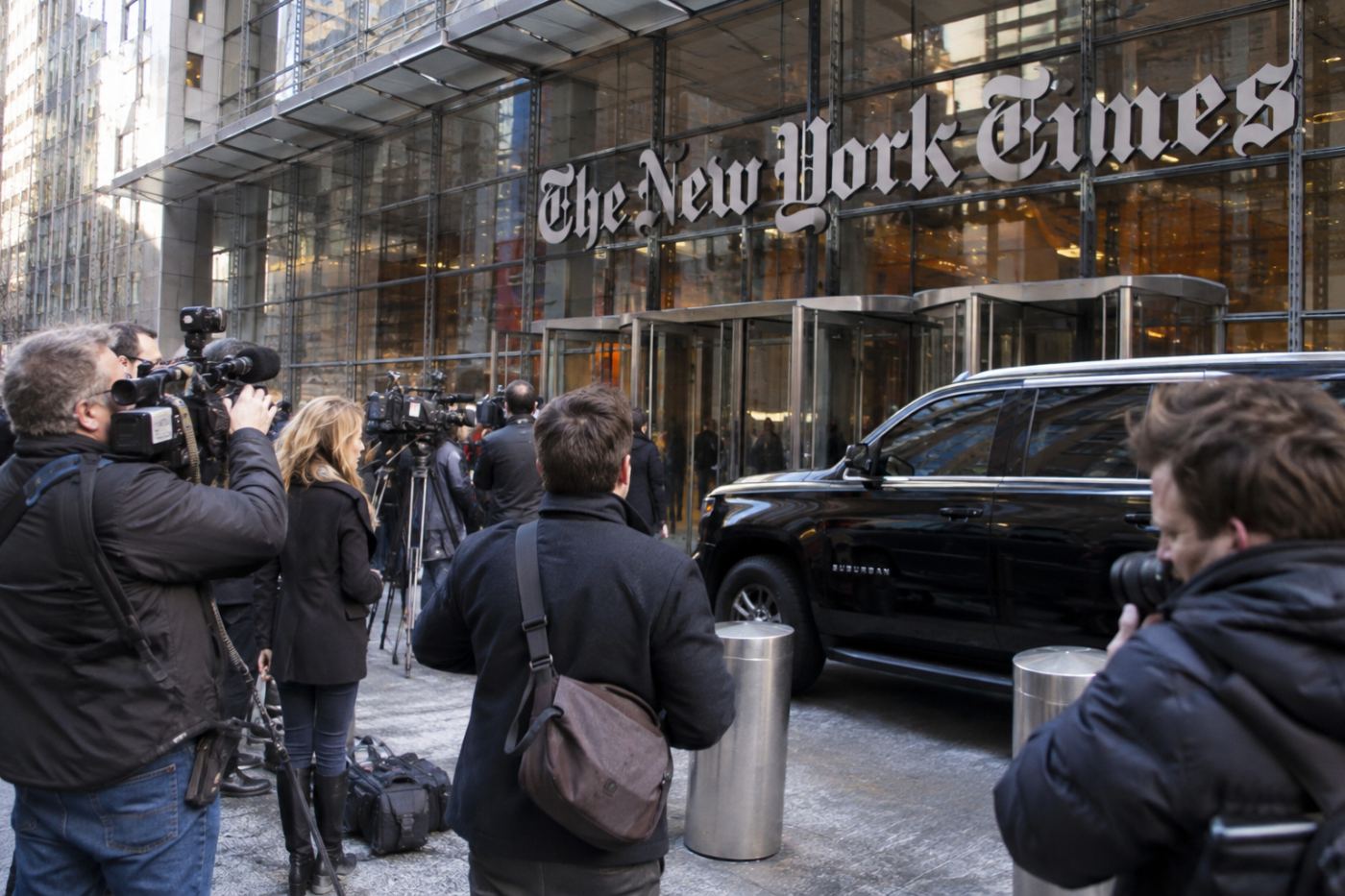
Donald Trump had not yet taken office, but his confrontational relationship with the American press was already producing extraordinary scenes.
On November 22, 2016, the president-elect abruptly canceled a scheduled meeting with The New York Times, publicly attacked the newspaper's credibility, and accused its journalists of changing the meeting's conditions.
There was just one problem.
The newspaper disputed his account, saying Trump's own representatives had attempted to change the agreement.
Within hours, Trump reversed himself and attended the meeting anyway.
A Presidential Meeting Canceled on Twitter
The confrontation began early Tuesday morning when Trump announced on Twitter that he was canceling his planned meeting with the newspaper.
He claimed that the terms of the discussion had been changed at the last moment.
Trump then attacked the publication, accusing it of inaccurate coverage and a hostile tone.
The New York Times responded that its representatives had not changed the agreement.
According to the newspaper, the original arrangement called for a brief private meeting with its publisher followed by an on-the-record discussion with reporters, editors, and columnists.
The Times said Trump's representatives had sought to eliminate the public portion and conduct the entire meeting privately.
The newspaper refused.
Its spokeswoman, Eileen Murphy, said the organization had not even known the meeting was canceled until Trump's announcement appeared on Twitter.
Trump Attacks the Newspaper's Credibility
Rather than resolve the disagreement privately, Trump continued criticizing the newspaper on social media.
He described the Times as a failing publication and suggested that complaints about its journalism were reaching extraordinary levels.
The attacks followed months of campaign rhetoric in which Trump regularly accused major news organizations of dishonesty and unfair treatment.
The president-elect was also facing scrutiny over his international business interests and questions about potential conflicts of interest.
The Times had reported on those issues, including Trump's overseas properties and interactions with foreign political figures.
Trump rejected suggestions that his business interests presented a serious problem, accusing the media of exaggerating the controversy.
Hours Later, the Meeting Is Back On
Despite the public confrontation, the cancellation proved temporary.
By midmorning, Trump's representatives informed the newspaper that the meeting would proceed.
The original arrangement remained intact: a private discussion with the publisher followed by an on-the-record session with journalists.
Trump subsequently announced that he was looking forward to the meeting.
The sudden reversal turned what should have been a routine discussion between an incoming president and a major newspaper into a national news story.
The meeting eventually took place at the Times' Manhattan headquarters.
From Hostility to Praise
The encounter produced another striking contrast.
After spending the morning attacking the newspaper, Trump spoke more favorably about the institution during the meeting.
He described the Times as an important American institution and discussed his desire for a better relationship with the publication.
The discussion also covered several major policy questions.
Trump indicated that he did not intend to pursue the prosecution of Hillary Clinton, despite his campaign rhetoric.
He expressed a willingness to consider evidence concerning climate change and discussed his international business interests.
He also condemned extremist groups that had celebrated his election.
The substantive discussion demonstrated that Trump was capable of engaging with journalists even after publicly criticizing their organization.
But the events leading up to the meeting illustrated the volatility of his relationship with the press.
A Preview of Four Years of Confrontation
The episode came one day after Trump met privately with television news executives and prominent journalists at Trump Tower.
During that meeting, according to participants quoted in contemporary reporting, he complained about coverage he considered unfair and dishonest.
His confrontation with The New York Times extended that dispute into public view.
Presidents have frequently disagreed with journalists, challenged inaccurate reporting, and criticized editorial decisions.
But Trump's approach combined personal attacks, public accusations, and rapid reversals in ways that attracted unusual attention during the presidential transition.
His supporters viewed the confrontations as evidence that he was willing to challenge powerful media institutions.
Critics argued that repeatedly attacking news organizations risked undermining public confidence in independent journalism.
An Early Warning About Trump's Relationship With the Press
November 22, 2016, became an early example of the turbulent relationship between Trump and the journalists responsible for covering his presidency.
The documented sequence was straightforward.
Trump announced that he was canceling a meeting.
He blamed the newspaper for changing the conditions.
The newspaper denied the accusation and said Trump's representatives had sought the changes.
Then Trump attended the meeting under the original arrangement.
The episode did not establish that every criticism Trump made of the media was unfounded.
It did demonstrate how quickly an ordinary disagreement could become a public confrontation involving the incoming president.
Before Trump had even entered the White House, his relationship with the press was already becoming a defining feature of his political leadership.