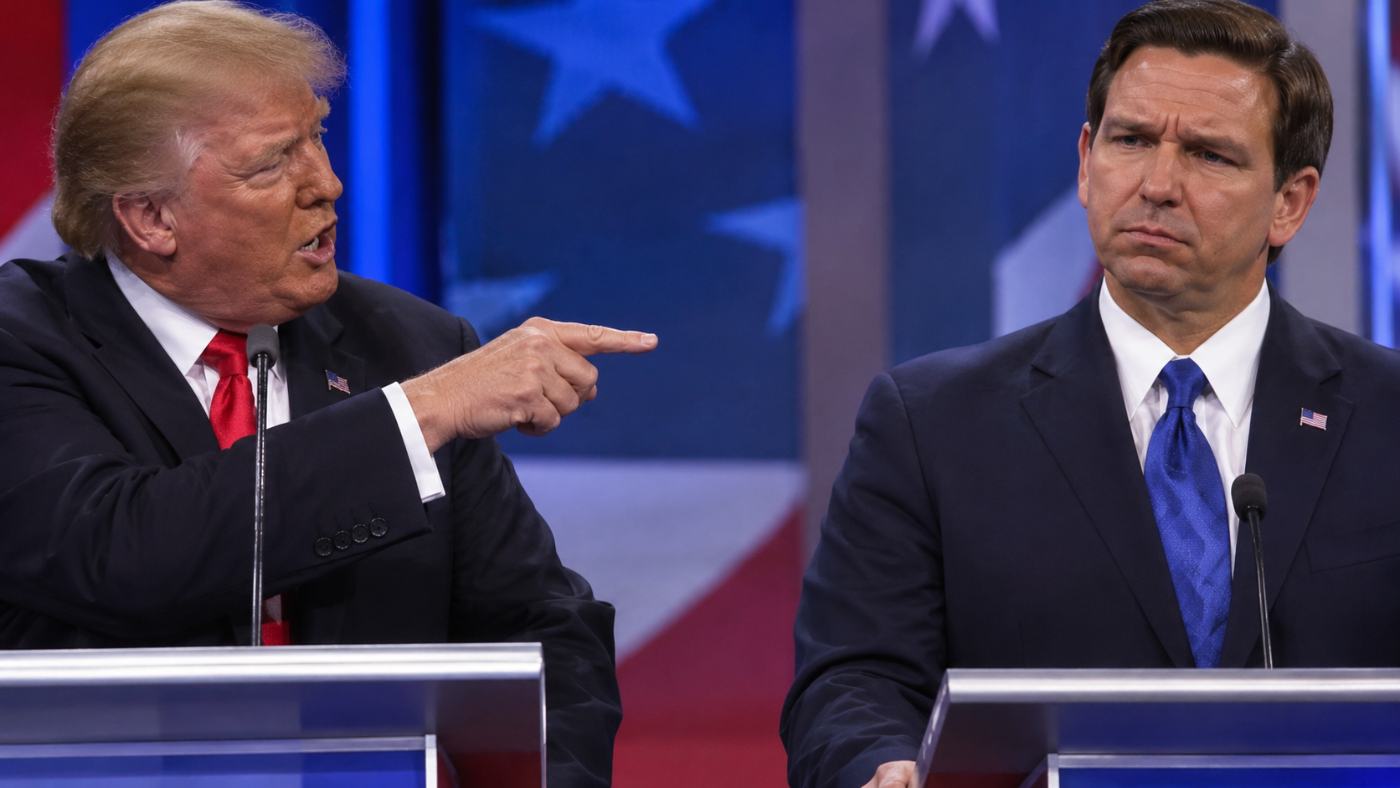
Former President Donald Trump has launched a blistering public attack against Florida Governor Ron DeSantis, criticizing his political accomplishments, questioning his loyalty, and reviving a mocking nickname just two days after DeSantis secured a landslide reelection victory.
The extraordinary attack comes as Republicans struggle to explain disappointing midterm election results and growing questions emerge about Trump's continued influence over the party.
DeSantis defeated Democratic challenger Charlie Crist by nearly 20 percentage points Tuesday, strengthening his national profile and fueling speculation that he could challenge Trump for the 2024 Republican presidential nomination.
Trump appears unwilling to let that possibility go unanswered.
Trump Takes Credit for DeSantis' Career
In a lengthy statement Thursday evening, Trump described DeSantis as an average Republican governor whose political success was largely attributable to favorable publicity.
He argued that DeSantis owed his political career to Trump's endorsement during the 2018 Republican gubernatorial primary.
According to Trump, DeSantis was struggling against Agriculture Commissioner Adam Putnam before seeking his support.
Trump claimed his endorsement transformed the race and helped DeSantis secure the nomination.
The former president also repeated his newly introduced nickname, “Ron DeSanctimonious,” which he first used during a Pennsylvania campaign rally on November 5.
The criticism represents a sharp change in tone toward a governor Trump previously supported and publicly praised.
A Demand for Political Loyalty
Trump's central complaint appears to involve DeSantis' refusal to rule out a presidential campaign against him.
When questioned about his political future, DeSantis has generally maintained that he is focused on governing Florida rather than discussing the 2024 election.
Trump rejected that explanation.
He argued that DeSantis should demonstrate greater loyalty by making clear whether he intends to challenge the former president.
The confrontation highlights an increasingly visible conflict within Republican politics: whether Trump's past endorsement should obligate another Republican leader to step aside in a future presidential contest.
DeSantis has not publicly responded to Thursday's attack.
Republican Midterm Disappointments Fuel Tensions
The dispute follows an election in which Republicans failed to achieve the sweeping victories many party leaders had anticipated.
Several prominent Trump-backed candidates suffered defeats, including Mehmet Oz in Pennsylvania's Senate race and Tudor Dixon in Michigan's gubernatorial contest.
Meanwhile, DeSantis won decisively in Florida, carrying traditionally competitive areas and strengthening his reputation among conservatives.
Some Republican commentators and strategists are questioning whether Trump's influence helped or hindered the party's performance.
Conservative media outlets have also begun highlighting DeSantis as a possible alternative to Trump.
Rather than concentrating exclusively on the election results, Trump has responded by attacking both the governor and media organizations giving him favorable attention.
Trump Turns on Conservative Media
Trump's statement also criticized Fox News and other conservative publications, accusing them of promoting DeSantis while undermining his own political standing.
The attacks follow critical commentary in the Wall Street Journal and New York Post about Trump's role in the midterm elections.
Trump has repeatedly suggested that unfavorable coverage reflects coordinated opposition to his political ambitions, without providing evidence of such coordination.
The dispute illustrates how quickly the relationship between Trump and portions of the conservative media has deteriorated following Tuesday's results.
A Republican Rivalry Takes Shape
Trump has promised a major announcement at Mar-a-Lago on November 15, widely expected to concern another presidential campaign.
DeSantis has not announced any plans to seek the White House.
Nevertheless, Trump's increasingly personal attacks suggest he already regards the Florida governor as a significant political rival.
For Republicans attempting to regroup after disappointing midterm results, the confrontation introduces another challenge: an emerging leadership dispute that could dominate the party's next presidential nomination contest.
What began as a political alliance is now developing into an increasingly public confrontation over loyalty, influence, and the Republican Party's future.