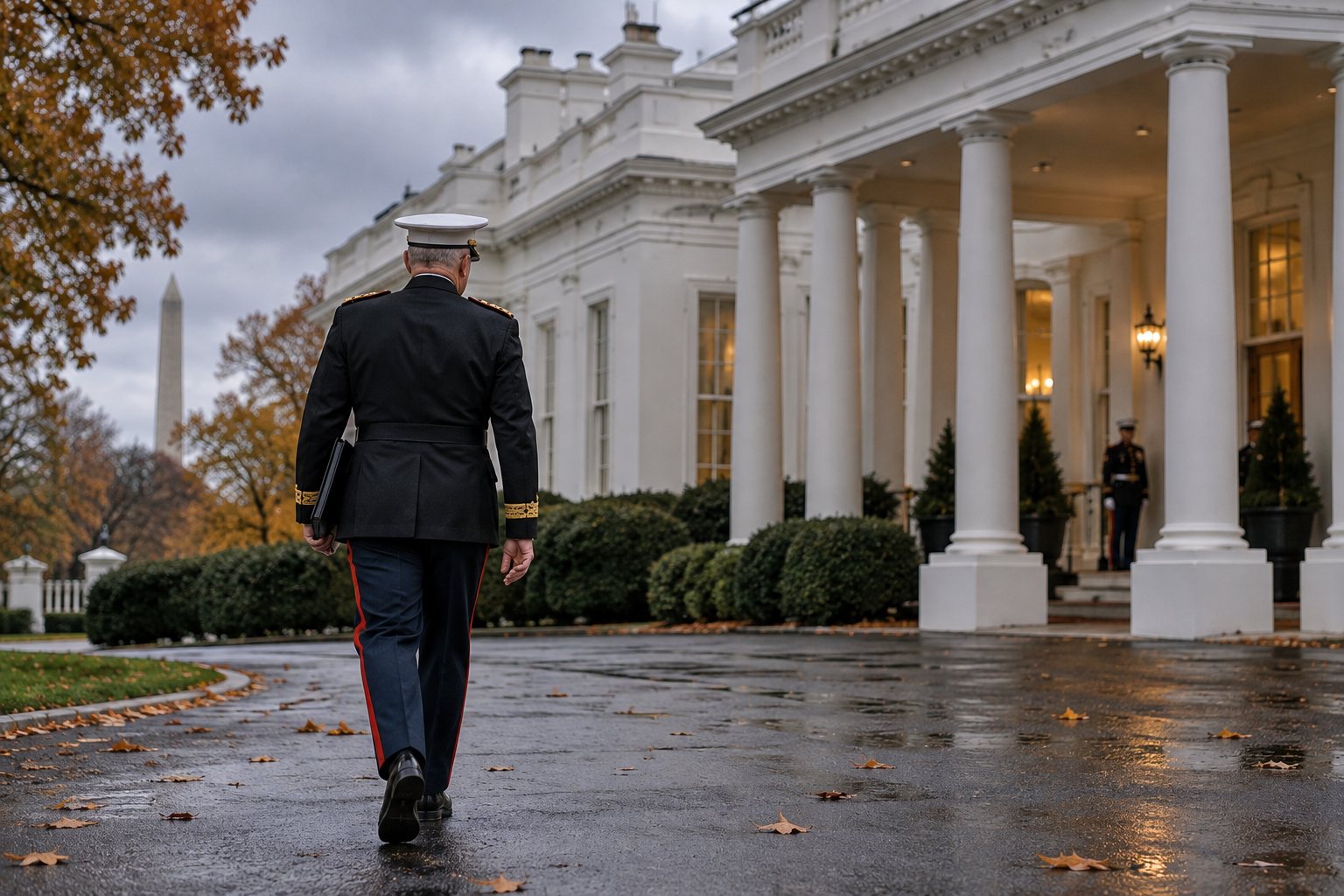
Former President Donald Trump lashed out Wednesday at retired Marine Corps General John Kelly, his former White House chief of staff, after the decorated military veteran publicly described Trump's alleged admiration for Adolf Hitler and his desire for generals who would demonstrate unquestioning personal loyalty.
Rather than addressing the constitutional concerns raised by Kelly, Trump attacked the retired four-star general's character, calling him a "LOWLIFE" and a "bad General."
The confrontation comes less than two weeks before the presidential election and follows extraordinary warnings from a man who served alongside Trump inside the White House for nearly 18 months.
Trump Turns on His Former Chief of Staff
In a lengthy Truth Social statement Wednesday evening, Trump accused Kelly of fabricating stories about their time working together.
Trump described his former chief of staff as a disgruntled individual whose supposed toughness had deteriorated into weakness.
He also disputed allegations about his treatment of American service members, insisting that Kelly's accounts were false.
The attacks represent another public confrontation between Trump and a senior official he personally selected for a position of enormous responsibility.
Kelly served as Trump's secretary of homeland security before becoming White House chief of staff in July 2017.
He remained in that position until January 2019.
Now, the former president is publicly attacking the credibility and military record of a man he once entrusted with helping run his administration.
Kelly Says Trump Admired Hitler's Generals
The dispute erupted following interviews published Tuesday by The Atlantic and The New York Times.
Kelly told The Atlantic that Trump had expressed frustration with American military commanders who would not demonstrate the kind of personal loyalty he expected.
According to Kelly, Trump said he wanted generals like those who served Nazi Germany.
Kelly recalled challenging the former president about whether he was referring specifically to Adolf Hitler's generals.
Trump, according to Kelly, confirmed that he was.
The retired Marine general also told The New York Times that Trump had made favorable remarks about Hitler on multiple occasions.
Kelly said he challenged those statements when they occurred.
Trump's campaign denies the allegations.
A Decorated Marine General Raises the Alarm
Kelly's accusations are particularly significant because of his military background and proximity to Trump.
The retired four-star Marine served more than four decades in uniform, including combat deployments and senior command assignments.
He eventually led United States Southern Command before retiring from the military.
Kelly also experienced the loss of a child in military service. His son, Marine First Lieutenant Robert Kelly, was killed in Afghanistan in 2010.
His military career and personal sacrifice provide important context for his public warnings about Trump's attitude toward service members and military leadership.
Kelly is not an outside observer speculating about what happened inside the White House.
He was there.
His allegations concern conversations he says he personally witnessed.
The Constitution Versus Personal Loyalty
At the center of Kelly's warnings is the distinction between loyalty to the Constitution and loyalty to an individual president.
American military officers swear an oath to support and defend the Constitution of the United States.
They are obligated to obey lawful orders, not every personal demand made by a commander in chief.
Kelly has described Trump as an authoritarian figure who admires dictators and struggles with constitutional limits on presidential authority.
In his interview with The New York Times, Kelly said Trump fits the general definition of a fascist.
That is Kelly's assessment, and Trump's campaign strongly rejects it.
Nevertheless, the accusation raises a serious question about what Trump expects from the military if he returns to the White House.
Other Former Military Leaders Have Raised Concerns
Kelly is not alone among Trump's former senior military advisers in publicly criticizing his leadership.
Retired Marine General James Mattis, who served as Trump's secretary of defense, criticized the former president in 2020 for dividing Americans and undermining constitutional principles.
Retired Army General Mark Milley, Trump's former chairman of the Joint Chiefs of Staff, has also expressed concerns about Trump's authoritarian tendencies.
These are individuals who held some of the highest military and national security positions in the United States government.
Their criticisms do not establish the truth of every allegation against Trump.
But they demonstrate that significant disagreements about presidential authority and military obligations have emerged among officials who served directly under him.
Harris Responds to Kelly's Warning
Vice President Kamala Harris addressed Kelly's allegations Wednesday, arguing that his comments reinforce concerns about Trump's approach to power.
Harris warned that a second Trump administration might lack senior officials willing to challenge presidential decisions they considered dangerous or unlawful.
During a CNN town hall Wednesday evening, Harris agreed with Kelly's characterization of Trump as a fascist.
Trump and his campaign reject that characterization and maintain that Kelly's allegations are politically motivated.
The controversy has become a prominent issue in the closing days of the presidential campaign.
Trump Attacks the Messenger
Trump's response to Kelly follows a familiar pattern in his disputes with former administration officials.
When former aides publicly criticize his conduct, Trump frequently responds by questioning their competence, loyalty, or character.
In this instance, the target is a retired four-star Marine general who served in the military for decades and later worked as Trump's White House chief of staff.
Kelly's allegations concern whether Trump sought personal obedience from military commanders and expressed admiration for the generals of one of history's most notorious dictators.
Trump's response has largely focused on discrediting Kelly himself.
The competing accounts remain disputed.
But the underlying constitutional issue is unmistakable: American military commanders are expected to serve the country and obey lawful civilian authority, not pledge unconditional personal loyalty to a president.
As voters prepare for the November election, Kelly's warnings and Trump's response have brought that distinction into sharp public focus.
The former chief of staff says he witnessed a president who admired authoritarian power.
The former president says the general is lying.
And the American public is left to evaluate the competing accounts of two men who once worked together at the highest levels of government.