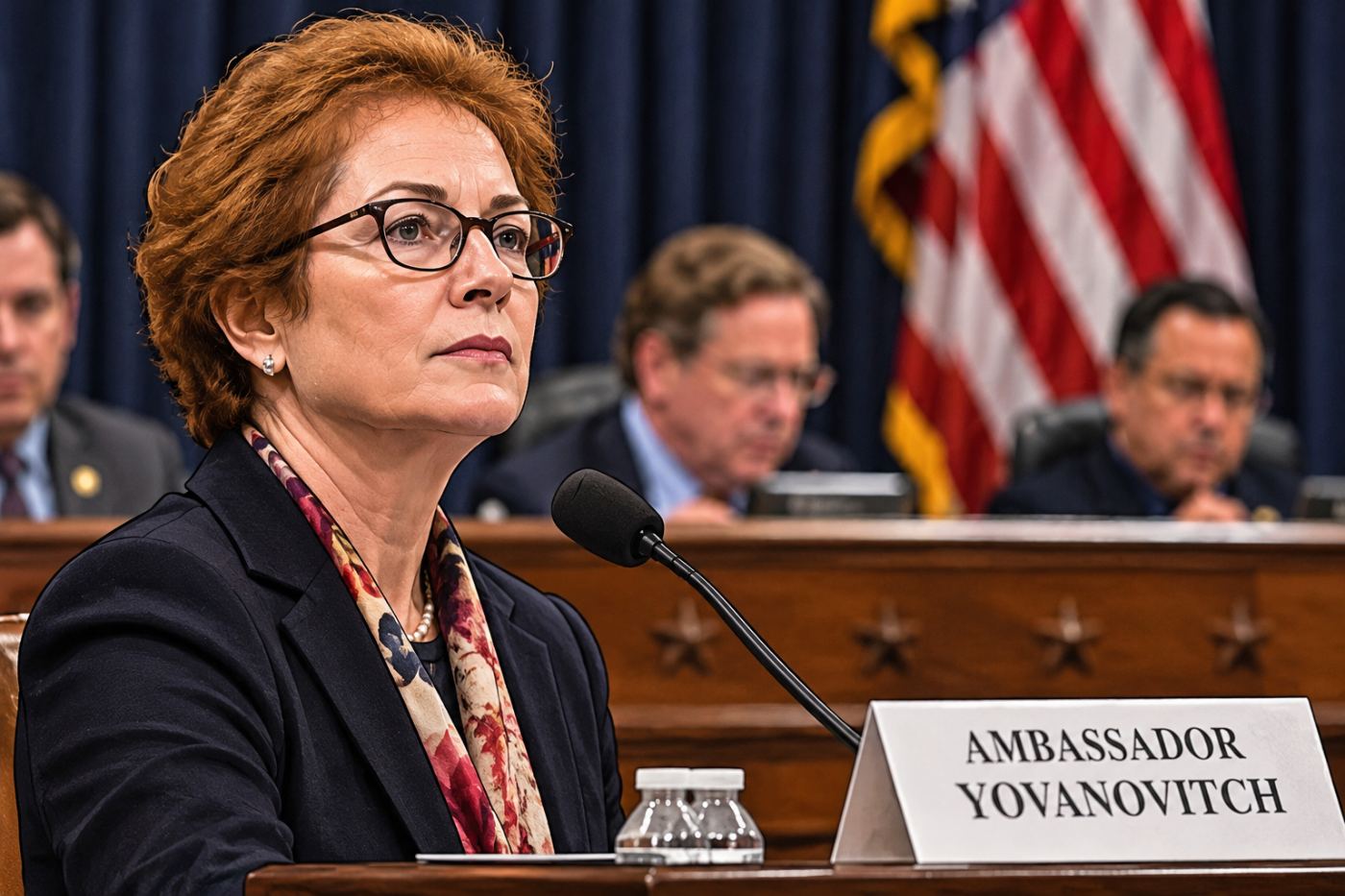
President Donald Trump sparked a new controversy Friday when he publicly attacked former U.S. Ambassador to Ukraine Marie Yovanovitch on Twitter while she was testifying before Congress in the impeachment inquiry against him.
The extraordinary confrontation unfolded in real time, with House Intelligence Committee Chairman Adam Schiff reading the president's remarks aloud to the witness and raising concerns about possible witness intimidation.
Yovanovitch, a career diplomat with more than three decades of government service, was describing the campaign that led to her removal from Ukraine when Trump began criticizing her diplomatic record.
The President Attacks a Witness
As Yovanovitch testified, Trump posted a message claiming that conditions deteriorated wherever she served.
He specifically referenced her diplomatic assignments in Somalia and Ukraine before asserting his authority to appoint and dismiss ambassadors.
The president's comments immediately drew attention because they targeted a witness actively participating in a congressional investigation of his administration.
Schiff interrupted the proceedings to read Trump's remarks aloud.
He then asked Yovanovitch what effect such statements might have on witnesses considering whether to testify about government misconduct.
Yovanovitch described the president's comments as intimidating.
Although she declined to speculate about Trump's intentions, she acknowledged that his public criticism could discourage witnesses from coming forward.
Schiff warned that allegations of witness intimidation would be taken seriously.
A Diplomat Describes Her Treatment
Earlier in her testimony, Yovanovitch described how political attacks and unsupported allegations contributed to her abrupt recall from Ukraine.
She testified that Rudy Giuliani, Trump's personal attorney, had participated in efforts to undermine her reputation.
The former ambassador also addressed Trump's July 25 telephone conversation with Ukrainian President Volodymyr Zelensky.
During that conversation, Trump criticized Yovanovitch and suggested that she would face unspecified difficulties.
Yovanovitch told lawmakers that she interpreted those remarks as threatening.
Her testimony raises questions about the treatment of career diplomats who become targets of political campaigns.
Trump Claims Freedom of Speech
The president rejected accusations that his tweets constituted intimidation.
Speaking to reporters later Friday, Trump defended his right to criticize the former ambassador and insisted that he was entitled to express his opinions.
White House Press Secretary Stephanie Grisham also denied that the messages amounted to witness intimidation, describing them as the president's personal views.
Republicans have emphasized that presidents possess broad authority to remove ambassadors and have challenged the legitimacy of the impeachment investigation.
However, the controversy surrounding Friday's tweets involves a separate question: whether a president should publicly attack a witness while that person is testifying in an investigation concerning his conduct.
Even Republicans Express Concern
The president's decision drew criticism beyond congressional Democrats.
Kenneth Starr, the former independent counsel who investigated President Bill Clinton, questioned Trump's judgment during an appearance on Fox News.
Starr described the attack as harmful to the president's position, although he disputed that it legally constituted witness intimidation.
The episode has given Democrats another issue to examine as they consider the evidence supporting potential articles of impeachment.
A New Question for the Impeachment Inquiry
The investigation already concerns allegations that Trump used presidential authority to pressure Ukraine into announcing politically advantageous investigations.
Friday's confrontation introduces another controversy involving the president's treatment of individuals providing testimony to Congress.
Whether Trump's public criticism meets the legal definition of witness intimidation remains disputed.
But the incident has created an unusual spectacle: a sitting American president attacking a witness while the country watches her testify in an impeachment investigation.
The question now facing Congress is not simply what happened in Ukraine, but whether witnesses can testify about presidential conduct without becoming targets of the president himself.