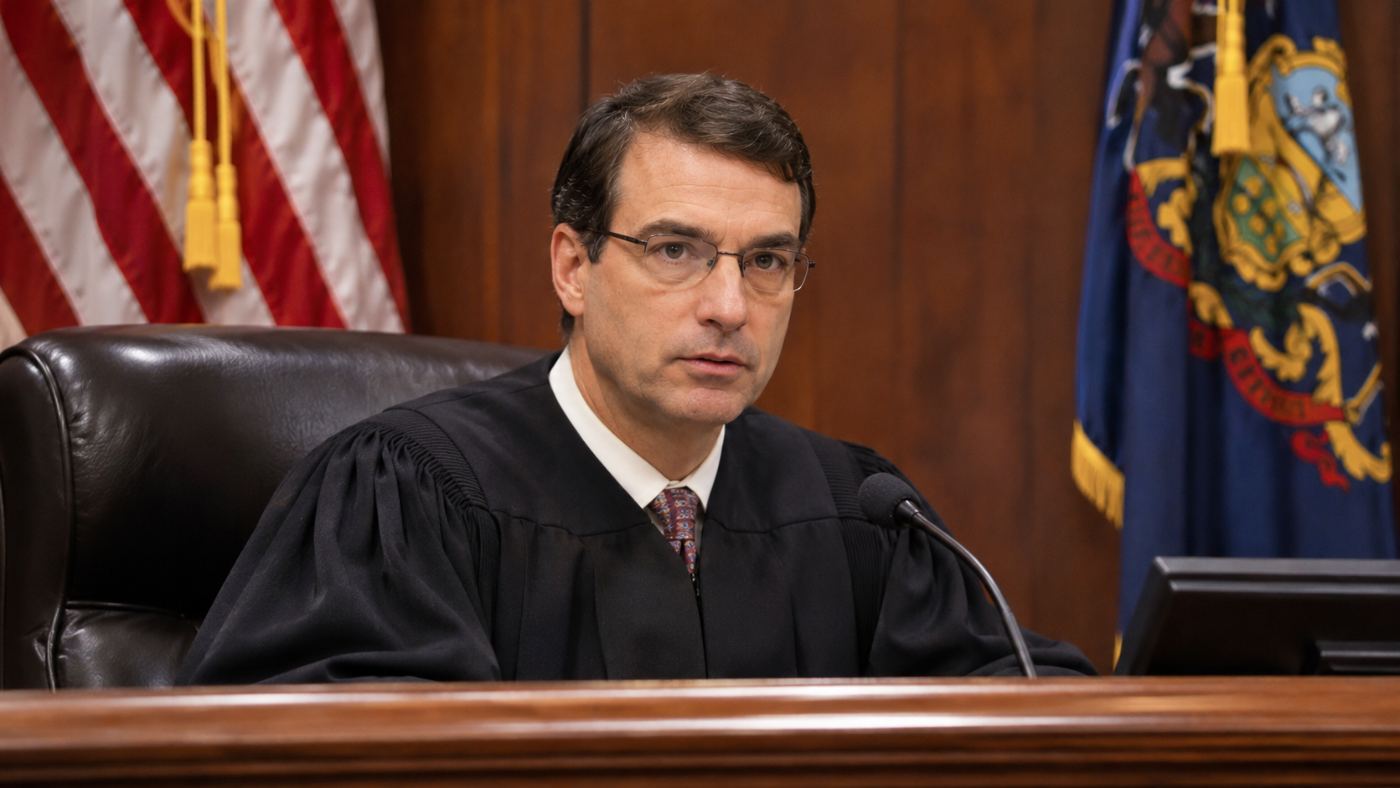
President Donald Trump's efforts to overturn the 2020 presidential election suffered another major legal defeat on November 27, 2020, when a federal appeals court unanimously rejected his campaign's challenge to Pennsylvania's election results. The ruling was particularly significant because it was written by Judge Stephanos Bibas, whom Trump himself had appointed to the federal bench.
The three-judge panel of the U.S. Court of Appeals for the Third Circuit rejected the campaign's attempt to revive its lawsuit, finding that its allegations lacked the factual and legal foundation necessary to proceed.
The decision delivered a clear message: accusations alone were not sufficient to overturn an American election.
"Charges require specific allegations and then proof. We have neither here," Bibas wrote.
The ruling came as Trump continued insisting that widespread voter fraud had cost him reelection, despite the absence of credible evidence supporting claims of fraud sufficient to change the outcome.
Pennsylvania had certified Joe Biden's victory just four days earlier. Biden defeated Trump in the state by more than 80,000 votes, securing Pennsylvania's 20 electoral votes.
Trump's legal team had challenged aspects of Pennsylvania's election procedures, including restrictions on poll watchers and the handling of mail-in ballots with technical deficiencies.
The campaign argued that different counties had applied election procedures inconsistently, violating constitutional protections.
However, the judges found that the campaign had failed to establish that Trump voters or Republican observers had been treated differently from their Democratic counterparts in a manner that supported its constitutional claims.
The case also exposed a striking contradiction between Trump's public accusations and his campaign's legal arguments.
Although Trump repeatedly alleged massive election fraud, his attorneys acknowledged in the lower court that their lawsuit was not actually alleging fraud.
The appeals court specifically highlighted that distinction, noting that attorney Rudy Giuliani had acknowledged the absence of a fraud claim in the case.
The campaign's appeal focused on whether the lower court had improperly refused permission to amend its complaint again. The appeals judges concluded that the proposed changes would not remedy the lawsuit's fundamental deficiencies.
The panel consisted of three judges appointed by Republican presidents, including Bibas, a Trump appointee confirmed in 2017.
That composition was significant because Trump and his supporters frequently portrayed unfavorable election rulings as products of partisan opposition.
In this case, judges appointed by presidents from Trump's own party rejected the campaign's arguments based on established legal standards.
The decision followed an earlier dismissal by U.S. District Judge Matthew Brann, who had criticized the campaign's complaint for its lack of supporting evidence and legal justification.
Trump's legal team nevertheless continued pursuing challenges, maintaining that the election had been compromised.
Campaign representatives criticized the judicial decisions and indicated they would seek further review.
But the November 27 ruling reinforced a pattern emerging across the country: Trump's public claims of widespread election fraud were not being substantiated in court.
Judges repeatedly required specific allegations, admissible evidence, and legally sufficient arguments rather than political accusations or speculation.
The distinction was crucial.
American elections are administered through established procedures, including vote counting, certification, recounts, audits, and judicial review. Candidates have the right to challenge irregularities, but overturning certified results requires a substantial legal and evidentiary basis.
The Trump campaign had not established such a basis in its Pennsylvania lawsuit.
Despite these defeats, Trump continued challenging the election results throughout December.
His campaign and allies pursued additional lawsuits, pressured state officials, and attempted to prevent Biden's victory from being formally recognized.
The Electoral College confirmed Biden's victory on December 14, 2020, with 306 electoral votes to Trump's 232.
Nevertheless, Trump continued insisting that the election had been stolen.
Those allegations became central to the events of January 6, 2021, when Trump supporters attacked the United States Capitol as Congress gathered to certify the Electoral College results.
The November 27 decision remains an important part of the historical record because it demonstrated that Trump's election challenges were evaluated and rejected by judges regardless of which president had appointed them.
It also established a fundamental distinction between alleging election misconduct and proving it.
Trump's campaign had access to the courts and an opportunity to present its arguments. The judges reviewed those arguments and found them legally insufficient.
The ruling stands as a documented example of the judiciary refusing to overturn election results without the evidence and legal grounds required by American law.