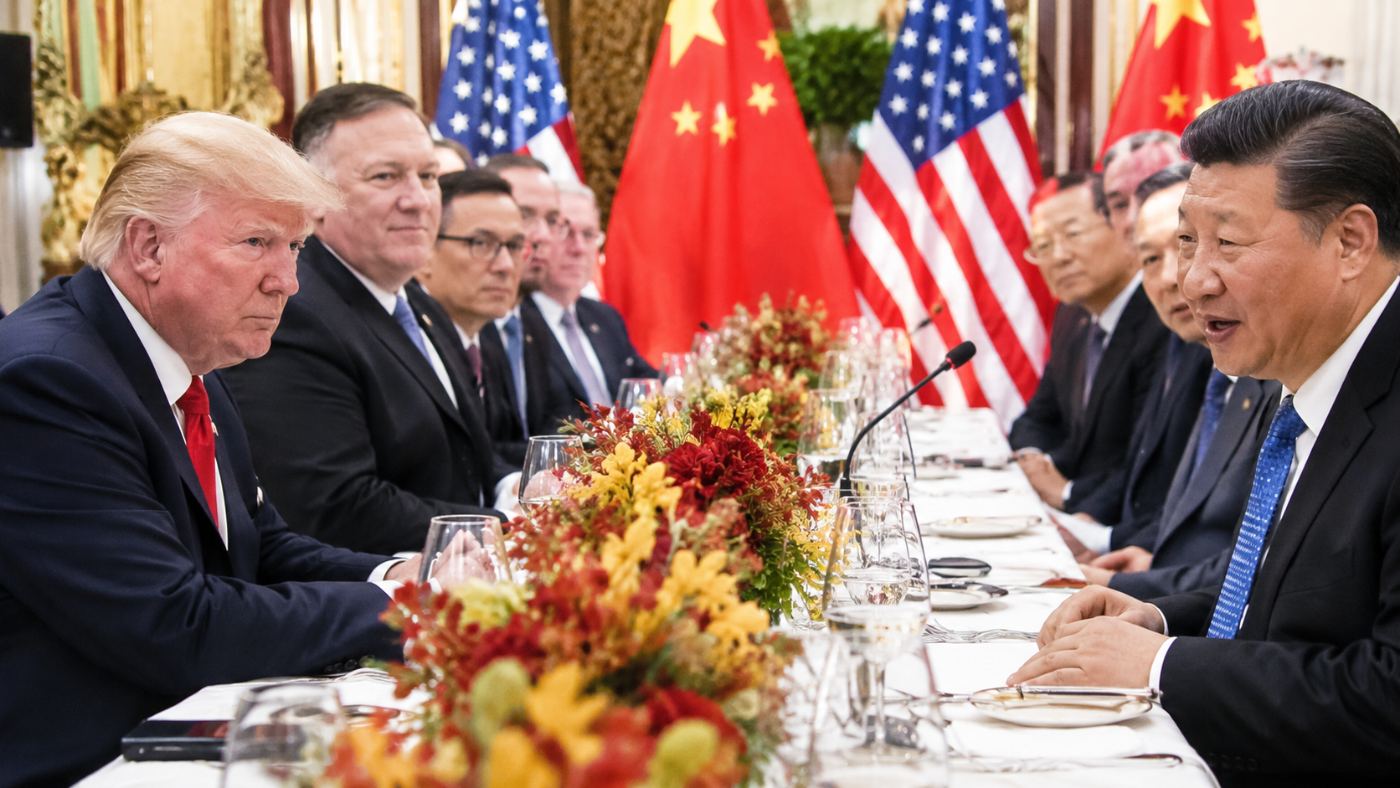
On December 1, 2018, President Donald Trump announced a temporary ceasefire in his escalating trade war with China following a meeting with Chinese President Xi Jinping at the G20 summit in Buenos Aires, Argentina.
The agreement suspended a planned increase in American tariffs on approximately $200 billion worth of Chinese imports, giving both countries 90 days to negotiate a broader trade agreement.
Although Trump celebrated the announcement as a diplomatic achievement, the agreement did not eliminate existing tariffs or resolve the underlying trade dispute.
It was a temporary pause in an economic confrontation that had already disrupted international commerce.
Months of Escalating Tariffs
Throughout 2018, Trump imposed tariffs on Chinese imports, arguing that China engaged in unfair trade practices, intellectual property theft, and forced technology transfers.
China responded with retaliatory tariffs targeting American exports, including agricultural products.
American soybean farmers were particularly vulnerable because China had been one of their largest international customers.
The escalating dispute created uncertainty for manufacturers, agricultural producers, retailers, and businesses dependent on international supply chains.
Trump maintained that tariffs would pressure China into accepting more favorable trade terms.
Critics warned that American importers paid the tariffs directly and that businesses could pass those additional costs along to consumers.
A 90-Day Agreement in Argentina
Following a working dinner on December 1, the White House announced that Trump would postpone increasing tariffs on $200 billion in Chinese goods from 10% to 25%.
The increase had originally been scheduled for January 1, 2019.
In exchange, China agreed in principle to increase purchases of American agricultural, energy, and industrial products.
However, the White House acknowledged that the quantities had not yet been negotiated.
Both countries also agreed to discuss intellectual property protections, technology transfers, cybersecurity, and other longstanding trade disagreements.
The administration established a 90-day negotiating period, with higher tariffs remaining a possibility if discussions failed.
Trump Celebrates an Unfinished Deal
Trump described the meeting as productive and expressed optimism about the possibility of a comprehensive agreement.
But the announcement contained few binding details.
There was no finalized purchase agreement, no established timetable for major structural reforms, and no permanent resolution of the tariff dispute.
The truce prevented an immediate escalation but left the existing trade barriers largely intact.
For American businesses, the announcement provided temporary relief without resolving the uncertainty surrounding future costs.
The Trade War Resumes
The temporary agreement failed to produce a comprehensive settlement within the original 90-day period.
Negotiations continued into 2019, but disagreements over enforcement, technology policy, and trade commitments remained unresolved.
In May 2019, Trump followed through on his earlier threat, increasing tariffs on approximately $200 billion in Chinese imports from 10% to 25%.
China responded with additional retaliatory measures.
American agricultural exporters continued experiencing disrupted sales, while manufacturers and retailers faced higher import costs.
The Trump administration authorized billions of dollars in federal assistance for farmers affected by retaliatory tariffs.
A Temporary Pause, Not a Lasting Resolution
The United States and China eventually signed a limited Phase One trade agreement in January 2020.
However, many tariffs remained in place, and the agreement did not resolve every structural dispute between the two economies.
The December 1, 2018, announcement demonstrated both the possibility of negotiations and the limitations of temporary tariff agreements.
Trump had paused an escalation that his administration itself had scheduled, but the underlying conflict continued.
For American farmers, manufacturers, importers, and consumers, the economic consequences extended well beyond the 90-day truce.
The agreement remains an important chapter in the history of Trump's trade policies and the prolonged economic confrontation between the United States and China.