Americans are heading into an uncertain election night as President Donald Trump and Democratic challenger Joe Biden battle for the White House, with millions of ballots still awaiting tabulation and several critical battleground states too close to call.
The election is unfolding amid the COVID-19 pandemic, record-breaking early voting, and widespread concerns about how long it will take to determine a winner.
Although results are emerging across the country, neither candidate has secured the 270 Electoral College votes required to win the presidency.
With enormous numbers of mail-in ballots still being processed, election officials are warning that a final result may not be available tonight.
Battleground States Remain Undecided
The outcome is increasingly focused on Pennsylvania, Michigan, Wisconsin, Georgia, North Carolina, and Arizona, where the remaining votes could determine the next president.
Trump is showing strength in several states he carried in 2016, including Florida and Ohio, while Biden is seeking to rebuild Democratic support in the industrial Midwest.
Early returns show Trump leading in Pennsylvania, Michigan, and Wisconsin, but those numbers do not include all outstanding absentee and mail-in ballots.
In several states, election laws prevent officials from beginning to process or count mail ballots until Election Day, creating delays in reporting results.
Election experts caution that early leads can change significantly as different categories of ballots are counted.
Mail-In Voting Takes Center Stage
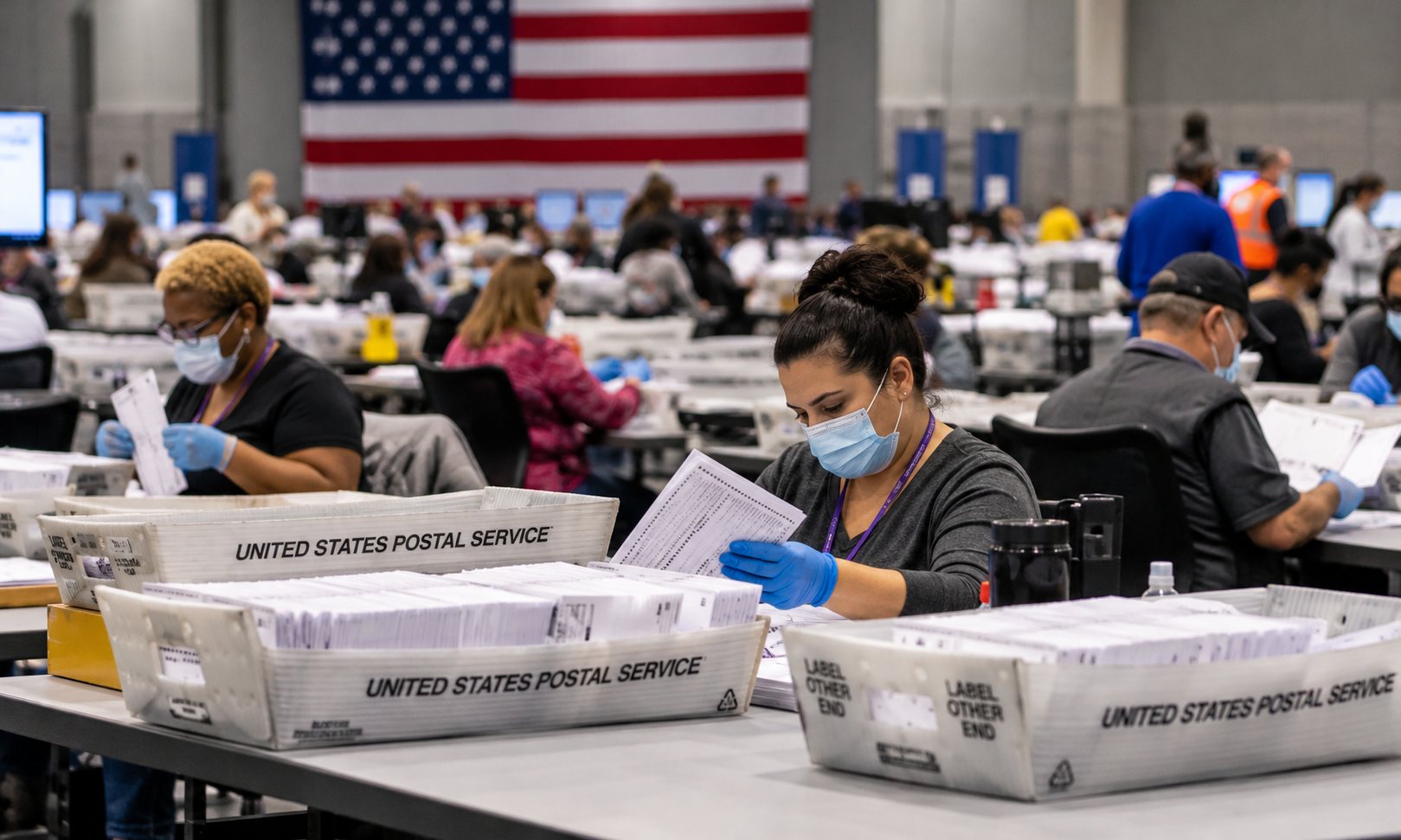
The coronavirus pandemic has dramatically changed how Americans are voting, with millions choosing to cast ballots by mail rather than visit polling locations.
Democrats have encouraged mail-in voting, while Trump has repeatedly criticized the practice and raised concerns about potential fraud.
The president has spent months warning that widespread mail voting could undermine the election, despite the absence of evidence supporting claims that it produces widespread fraudulent ballots.
Election officials emphasize that properly submitted mail ballots are legitimate votes and must be counted according to state law.
The unusually large volume of absentee ballots means some states could require additional days to complete their counts.
The delay itself is not evidence of misconduct. Election results are routinely finalized after Election Day, even when news organizations are able to project winners earlier.
Trump Questions the Election Process
Throughout the campaign, Trump has repeatedly suggested that an election result delayed by mail-in voting could be illegitimate.
His statements have raised concerns among election officials and voting-rights advocates that he could challenge the outcome before all legally cast ballots are counted.
The president has also indicated that his campaign is prepared to pursue legal challenges involving election procedures.
Biden, meanwhile, has emphasized the importance of counting every ballot and allowing the established election process to determine the winner.
Both campaigns have assembled legal teams to monitor voting procedures and respond to disputes in closely contested states.
A Nation Awaits the Results
Beyond the presidential race, Americans are also voting in congressional contests that will determine control of the Senate and House of Representatives.
The election follows a deeply divisive campaign dominated by the pandemic, the economy, racial justice protests, health care, and questions about presidential leadership.
Election officials across the country are continuing to process ballots under intense public scrutiny, while Americans watch electoral maps and await updates from the remaining states.
For now, the central fact remains unchanged: neither Trump nor Biden has secured the presidency.
Millions of votes still need to be counted, and the final outcome will depend on those ballots—not simply on which candidate appears ahead on election night.