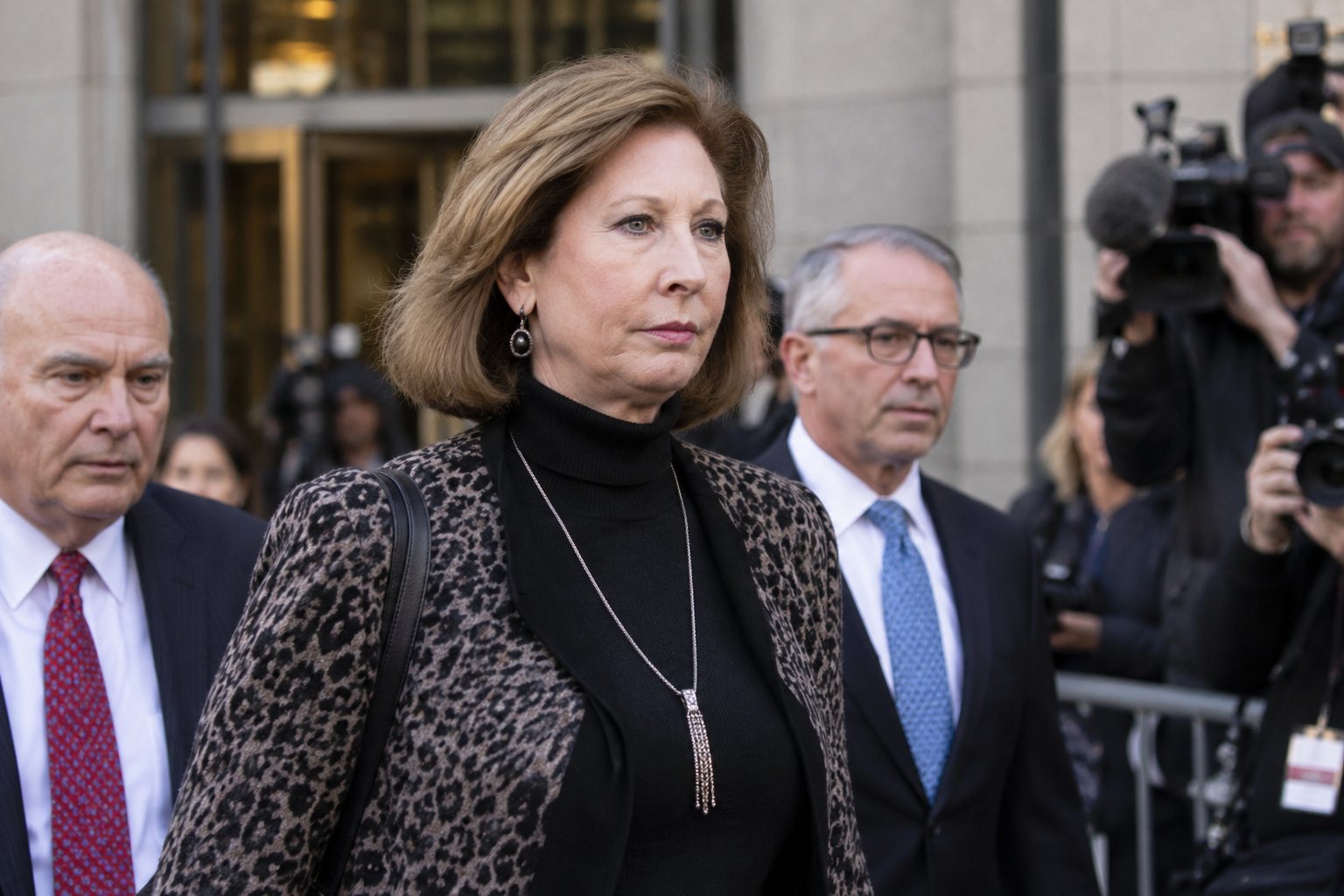
In a major development in the criminal investigation into efforts to overturn the 2020 presidential election, attorney Sidney Powell, one of Donald Trump's most prominent allies in promoting false claims of widespread voter fraud, pleaded guilty Thursday to six criminal charges in Georgia and agreed to testify truthfully against her former co-defendants.
Powell's guilty plea represents a significant victory for Fulton County District Attorney Fani Willis, whose sweeping election-interference prosecution accuses Trump and 18 others of participating in a criminal enterprise designed to reverse President Joe Biden's legitimate victory in Georgia.
The Texas attorney, who became nationally known for promoting conspiracy theories about voting machines and stolen ballots, accepted a plea agreement just one day before jury selection was scheduled to begin in her criminal trial.
Rather than face trial on seven felony charges, including racketeering, Powell pleaded guilty to six misdemeanor counts of conspiracy to commit intentional interference with the performance of election duties.
The agreement requires her to cooperate with prosecutors, provide evidence, and testify truthfully in proceedings involving her co-defendants.
Those defendants include former President Donald Trump.
For a criminal prosecution built around allegations of coordinated efforts to overturn an election, the cooperation of someone who participated in the movement's inner circle could prove consequential.
From Election-Fraud Crusader to Criminal Defendant
Powell emerged as one of the most recognizable figures in Trump's effort to challenge the 2020 election results.
Following Biden's victory, she appeared alongside members of Trump's legal team at a November 19, 2020, news conference at Republican National Committee headquarters in Washington.
There, Powell promoted extraordinary allegations involving electronic voting machines, foreign interference, and a supposed conspiracy to manipulate presidential election results.
She claimed that voting technology had been used to transfer votes away from Trump and toward Biden.
The allegations attracted enormous attention among Trump's supporters.
But they were not supported by credible evidence.
Election officials, courts, and independent investigators repeatedly rejected allegations of widespread fraud sufficient to change the election outcome.
Powell nevertheless continued promoting conspiracy theories about Dominion Voting Systems and other election technology.
Her claims helped fuel public distrust of an election that officials had repeatedly verified.
Now, nearly three years later, Powell has admitted criminal wrongdoing in connection with efforts to interfere with election administration in Georgia.
Her guilty plea does not establish the guilt of Trump or any other defendant. But it marks a substantial change in her own legal position.
The Guilty Plea: Six Criminal Counts
Appearing before Fulton County Superior Court Judge Scott McAfee on Thursday morning, Powell formally admitted guilt to six misdemeanor conspiracy charges.
The judge questioned her to ensure that she understood the agreement and accepted that there was a factual basis for her plea.
Powell acknowledged that sufficient facts supported her guilty plea.
Under the agreement, she will receive:
- Six years of probation, consisting of 12 months for each count.
- A $6,000 fine.
- $2,700 in restitution to the state of Georgia.
- A requirement to submit a written apology to Georgia residents.
- An obligation to provide documents and other evidence requested by prosecutors, subject to applicable legal privileges.
- A requirement to testify truthfully in future proceedings involving her co-defendants.
The agreement also restricts her contact with other defendants and witnesses while the remaining cases proceed.
Powell avoids the possibility of a prison sentence on the original felony charges, but she is now a convicted participant in the election-interference investigation.
The arrangement provides prosecutors with something potentially more valuable than a conviction after trial: a cooperating witness who may have firsthand knowledge of relevant events and communications.
The Coffee County Voting-System Breach
The criminal conduct underlying Powell's plea centers on an unauthorized effort to access sensitive election equipment and data in Coffee County, Georgia, in January 2021.
According to prosecutors, individuals working to investigate supposed election fraud obtained access to voting systems in the rural county and copied election-related information.
The effort involved forensic examination and copying of data from election equipment.
Prosecutors allege that Powell helped organize and finance the operation.
The breach is significant because it involved the very election technology that Powell and other Trump allies had publicly accused of manipulating votes.
Instead of producing credible evidence demonstrating that the presidential election had been stolen, the effort resulted in allegations that those pursuing the fraud claims had themselves unlawfully interfered with election systems.
Powell and her attorneys previously argued that local officials had invited the examination of the equipment.
Prosecutors maintained that the conduct violated Georgia law.
Thursday's guilty plea resolves Powell's criminal exposure on the negotiated charges while leaving the broader prosecution against other defendants unresolved.
The case also raises concerns about the security of voting systems when politically motivated individuals seek access outside authorized procedures.
Georgia's Election Results Were Repeatedly Verified
The underlying premise of Powell's political campaign was that Trump had been cheated out of victory.
But Georgia's 2020 presidential election underwent extensive scrutiny.
Biden defeated Trump in the state by 11,779 votes.
Georgia conducted a statewide hand audit of presidential ballots, followed by a recount requested by the Trump campaign.
Those reviews confirmed Biden's victory.
Republican Secretary of State Brad Raffensperger defended the accuracy of the state's election results despite intense political pressure.
No credible evidence emerged demonstrating widespread fraud sufficient to reverse the outcome.
Nevertheless, Trump and several allies continued asserting that the election had been stolen.
Those claims became central to the pressure campaign investigated by Georgia prosecutors.
The distinction is important: losing an election and pursuing lawful challenges are not crimes.
But prosecutors allege that the defendants crossed legal boundaries through coordinated actions intended to overturn the certified results.
Powell's guilty plea concerns specific criminal conduct related to election administration. It does not, by itself, prove every allegation in the broader racketeering indictment.
The Pressure Campaign Against Georgia Officials
The Georgia prosecution extends far beyond the Coffee County voting-equipment breach.
The indictment describes an alleged effort involving pressure on state officials, false claims about election fraud, attempts to influence election workers, and the organization of unauthorized presidential elector certificates.
One of the most prominent episodes occurred on January 2, 2021, when Trump telephoned Raffensperger.
During the recorded conversation, Trump pressed the secretary of state to revisit the election results and asked him to find enough votes to overcome Biden's margin.
Raffensperger rejected Trump's assertions about widespread fraud.
Prosecutors have included that conversation among the acts underlying their broader allegations.
Trump denies wrongdoing and argues that his efforts to challenge the election were legitimate.
He has pleaded not guilty to the Georgia charges.
The prosecution must prove the allegations against him and the remaining defendants individually.
But Powell's cooperation could provide prosecutors with additional evidence about the relationships, communications, and activities surrounding the effort to challenge the election.
What Could Powell Tell Prosecutors?
One of the most consequential aspects of Thursday's agreement is Powell's obligation to testify truthfully.
Her cooperation may provide prosecutors with information about events that are difficult to establish through public statements alone.
Powell participated in discussions involving prominent figures in Trump's post-election circle.
She also attended a contentious December 18, 2020, White House meeting during which Trump and several advisers discussed extraordinary proposals for challenging the election results.
According to accounts of that meeting, proposals included using federal authority to examine or seize voting equipment.
The meeting has attracted scrutiny because it illustrates how far some of Trump's advisers were willing to go in pursuing allegations that had not been substantiated.
Powell's firsthand knowledge of relevant conversations could become important if prosecutors seek to establish what particular defendants knew, intended, or agreed to do.
However, the plea agreement does not establish what she will ultimately say on the witness stand.
Nor does it guarantee that her testimony will incriminate Trump.
Her obligation is to provide truthful evidence, not to deliver a predetermined account favorable to the prosecution.
That distinction will matter as the remaining cases proceed.
The Second Defendant to Cooperate
Powell is the second defendant in the Georgia case to accept a plea agreement.
In September, Atlanta-area bail bondsman Scott Hall pleaded guilty to five misdemeanor counts involving conspiracy to interfere with election duties.
Hall was also connected to the Coffee County voting-system breach.
His agreement similarly requires cooperation with prosecutors.
The addition of Powell creates another potential source of evidence in the state's case.
Prosecutors frequently use plea agreements in complex criminal investigations to obtain testimony from individuals who may possess information about other participants.
Such agreements can be valuable, but they also invite scrutiny from defense attorneys, who may argue that cooperating witnesses have incentives to provide testimony favorable to prosecutors.
Courts and juries must assess that testimony alongside other evidence.
For Willis's office, Powell's decision nevertheless represents a significant procedural development.
A defendant who had been preparing for trial is now required to cooperate with the prosecution.
Trump's Legal Team Faces a New Complication
Trump's legal troubles extend beyond Georgia.
The former president also faces a federal criminal prosecution in Washington over alleged efforts to overturn the 2020 election and obstruct the certification of electoral votes.
Special Counsel Jack Smith is overseeing that case.
Trump has pleaded not guilty and maintains that the prosecutions are politically motivated.
Powell's agreement directly concerns the Georgia prosecution, not the federal case.
However, her knowledge of events surrounding the 2020 election could be relevant to investigators examining overlapping conduct.
Whether she provides information to federal prosecutors, and what that information might contain, remains uncertain.
In Georgia, the immediate significance is clearer.
A former Trump ally has admitted criminal wrongdoing and accepted a legal obligation to provide truthful testimony in proceedings involving other defendants.
That changes the evidentiary landscape facing the remaining accused participants.
The Collapse of the Voting-Machine Conspiracy Narrative
Powell's rise to prominence was inseparable from her claims about election technology.
She repeatedly suggested that voting machines had been secretly programmed or manipulated to produce a fraudulent Biden victory.
Her allegations became a major part of the election-denial movement.
But the claims were repeatedly challenged by election officials, voting-system companies, and independent examinations.
Dominion Voting Systems has pursued defamation litigation against Powell over her statements.
The company also brought a separate lawsuit against Fox News, which agreed earlier this year to pay $787.5 million to settle the case without admitting liability.
The settlement did not resolve Dominion's separate claims against Powell.
The significance of Thursday's plea is not that Powell has admitted every public statement she made about the election was false.
She has not done that through this agreement.
Rather, a lawyer who helped promote extraordinary allegations about compromised election equipment has now admitted criminal conduct involving interference with election administration.
That contrast is central to understanding the case.
The evidence supporting a stolen presidential election has not materialized.
Criminal proceedings arising from efforts to challenge or overturn that election, however, are producing guilty pleas.
A Major Development, but Not a Verdict Against Trump
Powell's guilty plea is a significant development in the Georgia prosecution, but its legal meaning must be kept precise.
She has admitted guilt to six misdemeanor conspiracy counts.
She has agreed to cooperate.
She may be called to testify against former associates.
Those facts do not establish that Trump is guilty of the charges against him.
The former president retains the presumption of innocence, and prosecutors must prove their case through admissible evidence.
Nevertheless, the plea represents a setback for the defense of the alleged election-interference enterprise as a whole.
The prosecution now has a cooperating witness who was closely associated with the effort to challenge the 2020 election and who participated in events central to the investigation.
The potential significance of her testimony will depend on what she knows and whether that information is corroborated.
From Claims of a Stolen Election to an Admission of Guilt
For nearly three years, Powell has been associated with allegations that the 2020 presidential election was stolen through an elaborate conspiracy involving voting machines and election officials.
Those allegations were repeatedly promoted to Americans who were told that the democratic process had been corrupted.
But the evidence has not substantiated the sweeping claims.
On Thursday, the legal proceedings surrounding the effort to overturn the election reached a different kind of conclusion.
Powell stood before a Georgia judge and pleaded guilty.
She accepted criminal responsibility for six offenses and agreed to assist the prosecution of other defendants.
The case against Trump and the remaining defendants is far from over.
But Powell's decision marks a turning point in a prosecution examining what happened when political claims about a stolen election moved beyond speeches, lawsuits, and television appearances into alleged interference with the machinery of democracy itself.
The woman who helped spread claims that Georgia's election had been corrupted has now admitted to criminal conduct involving the state's election administration.
What she tells prosecutors and, potentially, a jury could become one of the most consequential developments in the continuing investigation of efforts to overturn the 2020 presidential election.