The American intelligence community had reached its conclusion months earlier.
Russia interfered in the 2016 presidential election.
But during a trip through Asia on November 11, President Donald Trump again appeared to give considerable weight to a very different account — the repeated denials of Russian President Vladimir Putin.
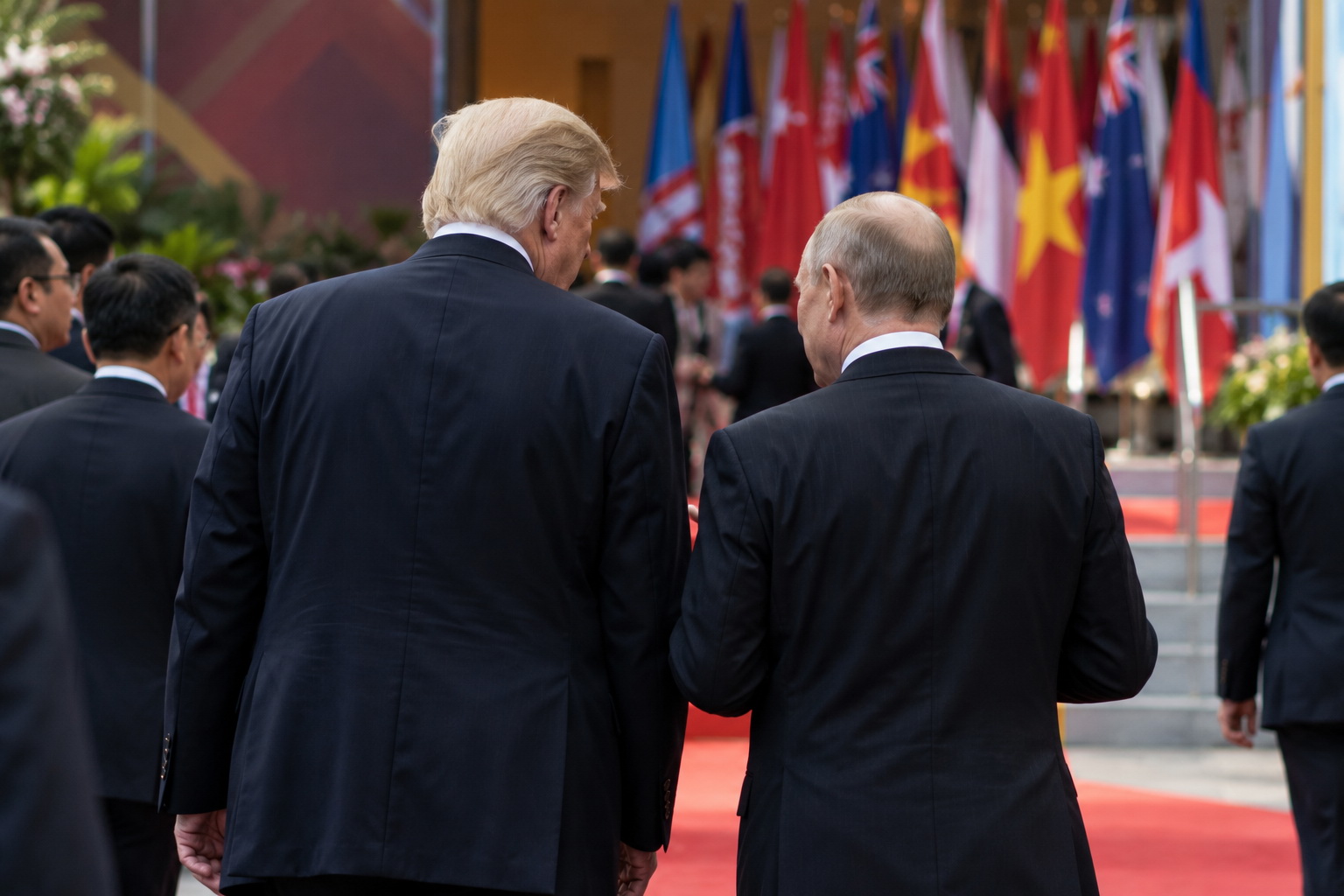
Trump and Putin had spoken briefly while attending the Asia-Pacific Economic Cooperation summit in Da Nang, Vietnam.
Afterward, aboard Air Force One, Trump told reporters that he had once again raised the election issue with the Russian president.
Putin denied it.
Again.
And Trump said he believed Putin was sincere.
“I really believe that when he tells me that, he means it,” Trump said.
The comment immediately revived one of the most persistent controversies of Trump's young presidency.
Why did the president continue emphasizing Putin's personal denials when America's intelligence agencies had already concluded that Russia conducted an extensive influence campaign targeting the election?
Putin Denies It Again
Trump and Putin did not hold the formal bilateral meeting that had been discussed before the summit.
Instead, the two presidents had several brief conversations while attending APEC events.
Trump said they discussed Syria and other international issues.
Election interference also came up.
According to Trump's account, Putin again insisted that Russia had not interfered.
“He said he didn't meddle,” Trump told reporters.
Trump said he asked Putin about it again, but suggested there was little value in repeatedly confronting him over the same accusation.
“You can only ask so many times,” Trump said.
Putin, according to Trump, remained adamant.
“He said he absolutely did not meddle in our election.”
Then Trump went further.
He described Putin as personally offended by the accusation and said he believed the Russian president was sincere in his denial.
The Intelligence Community Had Already Reached Its Conclusion
Putin's denial stood in direct conflict with the assessment produced by American intelligence agencies.
In January 2017, the Office of the Director of National Intelligence released a declassified assessment prepared by the CIA, FBI and NSA.
Its conclusion was unequivocal.
Russian President Vladimir Putin had ordered an influence campaign aimed at the 2016 American presidential election.
The intelligence community concluded that Russia pursued several objectives.
It sought to undermine public confidence in the American democratic process.
It attempted to damage Hillary Clinton.
And the assessment concluded that the Russian government developed a clear preference for Donald Trump.
The operation included cyber activity against political organizations as well as a broader propaganda and influence effort.
The assessment represented the judgment of American intelligence agencies.
Putin continued to deny that Russia had interfered.
Trump Attacks Former Intelligence Leaders
Rather than simply describing Putin's denial, Trump also attacked several former American intelligence and law-enforcement officials associated with the Russia assessment and investigation.
He singled out former Director of National Intelligence James Clapper, former CIA Director John Brennan and former FBI Director James Comey.
Trump called them “political hacks.”
The remark added another dimension to the controversy.
The president was not merely saying that Putin denied the allegations.
He was simultaneously criticizing former senior American officials involved in assessing or investigating Russian interference.
Trump had long argued that the Russia controversy was being used politically against him.
He frequently described investigations into Russian interference and possible connections between Russians and members of his campaign as attempts to undermine the legitimacy of his election victory.
That distinction became central to Trump's reaction to the issue.
Acknowledging Russian interference did not establish that Trump personally participated in it.
Nor did the intelligence assessment conclude that Russian activity had determined the election's outcome.
But Trump repeatedly treated discussions of Russian interference as connected to attempts to discredit his victory.
Two Separate Questions
The controversy frequently blurred two very different questions.
The first was:
Did Russia interfere in the 2016 election?
The U.S. intelligence community concluded that it did.
The second was:
Did members of Trump's campaign coordinate with the Russian government's interference efforts?
That was a separate matter under investigation.
The January intelligence assessment did not make a judgment about whether the Trump campaign had conspired with Russia.
It examined Russia's actions and intentions.
By November 2017, Special Counsel Robert Mueller was separately investigating Russian interference and contacts involving individuals associated with the Trump campaign.
That investigation had just produced its first public criminal cases.
Paul Manafort and Rick Gates had been indicted.
Former Trump campaign foreign-policy adviser George Papadopoulos had pleaded guilty to lying to the FBI about his interactions with people claiming connections to Russian officials.
The political environment surrounding Trump's conversation with Putin was therefore extraordinarily sensitive.
Trump Says Russia Investigation Hurts Diplomacy
Trump also offered another explanation for his reluctance to continue confronting Putin.
The United States needed Russia.
Trump wanted Russian cooperation on Syria.
He wanted help addressing North Korea's nuclear program.
He wanted progress involving Ukraine.
From Trump's perspective, constantly arguing with Putin about election interference made cooperation on those issues more difficult.
He described the controversy surrounding Russian interference as an “artificial barrier” preventing better relations between Washington and Moscow.
Trump argued that improved relations with Russia would benefit the United States.
That was a legitimate foreign-policy question separate from the factual determination about election interference.
A president could accept the intelligence assessment and still conclude that cooperation with Moscow was necessary on other issues.
The controversy arose because Trump's language sometimes appeared to place Putin's denials alongside — or in tension with — the conclusions reached by his own government.
The Reaction Is Immediate
Trump's remarks quickly produced criticism in the United States.
Critics argued that the president was giving inappropriate credibility to Putin's denial despite the findings of American intelligence agencies.
Republican Senator John McCain was among those who publicly criticized the comments.
Former intelligence officials also pushed back.
The central criticism was straightforward:
Putin had an obvious reason to deny that his government interfered in an American election.
American intelligence agencies had conducted an investigation and reached the opposite conclusion.
Trump's defenders emphasized a different point.
They argued that the president had not necessarily said Putin's denial was factually correct.
Trump had said he believed Putin meant what he was saying.
That linguistic distinction would become considerably more important the following day.
Trump Clarifies His Position
On November 12, during a news conference in Hanoi with Vietnamese President Tran Dai Quang, Trump was directly asked whether he believed Putin or the American intelligence agencies.
Trump attempted to clarify his remarks.
He said his previous statement meant that he believed Putin sincerely believed Russia had not interfered.
Then Trump addressed his own position.
“As to whether I believe it or not, I'm with our agencies,” he said.
Trump added that he believed “very much” in the intelligence agencies under their current leadership.
That clarification substantially changed the meaning of the previous day's controversy.
Trump was now explicitly saying that he accepted the intelligence agencies' conclusion while simultaneously maintaining that Putin sincerely believed his own denial.
But Trump's reference to the agencies “as currently constituted” was also notable.
Only a day earlier he had dismissed Brennan, Clapper and Comey as political hacks.
The president was drawing a distinction between former intelligence leadership he distrusted and the agencies under officials serving during his administration.
What the Intelligence Assessment Actually Said
The intelligence community's January assessment contained several important conclusions.
It determined that Russia had conducted an influence campaign targeting the 2016 election.
It assessed that Putin personally ordered the effort.
It concluded that Russia sought to undermine confidence in the American democratic process.
And it concluded that Moscow developed a preference for Trump over Clinton.
The assessment did not attempt to calculate whether Russian activity changed the outcome of the election.
Intelligence agencies do not determine election results.
American voters did that.
The issue before the intelligence community was whether a foreign government had attempted to influence the process.
Its conclusion was yes.
The Larger Problem Wasn't Going Away
Whatever Trump hoped to accomplish by improving relations with Putin, the issue of Russian election interference was not disappearing.
Congress was investigating.
Mueller was investigating.
The intelligence community had issued its assessment.
Cybersecurity officials were examining vulnerabilities exposed during the campaign.
And questions continued about how the United States should prevent foreign governments from attempting similar operations in future elections.
Trump's personal relationship with Putin therefore became intertwined with a much larger national-security issue.
The question was no longer simply what happened in 2016.
It was how the United States should respond.
A President Caught Between Putin and His Own Intelligence Agencies
Trump's comments during the Asia trip illustrated a tension that would repeatedly emerge during his presidency.
He wanted a workable relationship with Vladimir Putin.
He viewed the Russia investigation as politically damaging.
He distrusted several former intelligence and law-enforcement leaders associated with the investigation.
And he repeatedly emphasized Putin's denials.
At the same time, the institutions of the American government had reached a different conclusion.
Russia had interfered.
Trump ultimately said in Hanoi that he accepted that assessment.
But the controversy generated by his comments aboard Air Force One demonstrated why the issue remained so combustible.
The president of Russia said his government had done nothing.
The American intelligence community said Russia had conducted a deliberate influence operation.
And when Donald Trump described those competing accounts, he repeatedly made a point of telling Americans something about Vladimir Putin:
He believed Putin meant what he said.