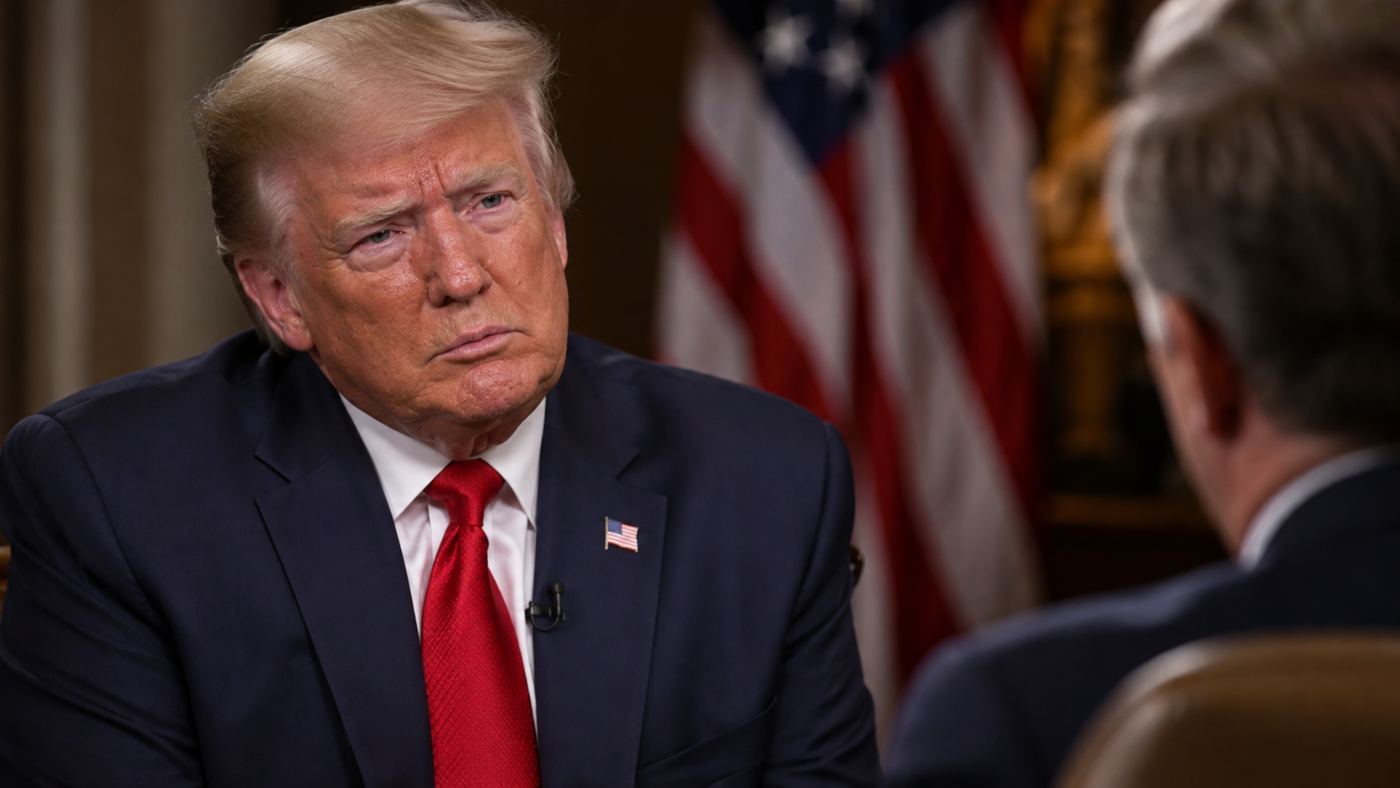
President Donald Trump made an unusually candid admission during a 60 Minutes interview Sunday evening, acknowledging that his administration's aggressive immigration enforcement policies may have gone too far and contributed to the Republican Party's devastating losses in the 2026 midterm elections.
Speaking with CBS correspondent Ross Douthat, Trump appeared more reflective than confrontational as he discussed the political consequences of his administration's deportation campaign.
In a notable departure from his previous rhetoric, the president acknowledged that federal immigration authorities had targeted hardworking immigrants whose only offense was entering the United States illegally.
He also expressed a willingness to negotiate with Democrats on immigration reform.
An Unexpected Admission
Trump acknowledged that his immigration policies had produced mixed political results.
He defended his administration's efforts to secure the southern border and deport people convicted of serious crimes. However, he recognized that the sweeping enforcement campaign had also affected immigrants who had established productive lives in American communities.
The president specifically mentioned immigrants working in hotels, landscaping businesses, and other industries, including people who had lived in the United States for 10 or 15 years.
When Douthat asked whether the deportation campaign had gone too far, Trump responded:
"I think it was too tough."
He subsequently acknowledged that the approach had damaged him politically.
For a president who has made aggressive immigration enforcement a defining feature of his political identity, the admission represented a significant change in tone.
The Midterms Changed the Conversation
The interview followed a sweeping Democratic victory in the November 3 midterm elections, which cost Republicans control of both chambers of Congress.
Immigration enforcement had become a major source of controversy, particularly among Latino voters and communities affected by federal deportation operations.
According to election polling, approximately 58 percent of voters believed the Trump administration's immigration actions had gone too far.
Republicans also suffered significant losses in heavily Latino communities that had supported Trump during the 2024 presidential election.
Trump acknowledged that his administration's treatment of longtime immigrants had contributed to the political backlash.
His remarks suggested an awareness that public support for border security does not necessarily translate into support for indiscriminate deportations.
An Opening for Immigration Reform?
Perhaps the most surprising moment came when Trump was asked what issue he would like to address with the incoming Democratic congressional majority.
His answer was immigration.
Trump suggested that Republicans and Democrats could negotiate an agreement allowing certain undocumented immigrants to remain in the United States, particularly those who had established careers, supported families, and contributed to their communities.
He continued to support deporting individuals convicted of serious crimes but appeared willing to consider legal protections for others.
Such an agreement would represent a substantial departure from the administration's previous emphasis on mass deportations.
However, Trump offered no specific legislative proposal, eligibility requirements, or timeline for negotiations.
Whether his comments lead to meaningful policy changes remains uncertain.
The Stephen Miller Contradiction
Despite Trump's conciliatory language, his recent personnel decisions raise questions about the administration's direction.
Just days before the interview aired, Trump appointed Stephen Miller as White House chief of staff, replacing Susie Wiles.
Miller has been one of the administration's most influential immigration hardliners and a principal architect of its deportation strategy.
His elevation to one of the most powerful positions in the White House appears difficult to reconcile with Trump's suggestion that immigration enforcement should become less aggressive.
Democratic leaders immediately highlighted the contradiction.
Senate Democratic Leader Chuck Schumer questioned how promoting the official responsible for the crackdown could represent a genuine policy correction.
The administration has not announced a comprehensive change in immigration enforcement priorities.
A Different Tone, but Will Policy Follow?
Trump's interview offered an uncommon moment of political introspection.
Rather than simply blaming Democrats, the media, or election officials for Republican defeats, the president acknowledged that his administration's own decisions had contributed to the outcome.
He also appeared to recognize a distinction that immigration advocates have emphasized for years: undocumented immigrants are not a single, uniform population.
Many have spent decades working, raising families, paying taxes, and contributing to American communities.
Recognizing those circumstances does not resolve the broader debate over immigration law, border enforcement, or legal status. But it potentially creates room for negotiations that previously appeared impossible.
Still, there is a considerable difference between acknowledging that a policy has gone too far and actually changing it.
Trump's first administration also explored immigration compromises that ultimately failed to produce lasting agreements.
The coming months will reveal whether his latest remarks represent the beginning of a meaningful shift or simply a response to an unfavorable election.
For now, the significance of the interview lies in the president's own acknowledgment that his administration's immigration crackdown has carried consequences beyond the political benefits he once expected.
Donald Trump has acknowledged that his deportation policies may have gone too far. The question now is whether he intends to do anything about it.