Trump Administration Withdraws Federal Guidance on Transgender Students
February 22, 2017
Barely a month into Donald Trump's presidency, his administration reversed a significant Obama-era interpretation of federal civil-rights law affecting transgender students across the country.
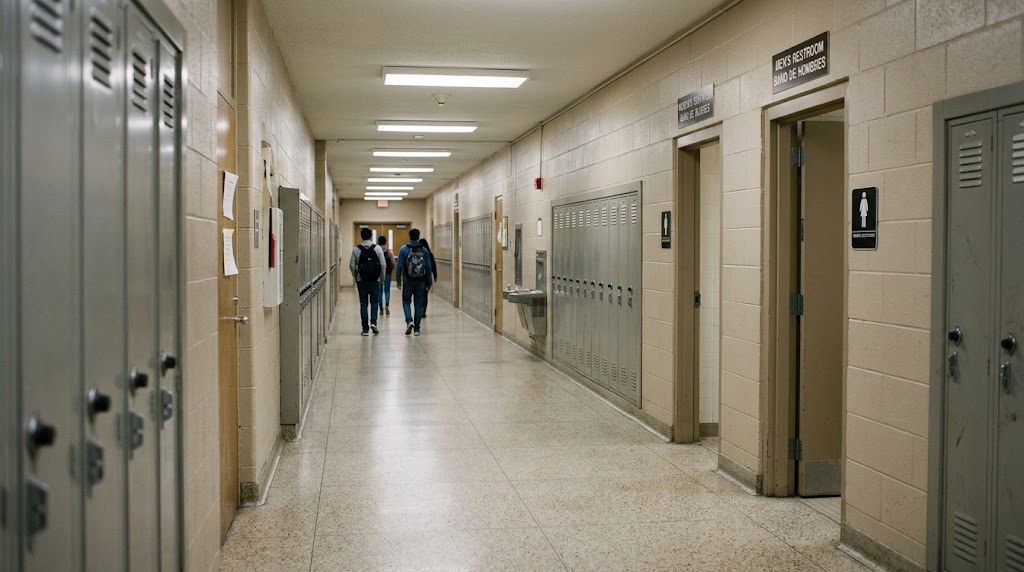
On February 22, the Departments of Education and Justice formally withdrew federal guidance stating that schools receiving federal funding should treat transgender students according to their gender identity — including when determining which bathrooms and locker rooms they could use.
The decision did not repeal Title IX, nor did it erase every legal protection available to transgender students.
But it represented an important change in how the federal government interpreted and intended to enforce the landmark education law.
What the Obama Administration Had Done
In May 2016, the Obama administration's Departments of Education and Justice issued guidance explaining how they interpreted Title IX of the Education Amendments of 1972.
Title IX prohibits sex discrimination in federally funded education programs.
The Obama administration concluded that those protections encompassed discrimination based on transgender status and gender identity.
Under that interpretation, schools were instructed to treat transgender students consistently with their gender identity.
That included allowing transgender students access to sex-segregated facilities, including bathrooms and locker rooms, corresponding with their gender identity.
The guidance also addressed privacy, school records, athletics and harassment.
For transgender students and their families, it established a nationwide federal position on an issue that otherwise varied considerably between states and school districts.
Trump Administration Reverses Course
On February 22, that federal position changed.
The Trump administration withdrew both the 2016 guidance and related guidance issued in 2015.
The Departments of Education and Justice argued that the previous interpretation had raised substantial legal questions and generated significant litigation.
Attorney General Jeff Sessions said the previous guidance had not provided sufficient legal analysis explaining how its interpretation was consistent with Title IX.
Education Secretary Betsy DeVos argued that bathroom policies were better addressed by states and local communities.
“This is an issue best solved at the state and local level,” DeVos said.
That represented a fundamental change in federal policy.
Rather than telling schools nationwide that Title IX required access to facilities based on gender identity, the federal government was stepping away from that interpretation.
What the Decision Did — And Didn't — Do
The withdrawal did not mean transgender students suddenly lost every federal civil-rights protection.
The administration specifically stated that schools were still responsible for protecting students from discrimination, bullying and harassment.
It also did not create a nationwide rule requiring transgender students to use bathrooms corresponding with their sex assigned at birth.
Instead, the administration removed the previous federal directive and placed considerably more responsibility for bathroom policies in the hands of states and local school districts.
The practical result was a patchwork.
Students' experiences could increasingly depend on where they lived and the policies adopted by their state or school district.
A National Civil-Rights Debate
Supporters of the Trump administration's decision argued that the Obama administration had stretched Title IX beyond what Congress originally intended and attempted to impose a nationwide policy without legislation.
They contended that elected state governments and local school districts should determine bathroom policies.
Civil-rights and LGBTQ advocates saw the decision very differently.
They argued that transgender students were entitled to the same federal protection against sex discrimination as other students and warned that withdrawing the guidance would leave vulnerable students facing inconsistent treatment around the country.
The disagreement was therefore about more than bathrooms.
At its core was a much larger legal question:
What does federal law's prohibition against discrimination “on the basis of sex” mean for transgender Americans?
That question would continue through the federal courts for years.
An Early Change in Civil-Rights Policy
The February 22 announcement demonstrated how quickly a presidential administration could change the federal government's interpretation of existing civil-rights laws without Congress passing a new statute.
The text of Title IX had not changed.
Congress had not repealed it.
What changed was the federal government's interpretation of what the law required.
For transgender students, that distinction had immediate consequences.
A federal government that only months earlier had told schools nationwide that transgender students were entitled to use facilities corresponding with their gender identity was no longer taking that position.
Only 33 days into Trump's presidency, another Obama-era policy had been reversed — and a contentious question about the rights of transgender students was being returned to states, school districts and the courts.