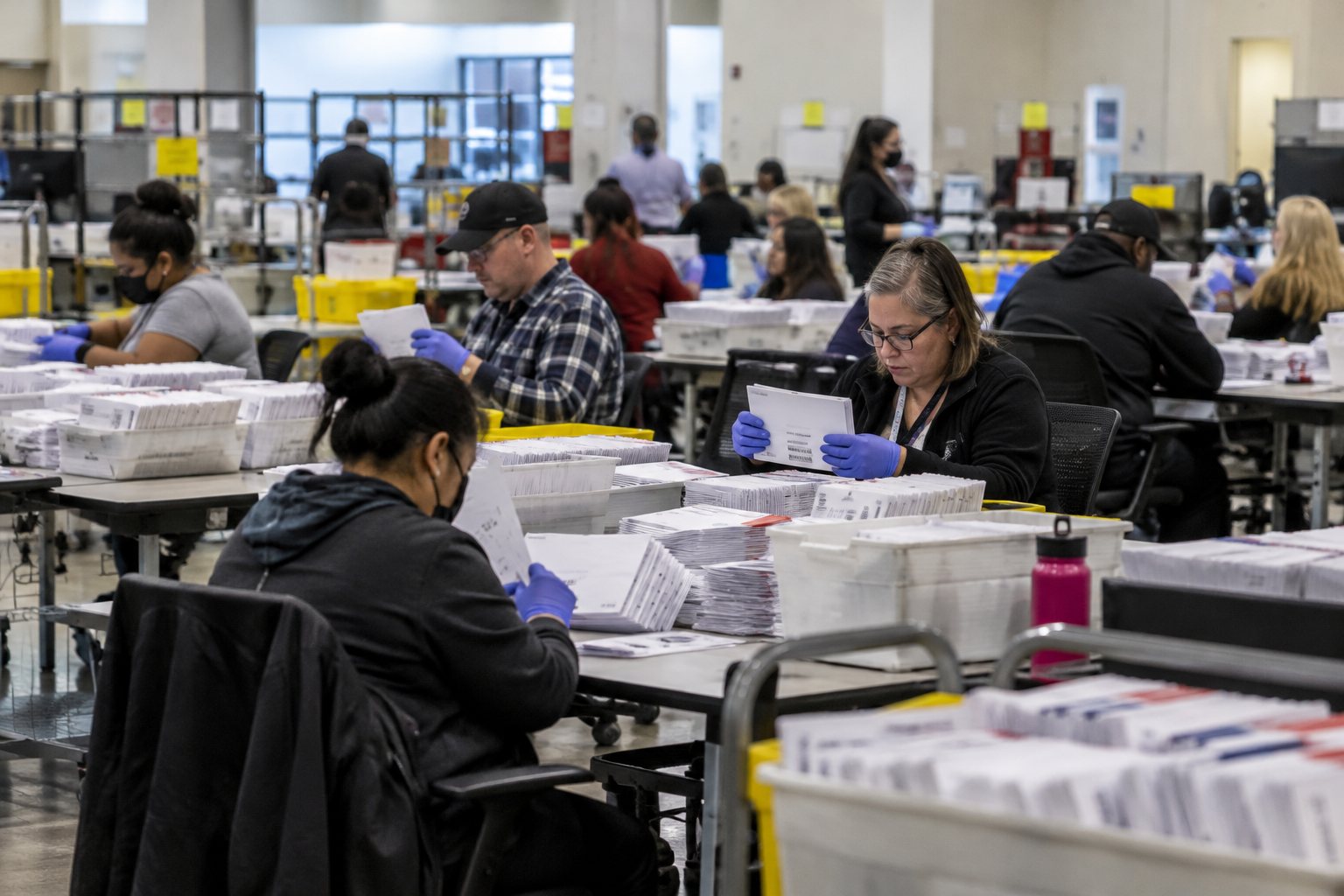
Just days before the November 3 midterm elections, the Trump administration has escalated its confrontation with California election officials, issuing federal subpoenas and pursuing legal action to prevent thousands of ballots from being counted.
The administration claims it is investigating potential noncitizen voting. California officials argue that the federal government's evidence is unreliable and that its demands threaten to disrupt an election already underway.
The dispute has now reached federal courts, where judges have questioned both the administration's evidence and the timing of its intervention.
Federal Subpoenas Target Election Officials
According to the Associated Press, the Justice Department issued subpoenas on October 21 and 24 to employees of the Los Angeles County Registrar-Recorder.
The subpoenas require officials to appear in court November 4, immediately following Election Day, and produce documents concerning allegations that noncitizens are registered to vote.
The requests are connected to a Homeland Security criminal investigation.
Los Angeles County Registrar Dean Logan has objected to threats and intimidation directed at election workers.
The subpoenas come as the administration pursues a separate lawsuit demanding that California set aside approximately 20,000 ballots associated with individuals federal officials suspect may be noncitizens.
However, the government has not established that all those individuals are ineligible voters.
Both sides acknowledge that the federal list contains an unspecified number of American citizens.
Federal Judge Rejects Administration's Demands
U.S. District Judge David O. Carter rejected the administration's initial request to separate the disputed ballots, finding that its demands violated federal election law restrictions on last-minute voter-roll changes.
Carter appointed a special master to examine the evidence and determine whether the government's allegations are supported.
The judge also warned against threats directed toward state and county election employees.
The administration has appealed, arguing that allowing potentially illegal ballots to be processed could irreversibly affect election results.
But two judges on a federal appellate panel expressed serious reservations about intervening so close to Election Day.
One warned that changing election procedures after voting had begun could create electoral chaos.
A Question of Election Integrity
The Trump administration maintains that preventing noncitizens from voting is essential to protecting legitimate ballots.
Noncitizen voting in federal elections is illegal, and federal authorities have charged more than two dozen foreign nationals in California with alleged election-related offenses.
Those cases deserve investigation.
But individual criminal allegations do not establish widespread voter fraud.
Available evidence indicates that noncitizen voting is exceedingly rare, and California officials say the federal government's list includes eligible citizens.
The distinction matters because incorrectly identifying American citizens as ineligible voters could prevent lawful ballots from being counted.
California has approximately 23 million registered voters. The disputed list represents a small fraction of that population, but the potential consequences for affected individuals remain significant.
Trump Attacks California's Elections
President Donald Trump has publicly described California's elections as corrupt and criticized the federal judge who rejected his administration's demands.
Yet allegations of widespread corruption have not been established in the court proceedings.
California officials contend that the administration's actions are interfering with their responsibility to conduct elections under established state and federal law.
The Justice Department maintains that its investigation is necessary to enforce voting eligibility requirements.
The courts must now determine whether the government's evidence justifies its requested intervention.
The Stakes Extend Beyond California
More than 500,000 ballots had already been processed in Los Angeles County, according to court filings cited by the Associated Press.
Election officials say separating individual ballots after processing presents significant practical and legal challenges.
Judge Carter has scheduled further consideration of the administration's request for November 13, after Election Day.
The larger question is how far federal authorities can go in challenging state election procedures during an active election.
Investigating illegal voting is a legitimate government responsibility. Protecting eligible citizens from having their votes improperly excluded is equally important.
The California confrontation places those principles in direct conflict.
Its resolution could establish important boundaries for federal intervention in future elections, determining how courts balance allegations of unlawful voting against the constitutional and statutory protections governing American elections.