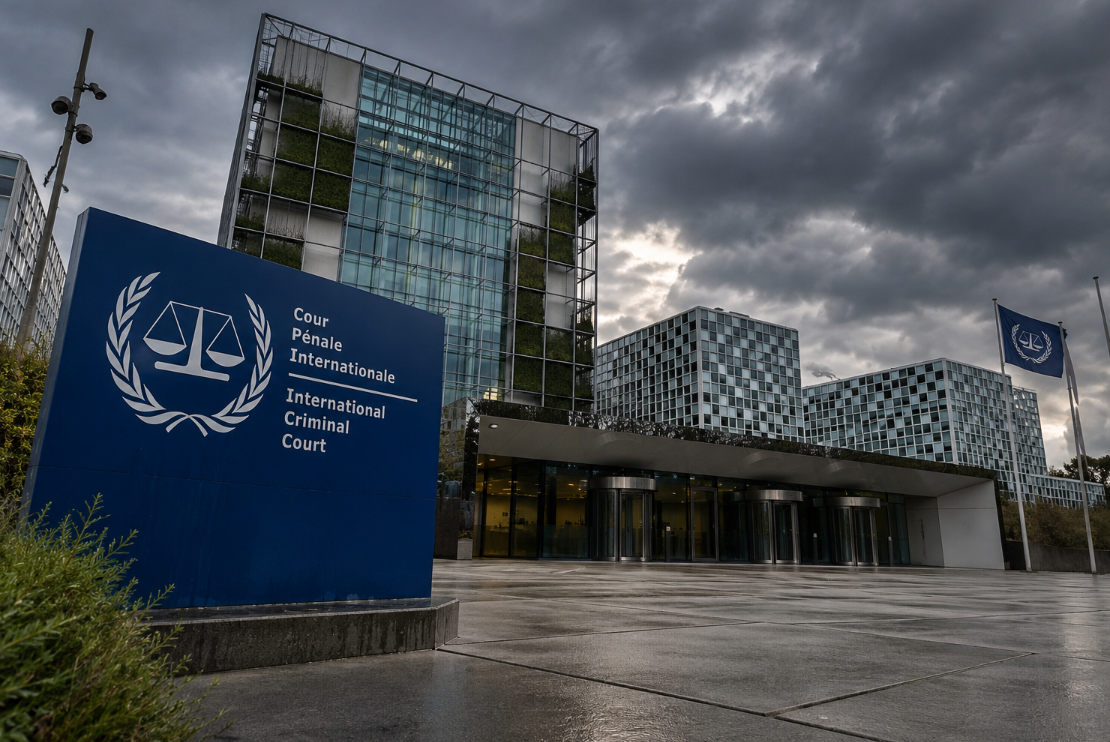
The Trump administration has prepared sanctions against the International Criminal Court itself, a major escalation of Washington's campaign against the tribunal responsible for prosecuting genocide, war crimes and crimes against humanity.
Until now, the administration has largely targeted individual ICC judges, prosecutors and officials. The measures under consideration would go much further by targeting the court as an institution and potentially restricting companies and organizations that continue doing business with it. Reuters reported Sunday that the sanctions have been prepared, although the exact timing of an announcement remains unclear.
According to reporting cited by Reuters, the restrictions could prohibit most transactions with the ICC following a six- to seven-month grace period. The measures could also interfere with the court's ability to conduct transactions in U.S. dollars.
That could transform an already bitter political confrontation into an operational crisis for the court.
From Sanctioning Officials to Sanctioning the Court
President Donald Trump's confrontation with the ICC has intensified throughout his second administration.
The United States is not a member of the ICC and has long disputed aspects of its jurisdiction. American objections to the court also predate Trump and have historically included concerns that U.S. military personnel and officials could face prosecution by an institution to which the United States never consented.
The Trump administration, however, has dramatically expanded the use of economic sanctions against the institution.
In August, the United States sanctioned ICC President Tomoko Akane and a senior trial attorney, continuing a campaign that had already targeted judges and prosecutors. Secretary of State Marco Rubio said the court had improperly pursued officials from countries that had not accepted its jurisdiction.
The United States has explicitly demanded that ICC proceedings involving the United States and Israel end. In a statement to ICC member states, Washington said investigations and arrest warrants involving the two countries should be terminated and warned that "all options remain on the table."
The new proposal would represent another significant step: rather than freezing assets or restricting individual court officials, Washington could attempt to economically isolate the institution itself.
The Fight Over Israel
A major source of the confrontation is the ICC's investigation of the war in Gaza.
The court issued arrest warrants in 2024 for Israeli Prime Minister Benjamin Netanyahu and former Israeli Defense Minister Yoav Gallant, alleging war crimes and crimes against humanity. Israel has rejected the allegations and disputes the court's jurisdiction.
The Trump administration has strongly backed Israel's objections to the proceedings.
Washington's position is that the ICC has no legitimate authority over citizens of countries such as the United States and Israel that have not joined the Rome Statute.
The court takes a different position, arguing that it may exercise jurisdiction over alleged crimes committed on the territory of a state that has accepted its jurisdiction.
That legal disagreement has now developed into a much larger confrontation over whether the United States should use its financial power to cripple the court's ability to function.
What Sanctioning the Entire ICC Could Mean
The consequences could extend far beyond preventing ICC officials from traveling to the United States.
Reuters reports that court-wide sanctions could interfere with information technology services, insurance, investigations and payments to employees. Companies doing business with the ICC could also reconsider those relationships if they feared exposure to American sanctions.
The enormous reach of the U.S. financial system gives Washington considerable leverage.
Even organizations operating entirely outside the United States frequently depend on banks, payment processors, software providers and other companies with American connections.
That means sanctions imposed in Washington can have consequences thousands of miles away in The Hague.
The ICC has already acknowledged the difficulties created by previous American sanctions and says it has taken measures to protect its operations. Court officials maintain that outside pressure will not determine how judges interpret the Rome Statute or decide cases.
A Court Created to Prosecute the World's Gravest Crimes
The International Criminal Court was established under the Rome Statute and began operating in 2002.
It is a permanent international tribunal designed to prosecute individuals accused of genocide, crimes against humanity, war crimes and the crime of aggression when applicable jurisdictional requirements are met.
The court has pursued cases involving conflicts and alleged atrocities in numerous countries.
It is also distinct from the International Court of Justice. The ICJ resolves disputes between countries; the ICC prosecutes individuals.
The United States participated in negotiations that created the ICC but never became a party to the Rome Statute. President Bill Clinton signed the treaty in 2000 but did not submit it to the Senate for ratification, and the United States subsequently withdrew its signature under President George W. Bush.
American skepticism toward the ICC therefore did not begin with Trump.
What has changed is the extent to which the United States is willing to employ sanctions against the institution.
A Much Larger Confrontation
The dispute ultimately involves two competing principles.
The Trump administration argues that an international tribunal should not be able to exercise authority over Americans or officials of U.S. allies when their governments never accepted the court's jurisdiction.
The ICC and its supporters argue that allowing powerful governments to economically punish judges and prosecutors because they object to investigations threatens the independence of international justice.
The administration is now considering taking that dispute considerably further.
If the proposed sanctions are implemented, the United States would no longer simply be targeting particular ICC officials.
It would be targeting the International Criminal Court itself — potentially using America's financial and economic power to restrict the operations of the world's permanent war-crimes tribunal.