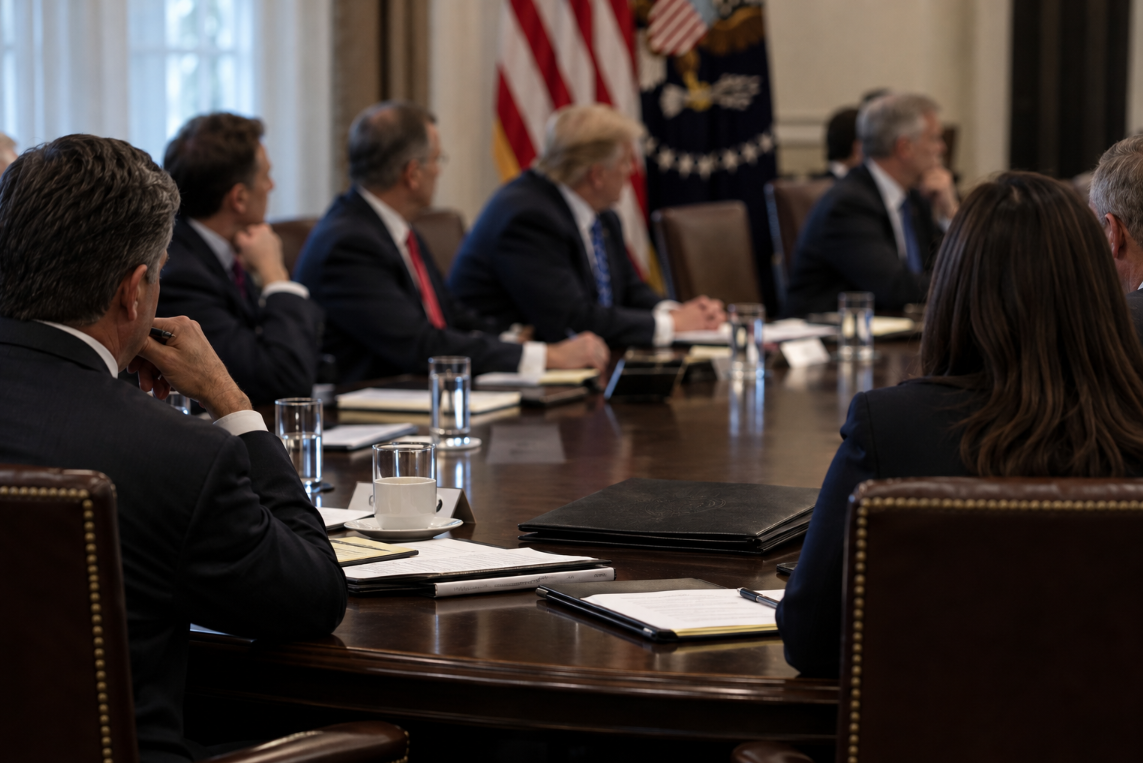
The Trump administration dramatically expanded its campaign against left-wing political violence on July 16, announcing an international effort to combat what the White House calls “Radical Left terrorism.”
The initiative moved an effort that had largely focused on domestic groups into the international arena.
Secretary of State Marco Rubio convened representatives from more than 65 countries in Washington for what the State Department called the Ministerial on the Resurgence of Political Terrorism.
The White House described the gathering in considerably stronger terms, announcing what it called an “unprecedented global offensive” against a transnational network of far-left extremists.
Administration officials argued that governments have spent decades building sophisticated systems to combat jihadist terrorism while failing to treat politically motivated violence from the far left with comparable seriousness.
Critics see something potentially much broader: an administration increasingly using the language and machinery of counterterrorism against political movements whose views extend well beyond individuals who commit violence.
That distinction — between prosecuting violence and investigating ideology — is at the center of the controversy.
Rubio Says Counterterrorism Has Had a Blind Spot
Speaking at the Washington gathering, Rubio argued that Western governments have underestimated violence associated with far-left movements.
He said American counterterrorism policy had developed a “blind spot” regarding extremist violence originating on the political left.
Administration officials specifically pointed toward militant antifascist networks and other groups they say coordinate activities, financing and propaganda across international borders.
Rubio also accused Iran and Cuba of helping support elements of the movement.
Public evidence substantiating those particular allegations was not presented with the announcement.
The administration nevertheless maintains that the threat is sufficiently organized and international to justify cooperation between governments similar to efforts traditionally used against other terrorist organizations.
The Campaign Didn't Begin in July
The July announcement is an expansion of a policy framework Trump established months earlier.
In September 2025, Trump issued National Security Presidential Memorandum 7, commonly known as NSPM-7.
The memorandum directed federal law-enforcement and national-security agencies to aggressively investigate organized political violence, radicalization networks and organizations suspected of financing or facilitating such activity.
The Justice Department subsequently established task forces involving counterterrorism and organized-crime prosecutors.
The FBI also established an operation devoted to implementing the policy, while federal agencies began examining organizations and financial networks suspected of supporting political violence.
Trump separately moved to designate Antifa as a domestic terrorist organization.
By July 2026, the administration was attempting to extend that strategy beyond America's borders.
The Government Is Looking at More Than the People Who Commit Violence
One of the most consequential elements of the administration's approach is its focus on the organizations and individuals surrounding perpetrators of political violence.
Federal investigators have been directed to examine financing, recruitment, radicalization and other forms of support.
The administration argues that simply arresting the person who commits an attack does little to dismantle a broader network that may have encouraged or financed the violence.
That concept is already familiar in traditional counterterrorism investigations.
Following the September 11 attacks, federal authorities devoted enormous resources to tracing terrorist financing, identifying recruiters and disrupting organizations before attacks could occur.
The Trump administration argues that similar tools should be available when the political ideology behind violence originates on the far left.
But applying those tools domestically creates significant constitutional questions.
When Does Political Belief Become a Terrorism Concern?
The controversy surrounding NSPM-7 is not primarily about whether violent crimes should be prosecuted.
Political violence is already illegal.
Bombings, assaults, arson, threats, destruction of property and conspiracies to commit violent crimes can all be investigated and prosecuted under existing federal and state laws.
The more difficult question is how far investigators should move outward from the individuals actually committing those crimes.
The administration's framework identifies ideological characteristics that it says can be associated with political radicalization, including extreme anti-capitalist, anti-Christian and anti-American beliefs.
It also discusses hostility toward traditional views involving family, religion and morality.
Civil-liberties advocates and legal scholars have raised concerns that language this broad could potentially sweep legitimate political activism into a counterterrorism investigation.
Being anti-capitalist is not a crime.
Criticizing Christianity is not a crime.
Opposing government immigration policy is not a crime.
Neither is holding radical political beliefs.
The constitutional line becomes whether investigators are targeting people because there is evidence connecting them to violence or because of the political ideas they advocate.
The Administration Says Violence Is the Target
Trump officials reject the argument that the initiative is intended to criminalize ordinary political opposition.
They describe it as an effort to confront organized violence that has been minimized because of its ideological origins.
The White House says the campaign targets networks responsible for attacks against police officers, civilians and public institutions.
Administration officials also argue that organizations should not be able to avoid scrutiny simply because they operate through decentralized structures rather than traditional terrorist organizations with clearly defined leadership.
That is particularly relevant to Antifa.
Unlike groups such as ISIS or al-Qaeda, Antifa generally does not operate as a single hierarchical organization with a national leader, formal membership rolls or a centralized command structure.
Instead, the term encompasses a variety of autonomous groups and individuals associated with militant antifascist activism.
That structure makes determining who belongs to a particular organization — and who is responsible for its actions — considerably more complicated.
More Than 65 Countries Were Brought Into the Discussion
The July 16 meeting demonstrated how much larger the administration wants the campaign to become.
Representatives from more than 65 countries participated.
The administration wants international partners to share intelligence, disrupt financing, identify cross-border networks and prevent countries from becoming safe havens for individuals or organizations connected to political violence.
That effectively places certain forms of far-left extremism within the same international counterterrorism framework governments have traditionally used against jihadist and other terrorist organizations.
It is a significant shift in American counterterrorism policy.
Political Violence Is Not Exclusive to One Ideology
Another issue surrounding the administration's strategy is its emphasis on violence from one portion of the political spectrum.
The United States has experienced politically motivated violence associated with multiple ideologies.
Far-right extremists, white supremacists, jihadist terrorists, anti-government extremists and individuals associated with far-left causes have all committed or plotted acts of violence.
The relative prevalence of those threats has varied substantially over time and depends partly on how incidents and ideologies are classified.
The Trump administration argues that left-wing violence has received insufficient attention and has increased enough to require a dedicated response.
Critics counter that concentrating counterterrorism resources around one ideological category risks politicizing law enforcement and obscuring threats originating elsewhere.
Those are competing assessments that will continue to be tested against actual investigations, prosecutions and evidence.
The Bigger Question Is How the Government Uses Its Power
The July announcement therefore represents more than another Trump administration initiative aimed at Antifa.
It raises a larger question about the government's enormous counterterrorism apparatus.
After September 11, the United States developed powerful investigative tools designed to identify terrorist networks before they could attack.
Those powers can include intelligence gathering, financial investigations, international information sharing and coordinated investigations involving numerous federal agencies.
Trump's administration is now attempting to use parts of that infrastructure against what it describes as organized far-left political terrorism.
If investigators focus on people planning, financing or committing violence, the administration argues that it is simply applying counterterrorism law regardless of ideology.
If investigations begin targeting Americans primarily because they hold radical or unpopular political beliefs, the constitutional implications become very different.
That is the line the administration's new campaign will ultimately have to navigate.
On July 16, however, Trump made his direction clear: his administration no longer intends to treat what it calls “Radical Left terrorism” primarily as a domestic law-enforcement problem.
It wants the United States and its allies to treat it as an international security threat.