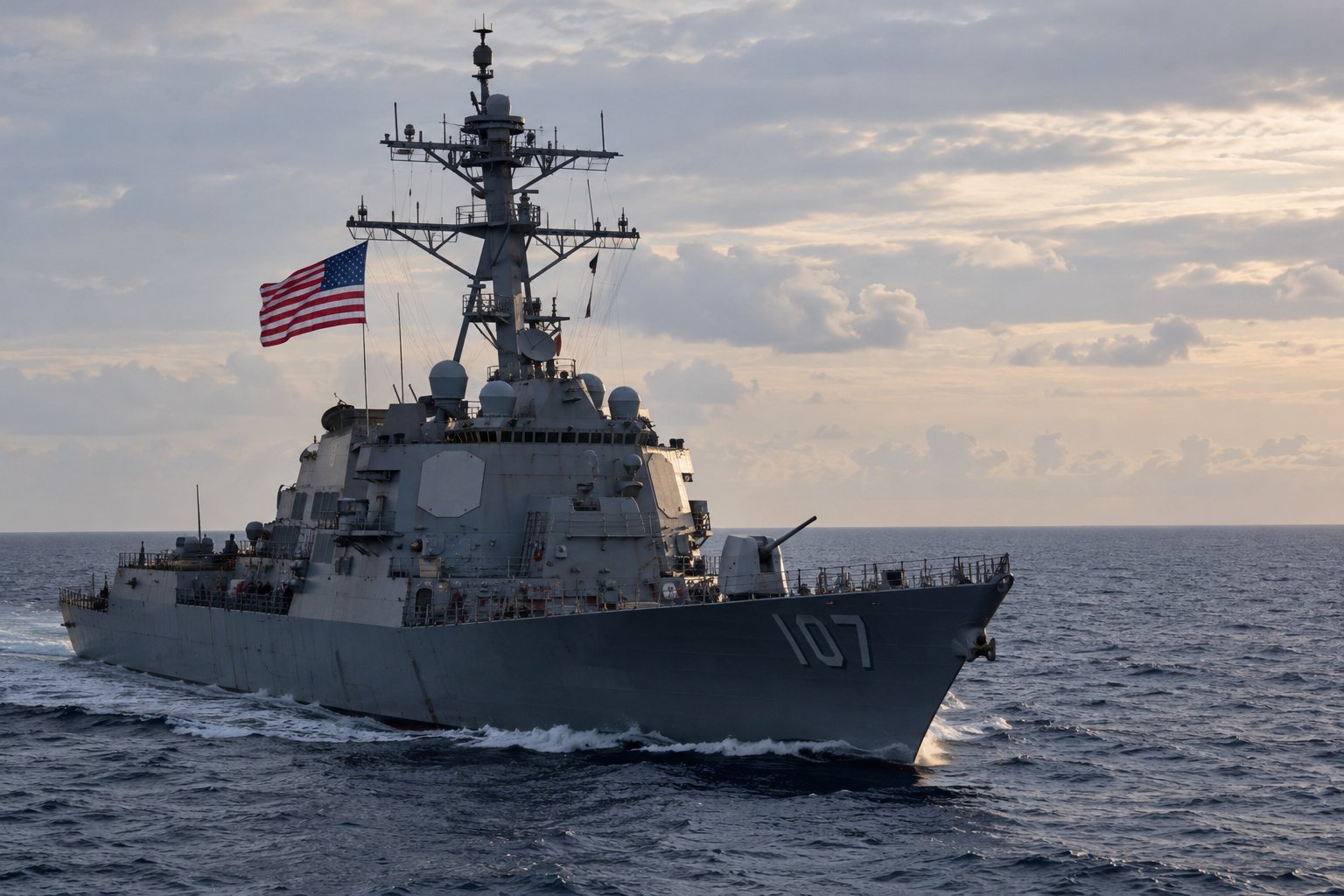
The Trump administration faced mounting questions on October 15, 2025, after President Donald Trump announced that American military forces had destroyed another small boat in the Caribbean Sea, killing all six people aboard.
The strike, carried out on October 14 in international waters off the coast of Venezuela, was the fifth publicly announced lethal attack against vessels the administration accused of transporting illegal drugs.
By that point, at least 27 people had been killed in the campaign.
None of those killed in the latest attack had been publicly identified by the United States government. No criminal charges had been presented, no judicial proceedings had taken place, and the administration had not released evidence establishing that the targeted vessel was carrying narcotics.
Instead, the government described the people aboard as terrorists and used military force to kill them.
The operation raised a fundamental legal question: Can the president order the military to kill people suspected of drug trafficking without establishing that they pose an imminent threat or that they are lawful military targets?
Six People Killed, No Public Evidence Presented
Trump announced the strike on his Truth Social platform on October 14, describing the six people killed as male narcoterrorists.
He said American intelligence had confirmed that the vessel was trafficking narcotics and was associated with illicit networks operating along known smuggling routes.
The president also claimed the boat was affiliated with a designated terrorist organization.
However, he did not identify the organization.
Nor did the administration publicly release the intelligence supporting its allegations, identify the people aboard, disclose the drugs allegedly being transported, or explain why the vessel required an immediate lethal military response.
Defense Secretary Pete Hegseth also publicized footage of the attack.
The video showed a small boat on the water before an explosion engulfed it.
But the footage did not establish that the vessel was carrying drugs, that its occupants belonged to a terrorist organization, or that anyone aboard posed an immediate danger to American personnel.
The administration maintained that it possessed intelligence supporting the operation.
The public, however, was being asked to accept that assessment without seeing the underlying evidence.
Five Strikes and 27 Deaths in Six Weeks
The October 14 attack was part of a military campaign that began in September 2025.
The administration had announced four previous strikes against boats it accused of participating in narcotics trafficking.
The first, on September 2, reportedly killed 11 people.
Two additional attacks in September killed three people each.
A fourth strike, announced on October 3, killed four people.
The fifth strike brought the reported death toll to 27.
The administration described the operations as necessary to disrupt drug trafficking organizations that threatened American lives.
But the attacks represented a significant departure from traditional maritime drug enforcement.
For decades, the United States had used the Coast Guard, federal law enforcement agencies, and international partnerships to intercept suspected drug shipments.
Those operations typically involved locating suspicious vessels, stopping them, searching for contraband, arresting suspects, and prosecuting criminal offenses.
The new campaign instead involved destroying vessels with lethal military force.
The difference was not merely procedural.
In a conventional law enforcement operation, suspects generally have an opportunity to surrender, face charges, challenge evidence, and defend themselves in court.
A missile strike eliminates those possibilities.
The Administration Declares an Armed Conflict With Drug Cartels
The Trump administration argued that its actions were justified because the United States was engaged in an armed conflict with certain drug trafficking organizations.
According to reporting on a confidential notification sent to Congress, the administration classified suspected cartel members as unlawful combatants.
That characterization was central to its legal argument.
Under the laws of armed conflict, military forces may target enemy combatants under applicable rules, including requirements of distinction, proportionality, and military necessity.
But drug trafficking is ordinarily treated as a criminal activity, not automatically as participation in an armed conflict.
Even when criminal organizations engage in extreme violence, that does not necessarily make every member a lawful military target.
International humanitarian law requires specific conditions before an organized confrontation qualifies as an armed conflict.
Legal experts questioned whether the administration had demonstrated those conditions.
The administration argued that cartels were responsible for deadly harm to Americans through the distribution of illicit drugs.
Critics responded that causing deaths through criminal activity, however serious, does not automatically create the legal equivalent of an enemy military force attacking the United States.
That distinction matters because it determines whether lethal force is governed primarily by the laws of war or by the more restrictive standards applicable to law enforcement and the protection of human life.
Drug Trafficking Is a Crime. Is It Punishable by Death Without Trial?
Drug trafficking can be an extremely serious criminal offense.
Large trafficking organizations have contributed to addiction, overdose deaths, corruption, and violence in communities across the Americas.
The United States has a legitimate interest in stopping illegal drug shipments and dismantling criminal networks.
But the seriousness of a suspected crime does not eliminate legal protections.
Under ordinary law enforcement standards, government agents generally cannot deliberately kill someone solely because they suspect that person is committing a nonviolent offense.
Deadly force ordinarily requires an immediate threat of death or serious injury, subject to the circumstances and applicable law.
The administration's military campaign raised the question of whether those protections could be bypassed simply by describing suspected traffickers as terrorists or combatants.
Critics argued that the government's approach effectively replaced investigation and prosecution with lethal punishment.
The administration rejected that characterization, insisting that the strikes were lawful military operations against organizations engaged in an armed conflict with the United States.
The disagreement went to the heart of the controversy.
If the administration's armed-conflict classification was legally valid, the rules governing military targeting would apply.
If it was not, deliberately killing suspects who posed no imminent threat could constitute an unlawful deprivation of life.
International Waters Do Not Mean There Are No Laws
Trump emphasized that the latest strike occurred in international waters.
But international waters are not areas where governments can use lethal force without legal restrictions.
Maritime operations remain subject to international law, including rules governing the use of force, the jurisdiction of flag states, and the protection of human life.
The United States has long cooperated with other governments to intercept suspected narcotics shipments at sea.
Those operations can involve boarding vessels, seizing contraband, detaining suspects, and transferring cases for prosecution.
The Coast Guard routinely conducts such missions.
The existence of that established enforcement system raised an obvious question about the Trump administration's new approach.
Why was destroying a suspected smuggling vessel necessary when maritime interdiction and criminal prosecution were available alternatives?
The administration did not publicly provide sufficient operational detail about the October 14 strike to establish whether interception was feasible or why lethal force had been chosen.
The United Nations Raises Alarm
United Nations human rights experts had already criticized the American boat-strike campaign.
They warned that deliberately killing suspected drug traffickers without a lawful basis for military targeting could amount to extrajudicial executions.
The term refers to intentional killings carried out by state authorities outside a lawful judicial process and without another recognized legal justification.
Not every death caused by military force is an extrajudicial execution. Lawful combat operations and certain uses of force in self-defense are governed by different legal standards.
The critical question was whether the United States had a valid legal basis to treat the targeted individuals as combatants.
Human rights experts challenged that premise.
They argued that suspected participation in drug trafficking, by itself, did not establish that a person could lawfully be killed in a military attack.
Their concerns were compounded by the administration's refusal to publicly disclose the identities of those killed or the evidence connecting them to designated organizations.
Congress Demands Answers
Concern about the strikes extended beyond international human rights organizations.
Members of Congress from both political parties questioned the administration's authority to conduct lethal attacks against suspected traffickers without explicit congressional authorization.
Some lawmakers sought additional intelligence briefings and details about the legal justification for the campaign.
Others raised concerns about whether the administration was conducting military operations that effectively amounted to a new armed conflict without sufficient congressional oversight.
The Constitution divides war-related powers between the president and Congress.
The president serves as commander in chief, but Congress possesses the authority to declare war and enact laws governing military operations.
The precise limits of presidential military authority have been disputed for decades.
Nevertheless, the administration's assertion that it was engaged in an armed conflict with drug cartels raised questions about the scope of those powers.
If a president could independently declare a criminal organization to be an enemy combatant force and authorize lethal strikes against its suspected members, critics warned that the same reasoning could potentially be extended to other organizations accused of serious criminal activity.
A Growing American Military Presence Near Venezuela
The strikes occurred alongside a significant American military buildup in the Caribbean.
The United States deployed warships, aircraft, and other military assets to the region as the administration increased pressure on Venezuelan President Nicolás Maduro.
American officials accused Maduro and other Venezuelan figures of involvement in drug trafficking.
Maduro denied the allegations and accused Washington of seeking to remove him from power.
The Trump administration also offered a $50 million reward for information leading to Maduro's arrest.
The combination of lethal maritime strikes, expanded military deployments, and increasingly confrontational rhetoric heightened tensions between Washington and Caracas.
The administration presented the operations as a campaign against narcotics trafficking.
Critics questioned whether the growing military presence also served broader geopolitical objectives.
The public evidence available on October 15 did not establish that the specific boat strike was intended to initiate a conflict with Venezuela.
But the expanding military campaign created additional risks of confrontation in the region.
The Missing Evidence
One of the most consequential aspects of the October 14 strike was how little independently verifiable information the administration provided.
The public knew that six people had reportedly been killed.
The public knew that the United States had destroyed a small vessel.
And the public knew that the president claimed the people aboard were connected to narcotics trafficking and terrorism.
But the government had not publicly established who those people were.
It had not presented evidence showing what cargo the boat carried.
It had not identified the terrorist organization supposedly involved.
And it had not explained why the people aboard were considered lawful targets for military attack rather than suspects who should be arrested.
The absence of publicly disclosed evidence did not prove that the administration's intelligence was false.
Military and intelligence operations sometimes depend on classified information that cannot be released immediately.
But classification does not eliminate the need for lawful authority, accountability, or oversight.
When government officials deliberately take human lives, the legal basis for those actions becomes especially important.
A Dangerous Question About Presidential Power
By October 15, 2025, the Trump administration had announced five deadly attacks against alleged drug-smuggling boats in the Caribbean.
Twenty-seven people were reportedly dead.
The administration insisted that the operations were justified by the threat posed by international narcotics trafficking organizations.
But the public had not been shown the evidence necessary to independently evaluate the latest strike.
Nor had the administration resolved the central legal dispute over whether suspected drug traffickers could be treated as enemy combatants.
The distinction between stopping a criminal organization and waging war against it was no small matter.
One approach generally involves investigations, arrests, evidence, courts, and criminal penalties.
The other permits lethal military force under the laws of armed conflict.
Whether the Trump administration had lawful grounds to apply the second framework remained fiercely contested.
On October 15, 2025, the central facts were stark: the United States had destroyed another boat, six more people were dead, and the government had not publicly demonstrated that those killed were lawful military targets.
The question was not whether drug trafficking should be stopped.
It was whether a president could authorize the military to kill suspected criminals at sea without publicly establishing the evidence or legal justification for doing so.
For the 27 people reported killed in the first five strikes, there would be no opportunity to challenge the allegations against them in an American courtroom.