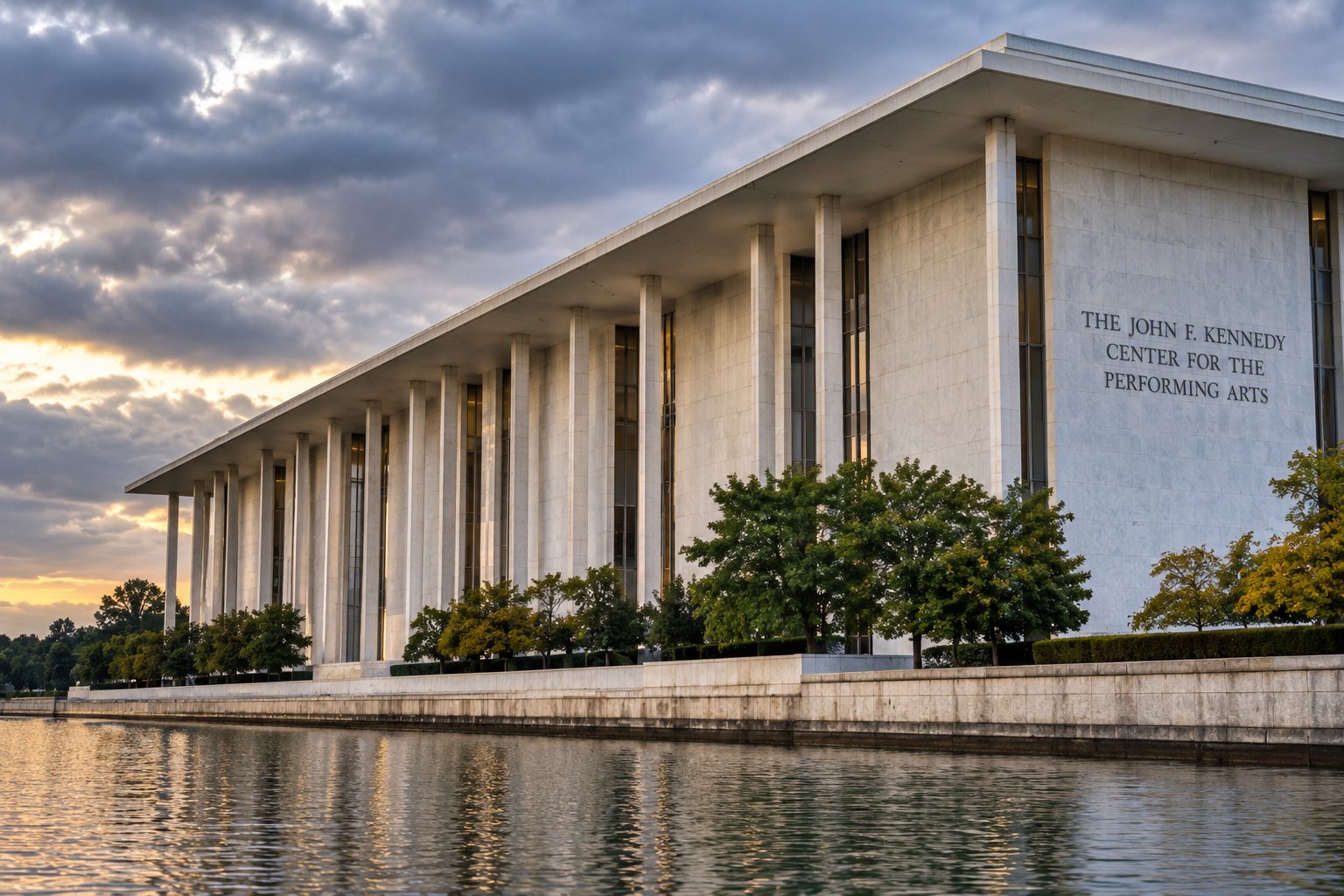
President Donald Trump's administration is fighting to prevent the release of hundreds of private communications that could reveal how extensively the White House influenced decisions at the Kennedy Center, including the controversial plan to close the performing arts institution for two years.
In a federal court filing submitted October 25, attorneys representing Democratic Representative Joyce Beatty of Ohio demanded the release of emails, text messages, and other records that administration officials have withheld under claims of presidential communications privilege.
At the center of the dispute are 19 text messages exchanged between Kennedy Center executive director and CEO Matt Floca and Trump's longtime executive assistant, Natalie Harp.
Eleven of those messages were exchanged on September 15, the same day the Kennedy Center's board voted for a third time to approve the facility's closure.
The messages themselves have not been publicly disclosed, leaving unanswered questions about what role Trump's closest advisers played in the decision.
Hundreds of Messages Withheld
The disputed records extend far beyond Harp's communications.
According to the court filing, approximately 180 additional text messages were exchanged between Floca and Commerce Secretary Howard Lutnick, whom Beatty's attorneys describe as an intermediary between Trump and Kennedy Center leadership.
The communications reportedly concern the institution's operations, renovation plans, finances, and other administrative matters.
Beatty's legal team argues that the volume and timing of the messages suggest Trump maintained extensive behind-the-scenes involvement in decisions that should have received independent consideration from the institution's governing board.
Attorneys also question whether the administration is improperly invoking presidential privilege to prevent scrutiny of decisions involving a federally established cultural institution.
The White House has defended Trump's involvement and the withholding of communications, although the precise contents of the disputed messages remain unknown.
A Controversial Two-Year Shutdown
The legal confrontation follows Trump's efforts to reshape the Kennedy Center since returning to the White House.
After becoming chairman of the institution's board in 2025, Trump supported major changes to its leadership, programming, and physical facilities.
The administration subsequently advanced plans for a two-year renovation project estimated to cost as much as $257 million.
Trump has argued that the building suffers from serious structural problems and requires extensive reconstruction.
Critics, however, have questioned whether the proposed closure is necessary and whether the board followed appropriate procedures when approving it.
On September 16, Floca announced the temporary closure of the Kennedy Center's main building.
The announcement followed a series of contentious board votes and legal challenges concerning the institution's governance.
Federal Judge Previously Ruled Against Trump
The dispute is unfolding before U.S. District Judge Christopher Cooper, who has already issued significant rulings involving the Kennedy Center.
In May, Cooper determined that the institution had unlawfully added Trump's name to the building and ordered its removal.
Following the September closure decision, Cooper also directed Kennedy Center officials to provide at least 30 days' notice before undertaking major physical changes to the facility.
Beatty, who serves as an ex officio member of the board, argues that the withheld communications are essential to determining whether Kennedy Center officials independently exercised their authority or simply implemented decisions made by Trump and his advisers.
Her attorneys have asked Cooper to compel the production of the records.
As of October 27, the judge had not ruled on that request.
Presidential Privilege Under Scrutiny
The case raises broader questions about the limits of presidential communications privilege when a president simultaneously exercises authority over an institution with its own statutory governance structure.
The administration maintains that certain communications involving presidential advisers are legally protected.
Beatty's attorneys contend that those protections should not prevent the disclosure of evidence directly relevant to their legal challenge.
The existence of the messages does not establish that Trump improperly directed the board or that the administration violated the law by withholding them.
However, the dispute highlights an unresolved question: how much influence did the White House exercise over the Kennedy Center's decision to shut its doors?
For now, the answer may depend on whether a federal judge orders the administration to disclose communications it has sought to keep confidential.