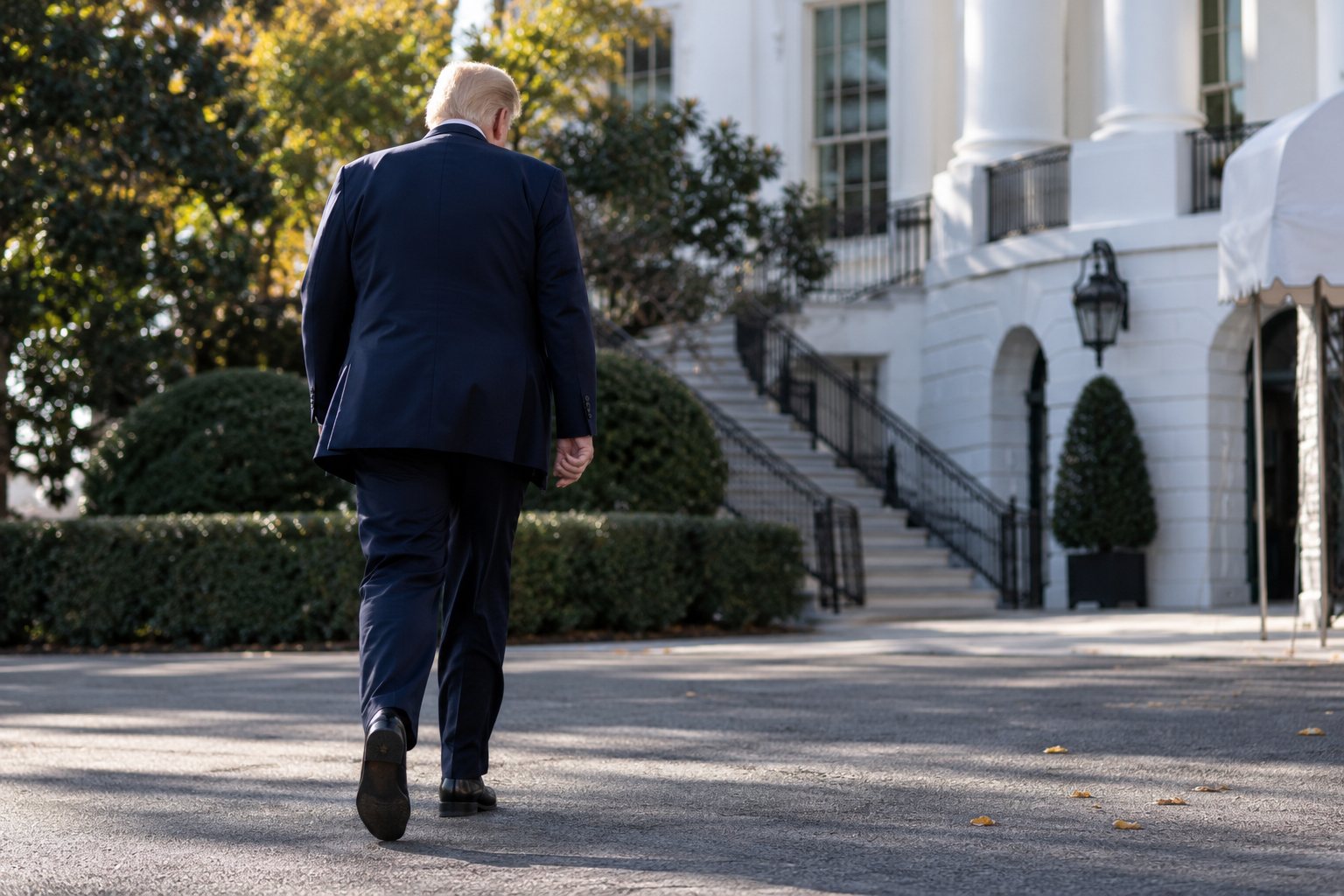
President Donald Trump is facing a series of controversies involving his defense secretary, the war in Ukraine and the economic consequences of the Iran conflict, raising new questions about his administration's direction just weeks before the midterm elections.
The latest controversy began when Defense Secretary Pete Hegseth announced plans to livestream the December 3 execution of Nidal Hasan, the former Army psychiatrist convicted of killing 13 people at Fort Hood in 2009.
The proposal triggered widespread condemnation from Republicans, Democrats, religious leaders and international observers. Critics warned that broadcasting an execution would undermine American values and turn capital punishment into a public spectacle.
On Thursday, Trump reversed the decision, announcing that the execution would proceed by firing squad but would not be televised.
The Pentagon insisted that Trump and Hegseth remained completely aligned, although the reversal represented a public retreat from one of the defense secretary's most controversial proposals.
Meanwhile, Trump drew criticism for condemning Ukrainian attacks against Russian oil refineries.
Speaking to Newsmax, Trump called the strikes a "disgrace," arguing that damaging Russian energy infrastructure was contributing to higher global oil prices.
The comments came despite Russia's continued attacks against Ukrainian energy facilities, which have disrupted electricity supplies for hundreds of thousands of civilians.
Trump also repeated his belief that Ukrainian President Volodymyr Zelensky was more difficult to negotiate with than Russian President Vladimir Putin.
Compounding these controversies is the ongoing war with Iran, which has contributed to higher energy prices and renewed economic uncertainty.
For an administration that promised lower prices and an end to costly foreign conflicts, the combination of military escalation, rising fuel costs and diplomatic tensions has created significant political challenges.
Writing in The Independent, columnist Chris Wiliamson suggested that these developments could eventually be remembered as early signs of a weakening Trump presidency.
Whether that assessment proves accurate remains uncertain. But the administration is confronting multiple disputes at once, including a rare reversal of a major Pentagon announcement and growing scrutiny of its foreign policy.
With the November elections approaching, those controversies are becoming an increasingly prominent part of the national political debate.