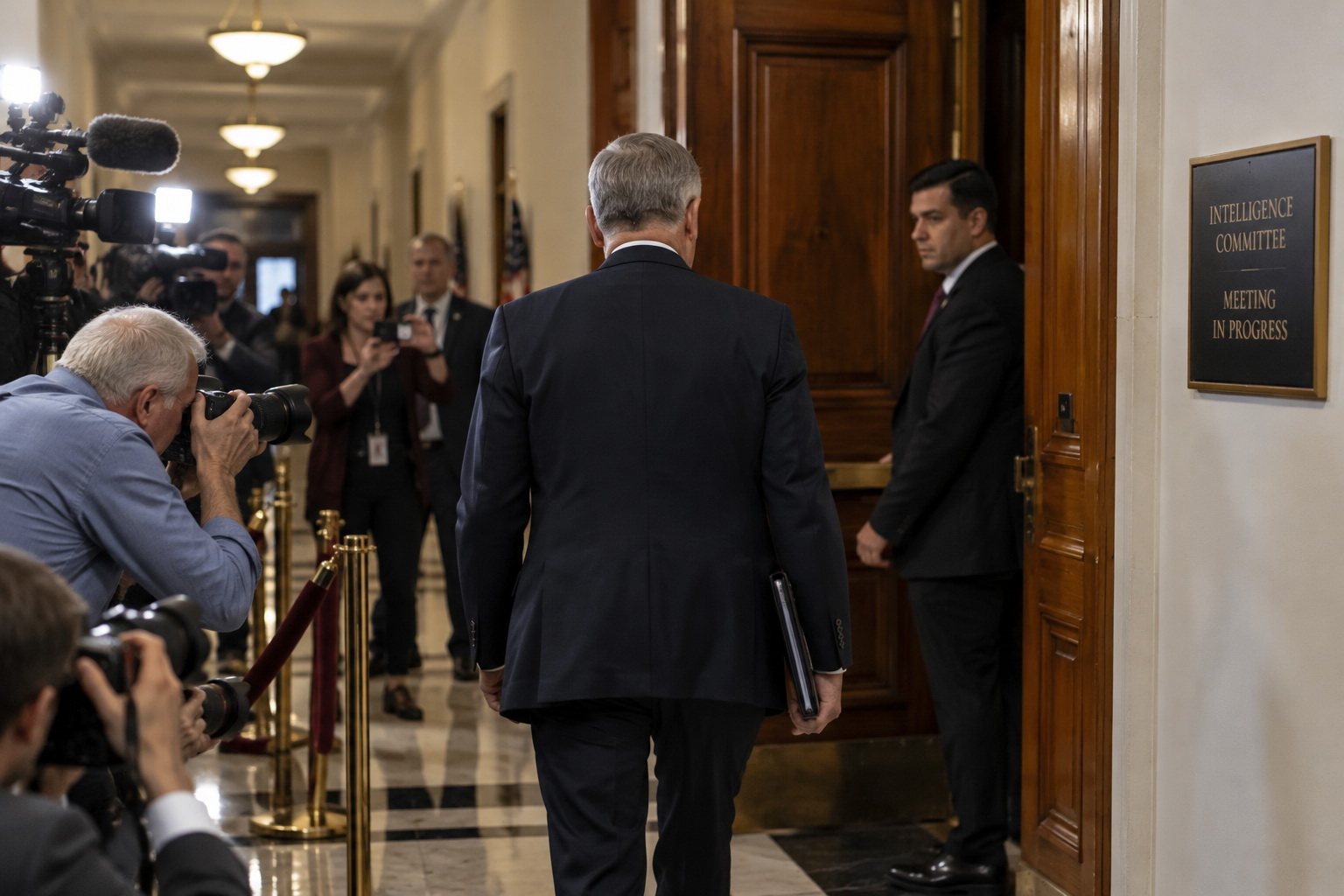
President Donald Trump's insistence that there was no quid pro quo in his dealings with Ukraine faced a major challenge Tuesday after the top American diplomat in Kyiv told congressional investigators that military assistance was tied to demands for politically advantageous investigations.
William B. Taylor Jr., the acting U.S. ambassador to Ukraine, delivered detailed testimony behind closed doors as part of the House impeachment inquiry, describing what he called an alarming effort to pressure Ukraine's newly elected president, Volodymyr Zelensky.
Taylor's account directly contradicts the White House's repeated assertions that the administration did not condition American assistance on Ukraine investigating Trump's political rivals.
Military Aid Used as Leverage
At the center of the controversy is nearly $400 million in congressionally approved security assistance intended to help Ukraine defend itself against Russian aggression.
According to Taylor's testimony, American officials communicated that the military assistance, along with a coveted White House meeting, depended on Zelensky publicly announcing investigations involving former Vice President Joe Biden's family and allegations about Ukrainian interference in the 2016 election.
Biden is a leading contender for the Democratic presidential nomination and a potential opponent of Trump in 2020.
Taylor said U.S. Ambassador to the European Union Gordon Sondland told him that Trump wanted Zelensky to publicly commit to the investigations.
The diplomat described his growing concern that American foreign policy was being used to advance domestic political objectives rather than national security interests.
A Shadow Foreign Policy Operation
Taylor also described two competing channels of American diplomacy in Ukraine.
One was the traditional diplomatic process involving the State Department and national security officials.
The other was an irregular operation involving Trump's personal attorney Rudy Giuliani, Sondland, former special envoy Kurt Volker, and Energy Secretary Rick Perry.
Taylor testified that this unofficial channel increasingly influenced decisions about Ukraine, sometimes bypassing the diplomats responsible for managing the relationship.
He became particularly concerned when it appeared that Ukraine's access to American military assistance depended on satisfying demands made through that channel.
The Text Message That Raised Alarms
Taylor's concerns had already surfaced in text messages exchanged with other American diplomats.
On September 9, he warned Sondland about the possibility that military assistance was being withheld to benefit Trump's political campaign.
"I think it's crazy to withhold security assistance for help with a political campaign," Taylor wrote.
Sondland responded that Trump had been clear there was no quid pro quo.
But Taylor's testimony Tuesday provided additional details about conversations in which Sondland reportedly acknowledged that military assistance was linked to Ukraine's willingness to announce the investigations.
Taylor said he feared that Ukraine could publicly commit to investigating Trump's political opponents and still fail to receive the assistance it needed.
Trump Continues Denying Wrongdoing
Trump has repeatedly maintained that his July 25 telephone conversation with Zelensky was appropriate and that he did nothing improper.
The president has characterized the impeachment investigation as a partisan effort to remove him from office.
His defenders argue that the administration had legitimate reasons to scrutinize Ukrainian corruption and that the military assistance was ultimately released.
However, Taylor's testimony raises questions about why an American president would make security assistance to an allied country dependent on public announcements concerning a domestic political rival.
The aid was intended to strengthen Ukraine's defenses against Russian-backed forces, not to serve as leverage in an American election campaign.
A Critical Moment in the Impeachment Investigation
Taylor is no political newcomer.
A West Point graduate and Vietnam veteran, he has served in military and diplomatic positions under Republican and Democratic administrations.
His lengthy government career and direct involvement in American diplomacy in Ukraine make his testimony particularly significant to congressional investigators.
The House impeachment inquiry is examining whether Trump abused presidential power by pressuring a foreign government to pursue investigations that could benefit his reelection campaign.
Taylor's account provides investigators with a detailed description of how that pressure was allegedly communicated and how military assistance became entangled in the effort.
The testimony does not by itself establish that Trump committed an impeachable offense. But it gives lawmakers substantial new evidence to examine as they investigate the administration's dealings with Ukraine.
The central question is now increasingly difficult for the White House to dismiss: Was American military assistance withheld to pressure a foreign government into publicly investigating the president's political opponents?