dddddddA remarkable dispute between President Donald Trump and his own secretary of state is consuming Washington after reports that Rex Tillerson privately referred to the president as a “moron,” forcing America's top diplomat to publicly defend his relationship with Trump while stopping short of personally denying that he made the remark.
The controversy erupted after NBC News reported that Tillerson made the comment following a tense July 20 meeting at the Pentagon involving Trump’s national security team and Cabinet officials.
The report also alleged that Tillerson had become so frustrated with the administration that he considered resigning during the summer.
Tillerson forcefully denied that part of the story.
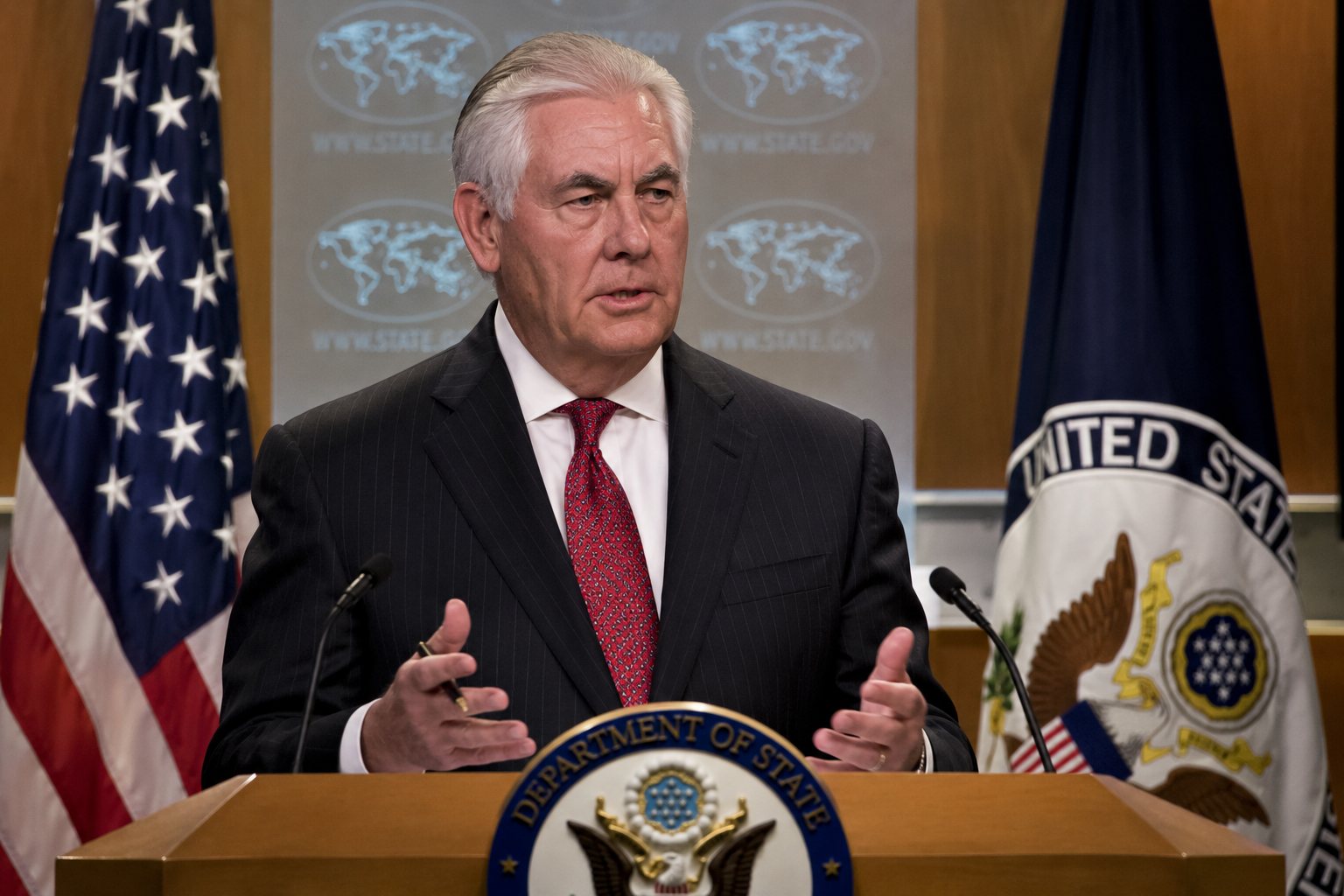
“I have never considered leaving this post,” Tillerson said during an unusual appearance at the State Department. He said he intended to remain secretary of state for as long as Trump believed he could be useful to the administration.
But when reporters asked the obvious follow-up question — whether he had actually called the president a “moron” — Tillerson did not provide the same unequivocal denial.
Instead, he dismissed the controversy as “petty nonsense.”
That distinction quickly became the story.
A Denial — But Not of Everything
Tillerson went out of his way to praise Trump during his appearance.
He described the president as smart, said Trump loves the country and praised him for demanding results from members of his administration.
Tillerson also rejected suggestions that Vice President Mike Pence had needed to persuade him to remain in the administration.
Yet the secretary of state repeatedly avoided directly answering whether he had used the insult attributed to him.
The State Department later issued a more explicit denial through spokeswoman Heather Nauert, who told reporters that Tillerson had not called Trump a moron and said the secretary did not use that type of language when speaking about the president.
Trump, meanwhile, seized on Tillerson's remarks as vindication.
The president accused NBC News of publishing “fake news” and demanded an apology, saying the report had been completely refuted by Tillerson and Pence.
But Tillerson himself had not actually refuted one of the report's most explosive claims.
Months of Visible Tension
The controversy comes after months in which differences between Trump and Tillerson have repeatedly surfaced in public.
Tillerson, the former chairman and chief executive of ExxonMobil, entered the administration with no previous government experience but decades of international business dealings.
As secretary of state, he has often adopted a more conventional diplomatic approach than the president.
Those differences have become particularly visible over North Korea.
Just days before the latest controversy, Tillerson disclosed that the United States was maintaining direct lines of communication with North Korea and was exploring whether Pyongyang had any interest in negotiations over its nuclear program.
Trump responded publicly by telling Tillerson he was “wasting his time” trying to negotiate with North Korean leader Kim Jong Un.
“Save your energy Rex,” Trump wrote on Twitter, adding that the United States would “do what has to be done.”
The public rebuke raised new questions about whether Tillerson was speaking for the administration when conducting American diplomacy.
An Extraordinary Moment
Cabinet secretaries disagree with presidents. Internal arguments over policy are hardly unusual.
What is unusual is having those tensions spill so openly into public view.
The nation's chief diplomat has now found himself publicly declaring his loyalty to the president after reports that he considered quitting and privately disparaged the president following a national-security meeting.
Tillerson insists his relationship with Trump remains functional and says he intends to continue implementing the president's foreign-policy agenda.
The White House similarly maintains that Trump continues to have confidence in his secretary of state.
But the controversy has exposed something the administration has struggled to conceal: significant differences exist between Trump and some of the senior officials responsible for carrying out his national-security policies.
And Tillerson's refusal to personally answer one very simple question ensures that the dispute is unlikely to disappear quickly.
Did the secretary of state call the president a “moron”?
Tillerson had an opportunity to say no.
He chose not to.