For more than a year, Donald Trump's presidential campaign had repeatedly crossed lines that once seemed capable of ending a national political career.
He had never held elected office.
He had never served in government.
He had never served in the military.
He had entered the race as a real-estate businessman and reality television personality, carrying a résumé unlike that of any previous person elected president of the United States.
During the campaign, he insulted John McCain's status as a war hero.
He proposed temporarily barring Muslims from entering the United States.
He attacked a federal judge while emphasizing the judge's Mexican heritage.
He feuded with the parents of a soldier killed in Iraq.
He was recorded making vulgar comments about women.
Multiple women accused him of unwanted sexual contact. Trump denied the allegations.
He publicly refused during the final presidential debate to promise that he would accept the election result.
Again and again, Trump's campaign survived controversies that might have destroyed a conventional candidate.
Then Americans went to the polls.
And in the early hours of November 9, the improbable became real.
Donald J. Trump was going to be the 45th president of the United States.
A President With No Government Experience
Trump's victory was historically unusual for a reason that had nothing to do with his rhetoric.
America had elected presidents with limited political experience before.
It had elected generals.
It had elected governors.
It had elected senators.
It had elected vice presidents.
Trump was different.
He would become the first person elected president without previous experience in either government or the military.
His experience came overwhelmingly from the private sector and entertainment.
He had built and licensed the Trump brand around hotels, casinos, golf courses and real estate.
Millions of Americans also knew him as the star of The Apprentice, where television audiences watched him portray a decisive billionaire executive.
Trump's supporters considered his outsider status an advantage.
He had not spent decades inside Washington.
He argued that his business experience had prepared him to negotiate deals, manage large organizations and challenge a political system his supporters believed had failed them.
His opponents saw the same résumé and reached the opposite conclusion.
The presidency was about to be handed to someone who had never governed a city, a state or a federal agency; never served in Congress; never worked as a diplomat; and never commanded troops.
There would be no apprenticeship.
On January 20, Donald Trump would become commander in chief.
The Campaign That Was Supposed to Collapse
Trump's victory was even more remarkable because predictions of his political demise had followed him almost from the moment he entered the race.
When he announced his candidacy in June 2015, many political observers treated the campaign as a celebrity spectacle.
Then he attacked John McCain.
The campaign survived.
He fought with Megyn Kelly.
It survived.
He proposed the Muslim entry ban.
It survived.
He attacked Judge Gonzalo Curiel.
It survived.
He feuded with Khizr and Ghazala Khan, whose son Army Capt. Humayun Khan had been killed in Iraq.
It survived.
Then came the Access Hollywood recording.
Trump could be heard boasting in extraordinarily vulgar terms about kissing and grabbing women.
Republican politicians condemned the recording.
Some withdrew their support.
Trump apologized for the remarks while dismissing them as locker-room talk.
The campaign survived.
Then women came forward accusing Trump of unwanted sexual contact.
Trump denied every allegation and threatened to sue his accusers.
The campaign survived that too.
By Election Day, Americans were no longer deciding whether any particular controversy would end Trump's candidacy.
They were deciding whether to make him president.
Enough voters in the right states said yes.
The Map Begins Turning Red
Election night initially looked uncertain.
Then the map began changing.
Florida went to Trump.
Ohio went to Trump.
North Carolina went to Trump.
Then came the states that shattered the Democratic path to victory.
Pennsylvania.
Wisconsin.
Michigan.
States that Democrats had counted on became the foundation of Trump's Electoral College victory.
The so-called Democratic “blue wall” had cracked.
Shortly before 3 a.m. Eastern time, the major television networks projected Donald Trump as the winner.
The candidate who had never held public office had defeated one of the most experienced presidential nominees in modern American politics.
Clinton Won More Votes
There was another extraordinary element to the result.
More Americans voted for Hillary Clinton.
When the national count was completed, Clinton had received:
65,840,578 votes.
Trump received:
62,978,288 votes.
Clinton's advantage was approximately 2.86 million votes.
But American presidents are not chosen by the national popular vote.
They are chosen through the Electoral College.
Trump had assembled victories in enough states to win the presidency.
After the electors ultimately cast their ballots, Trump received 304 electoral votes and Clinton received 227, with seven electors voting for other candidates.
Trump had lost the national popular vote.
He had won the presidency.
“It Is Time for Us to Come Together”
Trump appeared before supporters at the New York Hilton in the early hours of November 9.
The tone was noticeably different from many of his campaign rallies.
He announced that Clinton had called him and conceded.
Trump congratulated Clinton and her family on what he described as a hard-fought campaign.
Then the candidate whose rallies had featured some of the bitterest rhetoric of the election called for unity.
“Now it's time for America to bind the wounds of division,” Trump said.
He continued:
“It is time for us to come together as one united people.”
Trump promised to be president for all Americans.
It was a striking conclusion to a campaign built largely around confrontation.
Clinton Concedes
Later that morning, Hillary Clinton publicly conceded.
She acknowledged that the result was painful for her supporters but said Americans owed Trump an open mind and the opportunity to lead.
President Barack Obama also committed his administration to a peaceful and orderly transition of power.
The machinery of American democracy continued moving.
The candidate who had refused only weeks earlier to promise unequivocally that he would accept the election result was now its beneficiary.
His opponent conceded.
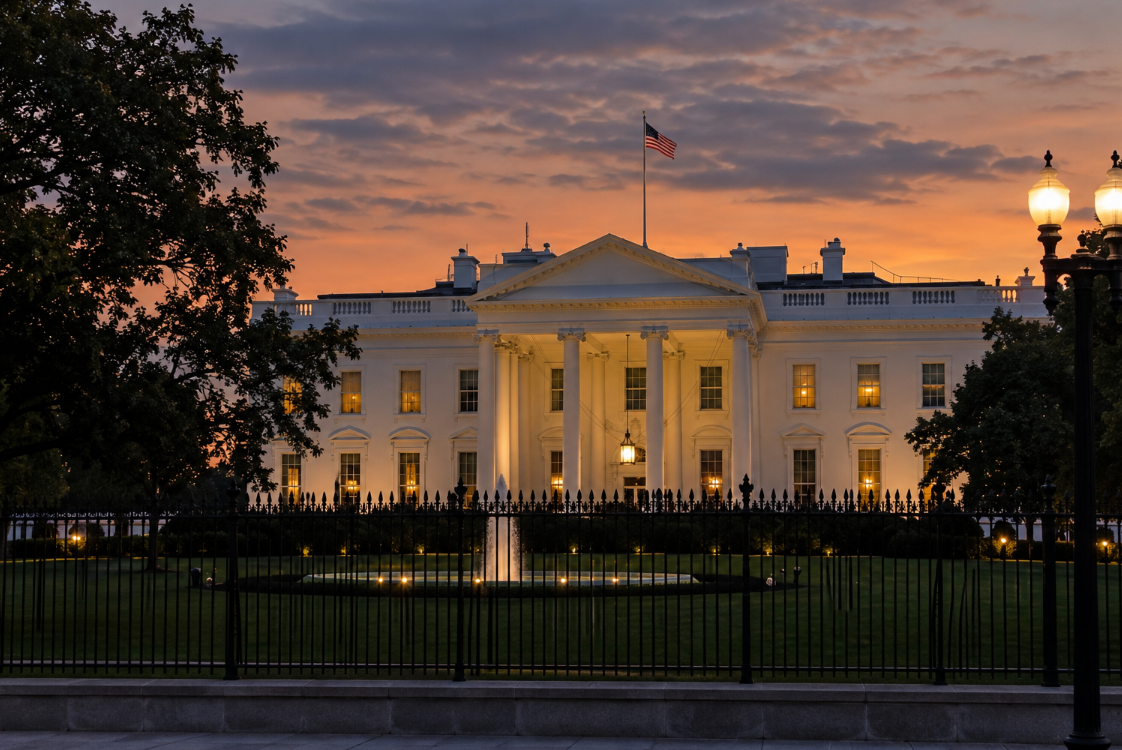
The sitting president prepared to welcome him to the White House.
How Did This Happen?
That question would consume American politics for years.
Trump had tapped into genuine anger among millions of voters.
Many felt abandoned by political institutions.
Some communities had suffered through decades of industrial decline.
Immigration had become a powerful political issue.
Distrust of Washington was widespread.
Trump's willingness to violate political conventions was not necessarily a liability to those voters.
For many, it was precisely what they liked about him.
Where critics saw recklessness, supporters saw someone willing to say things professional politicians would not.
Where critics saw a lack of governing experience, supporters saw independence from the political establishment.
Where critics saw chaos, supporters saw disruption.
Trump understood something many of his opponents had underestimated:
A substantial part of the electorate wasn't looking for a conventional president.
They wanted someone who would overturn the conventional political order.
The Ultimate Outsider Was Now Inside
The irony was extraordinary.
Donald Trump had spent his campaign attacking America's political establishment.
Washington was corrupt.
The media were dishonest.
Politicians were incompetent.
The system was rigged.
The experts didn't know what they were doing.
Now the ultimate political outsider was about to take control of the most powerful office in that system.
The businessman who had never served a day in government would oversee the executive branch of the United States.
The civilian who had never served in the armed forces would command them.
The candidate who had spent the campaign breaking political norms would soon be responsible for preserving the institutions of the presidency.
Millions of Americans were thrilled.
Millions were horrified.
But nobody could dismiss Donald Trump as a joke anymore.
President-Elect Donald Trump
The escalator ride at Trump Tower had begun less than seventeen months earlier.
At the time, the idea that Donald Trump could actually become president seemed implausible to many Americans.
Then came the rallies.
The Republican primary victories.
The collapse of Jeb Bush.
The defeat of Marco Rubio.
The defeat of Ted Cruz.
The Republican nomination.
The debates with Hillary Clinton.
The scandals.
The accusations.
The FBI letter.
And finally Election Day.
Donald Trump had broken almost every rule of conventional presidential politics.
He had won without prior government experience.
He had won without military experience.
He had won despite losing the national popular vote.
He had survived controversies that repeatedly produced predictions that his campaign was finished.
And now there was nothing hypothetical about Donald Trump's political career.
On January 20, 2017, the nuclear codes, the armed forces, the federal executive branch and the immense powers of the American presidency would pass to a man who had never previously held public office.
Donald Trump was going to be president.
And America — along with the rest of the world — was about to discover what that meant.