By August 2015, Donald Trump's presidential campaign was becoming difficult to dismiss.
He had been a candidate for barely two months.
He had already generated controversies involving Mexican immigrants, Senator John McCain and Fox News moderator Megyn Kelly.
He was dominating political coverage and rising in Republican polls.
Then came Mobile, Alabama.
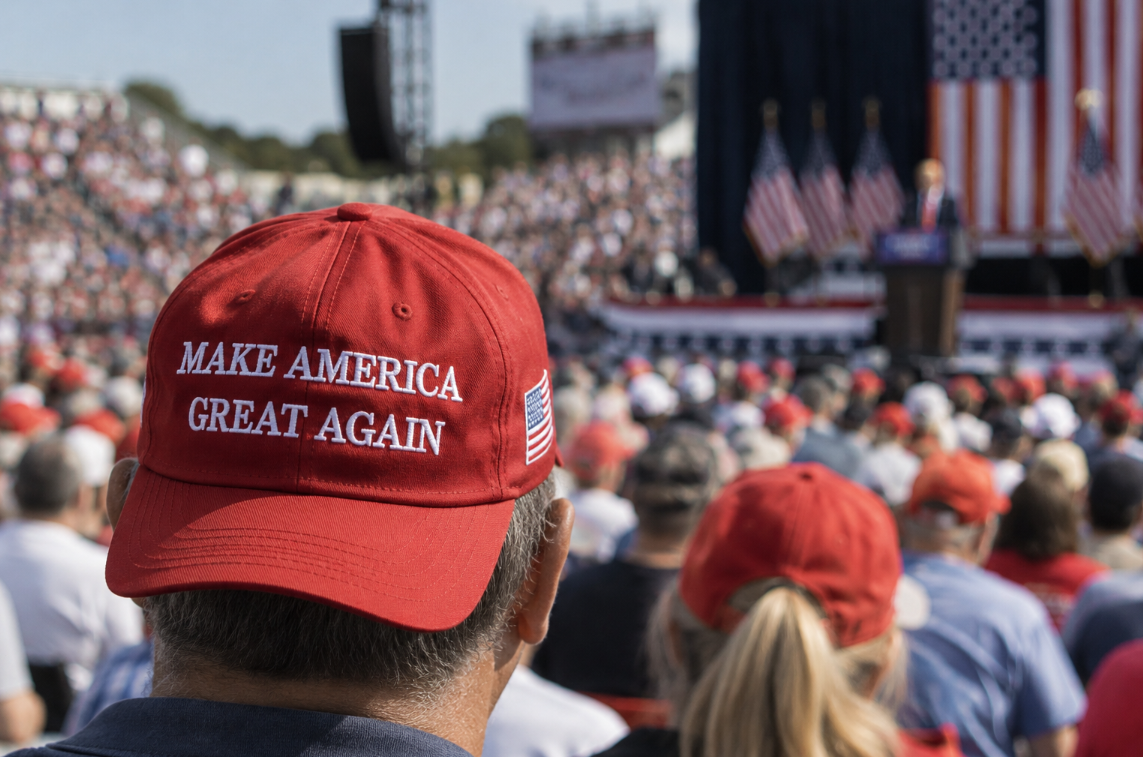
On August 21, 2015, thousands of people poured into Ladd-Peebles Stadium to see Donald Trump speak.
The size of the event offered something television interviews and opinion polls could not:
A visible demonstration of just how much enthusiasm Trump's campaign was generating.
The Event Outgrew Its Original Venue
Trump's appearance had originally been planned for a much smaller location.
But interest in attending grew so rapidly that organizers moved the event to Ladd-Peebles Stadium, a football stadium capable of accommodating a dramatically larger crowd.
Two days before the rally, Trump's campaign was already telling supporters to expect “tens of thousands” of people.
That alone represented an extraordinary development for a candidate who had entered the race only in June.
Trump wasn't simply attracting television viewers anymore.
People were showing up.
Thousands of them.
A Presidential Campaign Begins Looking Like a Movement
The scene in Mobile provided an early glimpse of the political rallies that would become synonymous with Donald Trump.
Supporters arrived wearing campaign merchandise.
American flags surrounded the stage.
People waited for hours.
Trump arrived by helicopter.
And when he finally addressed the crowd, the atmosphere looked less like a traditional political town hall and more like a major public event.
That distinction mattered.
Presidential campaigns routinely hold rallies, but Trump's events were beginning to become part of the campaign's identity.
The crowd wasn't merely there to hear a policy speech.
Many were there to see Donald Trump.
Trump Had Become the Republican Front-Runner
The Mobile rally didn't occur in isolation.
Trump's polling numbers had risen rapidly during the weeks preceding it.
The businessman and television personality who had initially occupied the lower end of Republican presidential polls was now competing at the top of the field.
His controversial statements had generated criticism from Republican politicians, corporations, Latino organizations and commentators.
But the controversies had not driven him from the race.
Instead, Trump remained at the center of political coverage.
The enormous audience in Alabama offered another indication that at least a portion of Republican voters wasn't merely curious about Trump.
They were enthusiastic about him.
The Rally Became Part of the Message
Trump frequently talked about the size of his crowds.
Large audiences became evidence he cited when discussing the strength of his campaign.
That approach would continue throughout the election.
Crowd size became intertwined with Trump's political identity — something he repeatedly mentioned at rallies, interviews and eventually during his presidency.
Mobile was an early example of why.
Television cameras could capture something immediately understandable:
A stadium.
Thousands of people.
And Donald Trump standing in the middle of it.
No complicated polling analysis was necessary.
The pictures told their own story.
A Campaign Built for Television
There was another advantage to holding enormous rallies.
They made compelling television.
Trump had spent years working in entertainment and understood the visual power of a large audience.
A candidate speaking inside a hotel ballroom looked like a conventional politician.
A candidate arriving by helicopter and addressing thousands of cheering supporters inside a football stadium looked like something else entirely.
The rally itself became news.
That generated more coverage.
The coverage exposed more voters to Trump.
And the cycle continued.
The Republican Race Had Changed
Only two months earlier, Donald Trump had descended an escalator at Trump Tower and announced his presidential campaign.
Many political observers questioned whether his candidacy would last.
By August, the question was changing.
Trump was leading national Republican polls.
He was dominating political coverage.
His confrontations with other Republicans and the news media were producing almost continuous attention.
And now thousands of Americans were filling a football stadium to see him.
Whatever happened next, Donald Trump's candidacy could no longer be treated simply as a celebrity publicity stunt.
The crowd in Mobile made that increasingly difficult to argue.
The television personality had become a presidential front-runner.
And the rallies were only getting started.