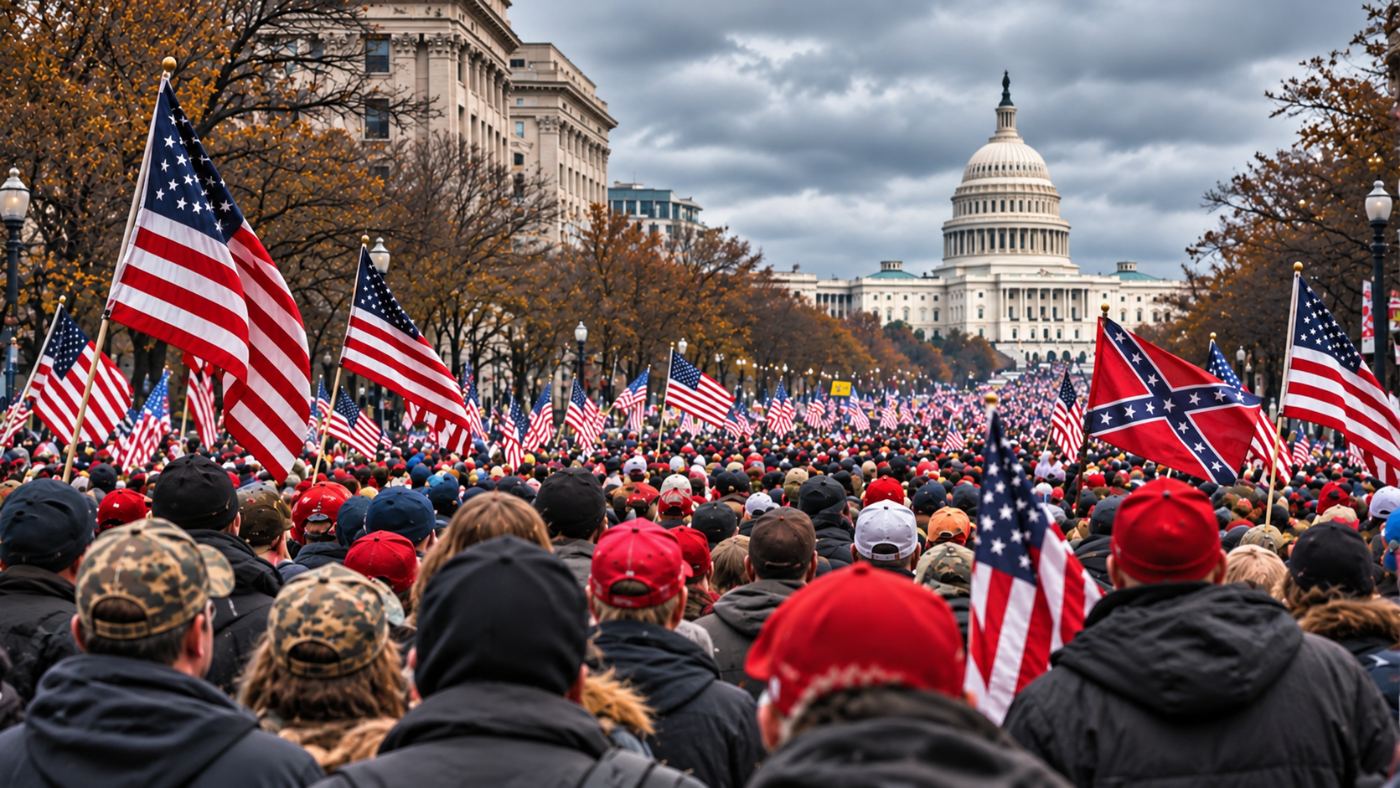
On November 14, 2020, thousands of Donald Trump's supporters descended on Washington, D.C., for what organizers called the "Million MAGA March." Their mission was to protest the presidential election results and demand that Trump remain in office despite his defeat by Joe Biden.
What unfolded that Saturday would become an important chapter in the history of the movement that culminated in the January 6 attack on the United States Capitol.
The election had been called for Biden a week earlier. State election officials had found no evidence of widespread fraud capable of changing the outcome. Nevertheless, Trump refused to concede, repeatedly insisting that the election had been stolen.
His supporters believed him.
A Million Marchers? Not Even Close.
The demonstration brought thousands of protesters to Freedom Plaza, where they marched toward the Supreme Court carrying Trump flags and chanting slogans about election fraud.
White House Press Secretary Kayleigh McEnany claimed that more than one million people had attended. The claim was false. Independent reporting documented thousands of participants, with some estimates reaching into the tens of thousands.
Trump himself made an appearance, passing through the crowd in his presidential motorcade on his way to his Virginia golf club.
For demonstrators, the presidential drive-by was a moment of celebration. For Trump, it was another opportunity to acknowledge supporters who refused to accept his electoral defeat.
Extremist Groups Join the Demonstration
Among the participants were members of the Proud Boys, Oath Keepers, and Three Percenters—organizations whose involvement in the events surrounding January 6 would later become subjects of federal investigations.
As evening approached, confrontations between Trump supporters and counterprotesters escalated into street violence.
Fights broke out, police officers were injured, and more than twenty people were arrested on charges that included assault and weapons offenses.
Federal intelligence reports later documented that authorities had anticipated possible violence. The presence of extremist organizations and threats circulating online had already raised concerns before the demonstration began.
The Road to January 6
The November rally did not constitute an organized rehearsal for the Capitol attack. But in retrospect, it revealed several elements that would become central to January 6.
The false narrative of a stolen election had mobilized thousands. Extremist organizations were participating in demonstrations alongside ordinary Trump supporters. Political anger was escalating, and some participants were willing to engage in violence.
Another major pro-Trump demonstration followed in Washington on December 12.
Then, on December 19, Trump publicly summoned supporters to Washington for January 6, promising that the gathering would be "wild."
The House January 6 committee later concluded that Trump's repeated false election claims helped provoke the violence at the Capitol and that his efforts to overturn the election included mobilizing supporters to pressure Congress.
The Warning America Had Already Seen
The Million MAGA March demonstrated how quickly an election conspiracy theory could become a mass political movement.
Not everyone who attended advocated violence. Many participated in lawful demonstrations protected by the First Amendment. But the presence of violent extremists, the confrontations in Washington, and the refusal to accept verified election results created warning signs that federal authorities documented.
On January 6, 2021, the consequences became unmistakable when a mob attacked the Capitol as Congress met to certify Biden's victory.
The November 14 demonstration was not the Capitol attack itself. It was an earlier moment when the same false election narrative, some of the same extremist networks, and the growing determination to prevent a peaceful transfer of power were already on display.
Six weeks before January 6, the warning signs were there. The country would soon discover how serious they were.