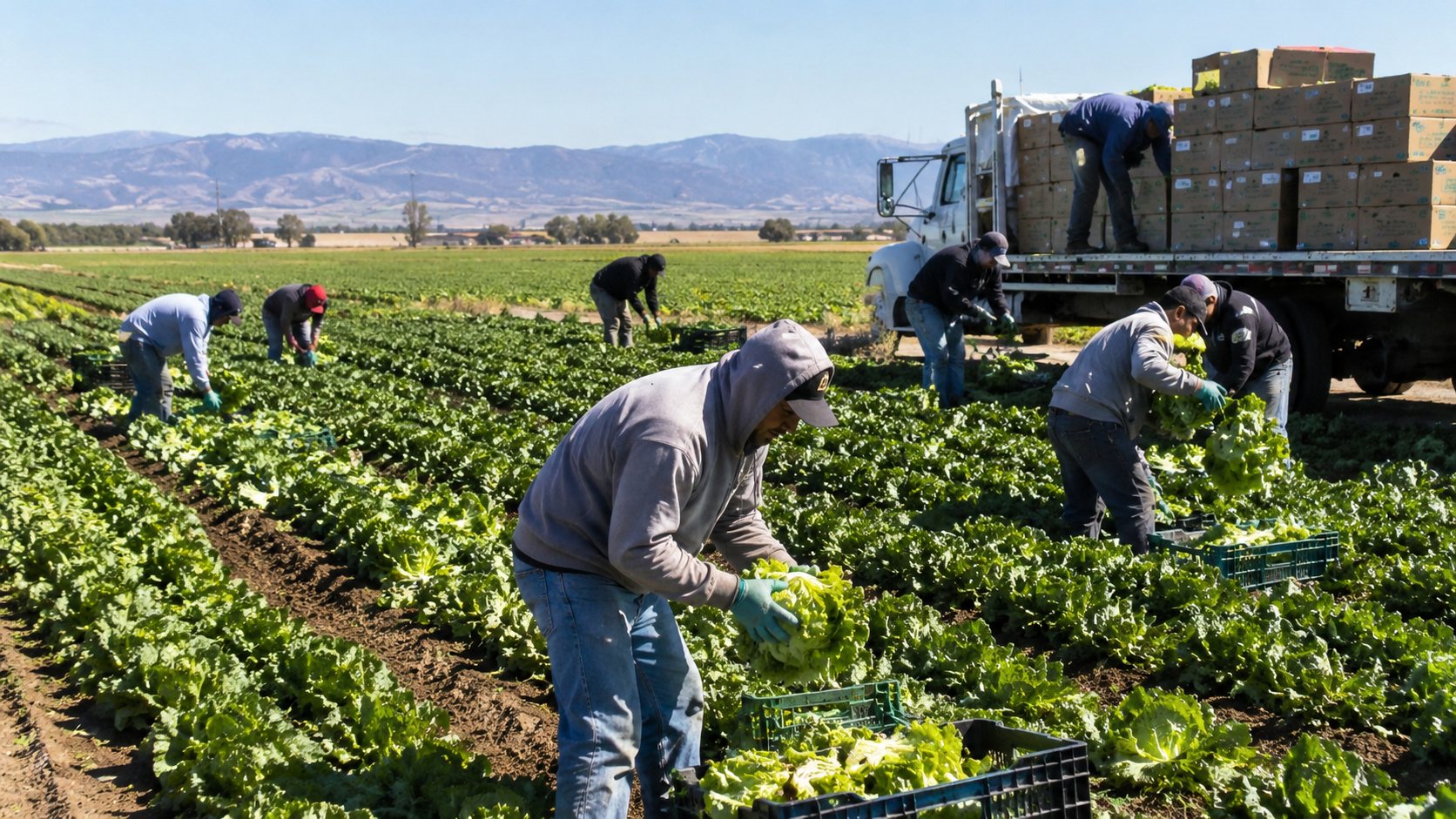
Across Texas, agricultural employers are struggling to recruit and retain workers. Some fruit and vegetable growers have reportedly gone out of business, while others have abandoned labor-intensive crops in favor of products requiring fewer employees.
According to the Texas Farm Bureau, the agricultural labor shortage has reached crisis levels. The organization reported that more than 415,000 agricultural positions were advertised nationwide during fiscal year 2025, yet only 182 positions received a domestic applicant.
The figures illustrate a longstanding problem: American agriculture depends heavily on immigrant labor because too few domestic workers apply for demanding seasonal farm jobs.
Now, Trump's immigration crackdown is adding another obstacle.
Immigration and Customs Enforcement operations have created widespread anxiety among agricultural workers, including some who are legally authorized to work in the United States. Workers fearful of detention have reportedly stayed home, avoided certain workplaces, or left agricultural communities altogether.
In September, three major cattle industry organizations representing Texas, Oklahoma, and Kansas publicly warned that ICE enforcement was disrupting agricultural operations.
The organizations reported delays involving thousands of cattle awaiting transportation to processing facilities, along with workforce disruptions affecting feedyards, dairies, transportation operations, and other essential agricultural businesses.
Their warning was particularly significant because it came from organizations representing an industry that has traditionally supported conservative political candidates.
The consequences extend far beyond individual farms.
Agriculture operates on unforgiving schedules. Crops must be harvested when ready. Dairy cattle require daily care. Livestock must be fed, transported, and processed regardless of whether enough employees report for work.
When workers disappear, production slows, expenses increase, and perishable products can be lost.
A 2026 Texas A&M agricultural economics analysis found that increased immigration enforcement reduces the availability of farm labor and increases production costs. Researchers also noted that enforcement can discourage workers who are not directly targeted from reporting to agricultural jobs.
The Trump administration maintains that immigration enforcement is necessary to uphold federal law and protect American workers. But agricultural employers argue that the domestic workforce cannot simply replace the immigrant employees upon whom the industry has depended for decades.
The federal H-2A guestworker program provides a legal avenue for hiring foreign agricultural employees, but farmers complain that the system is expensive, complicated, and poorly suited to businesses requiring year-round labor.
The crisis has become serious enough that more than 40 agricultural organizations reportedly warned Trump and congressional leaders in October that immigration enforcement was disrupting American food production.
The organizations called for protections and legal work authorization for established agricultural employees.
Not every Texas farm closure can be attributed to ICE. Labor shortages existed long before Trump's current administration, and rising costs, low commodity prices, and other financial pressures also threaten farm profitability.
Nevertheless, the evidence increasingly demonstrates that immigration enforcement is compounding those problems.
For consumers, the consequences could eventually appear in grocery stores through reduced domestic production and higher food prices.
For farmers, the consequences are already visible: fewer available employees, disrupted operations, and difficult decisions about whether their businesses can survive.
The central contradiction is becoming increasingly difficult to ignore: America wants a secure food supply, but the immigration policies intended to protect American jobs are also disrupting the workforce that helps produce that food.