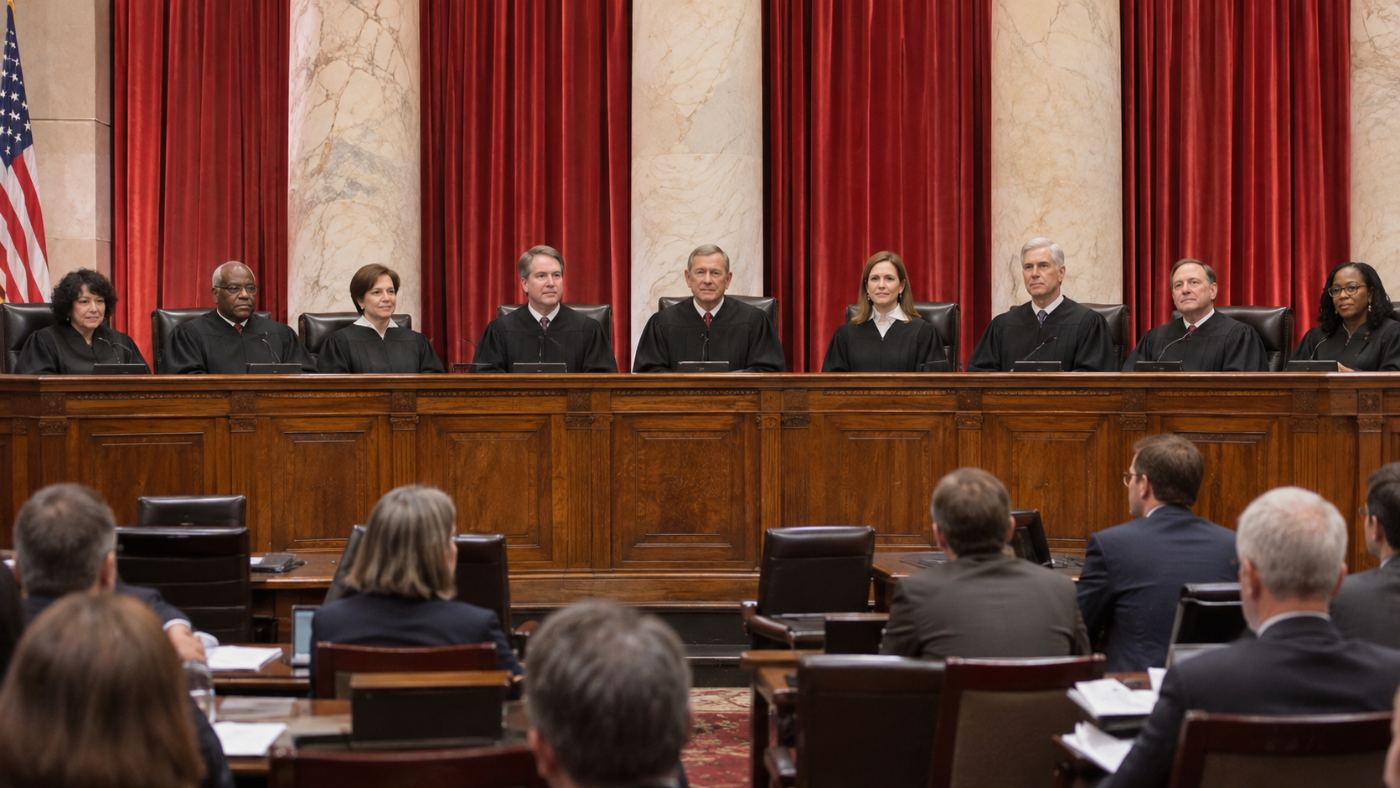
On December 8, 2020, President Donald Trump's effort to overturn his election defeat suffered another major setback when the United States Supreme Court rejected an emergency request from Republican allies seeking to invalidate Pennsylvania's presidential election results.
The decision left intact Joe Biden's victory in Pennsylvania, where he defeated Trump by more than 80,000 votes.
The lawsuit sought extraordinary relief that could have discarded more than 2.5 million mail-in ballots or allowed Republican state legislators to select presidential electors instead of honoring the certified results.
Republicans Attempt to Discard Millions of Votes
The legal challenge was led by Republican Congressman Mike Kelly and other Pennsylvania Republicans.
They argued that a 2019 Pennsylvania law expanding mail-in voting violated the state's constitution.
There was one particularly revealing problem with their argument: the law had been passed by Pennsylvania's Republican-controlled legislature more than a year before the presidential election.
Rather than challenge the law before voters used it, the plaintiffs waited until after the election, when Biden had won Pennsylvania.
Their proposed remedies could have invalidated millions of legally cast ballots, including votes submitted by Republicans.
The Pennsylvania Supreme Court had already dismissed the lawsuit, concluding that the challengers waited too long to bring their constitutional objections.
The state court also warned that granting the requested relief would disenfranchise millions of voters.
Trump's Supreme Court Strategy Fails
Trump had repeatedly suggested that the Supreme Court might ultimately decide the presidential election.
During the 2020 campaign, he emphasized the importance of confirming Justice Amy Coney Barrett before Election Day, citing the possibility of election-related litigation.
By December, the Court included three justices appointed by Trump, giving its conservative wing a six-to-three majority.
But on December 8, the justices refused to intervene.
In a brief, unsigned order, the Supreme Court denied the emergency application without providing an explanation or recording any public dissent.
The ruling did not decide every underlying constitutional question. It denied the immediate request to block Pennsylvania's certified election outcome.
Nevertheless, it represented another setback for Trump's allies as the Electoral College prepared to meet on December 14.
Trump Pressures Pennsylvania Republicans
The courtroom defeat followed reports that Trump had personally contacted Pennsylvania House Speaker Bryan Cutler, a Republican, seeking help reversing the state's election results.
According to The Washington Post, Trump called Cutler twice.
Cutler's office explained that the speaker lacked authority to overturn the election or unilaterally summon lawmakers into a special session.
The president's efforts illustrated how his campaign to reverse the outcome extended beyond lawsuits into direct pressure on Republican state officials.
Meanwhile, Pennsylvania's certified results continued to show Biden as the winner.
Another Challenge Arrives the Same Day
Even as the Supreme Court rejected the Pennsylvania application, Texas Attorney General Ken Paxton filed a separate lawsuit challenging Biden's victories in Pennsylvania, Georgia, Michigan, and Wisconsin.
That case sought another path to invalidate certified election results in states Trump had lost.
The Supreme Court would reject the Texas lawsuit on December 11, citing Texas's lack of standing.
The Pennsylvania ruling therefore came during a continuing series of unsuccessful attempts by Trump and his allies to reverse the election.
The Votes Remained Counted
The December 8 decision did not resolve every dispute over election procedures, but it prevented this emergency application from disrupting Pennsylvania's certified result.
For millions of Pennsylvania voters, the stakes were substantial. Their ballots had been cast under election rules established before the election, yet Republican challengers sought to invalidate those votes after the outcome became clear.
Trump's allies asked the nation's highest court for an extraordinary intervention that could have discarded millions of ballots. On December 8, 2020, the Supreme Court refused, leaving Pennsylvania's voters—not Republican legislators—to determine the state's presidential election outcome.