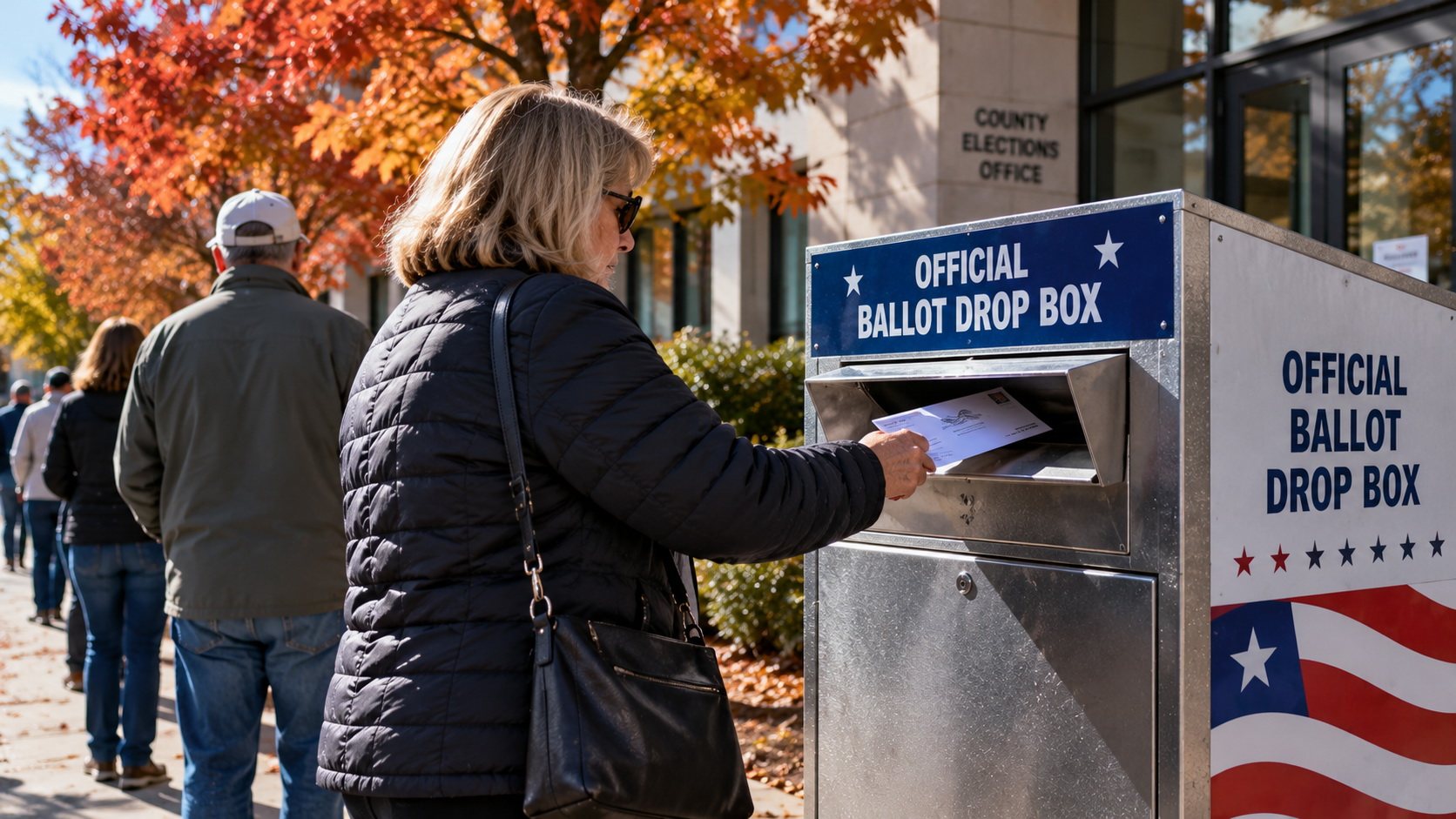
The U.S. Supreme Court handed Republicans two setbacks Wednesday, allowing extended deadlines for receiving mail-in ballots in North Carolina and Pennsylvania to remain in place just six days before the presidential election.
The decisions come as President Donald Trump continues attacking mail-in voting and making unsupported claims that widespread voting by mail will lead to election fraud.
Trump Campaign Loses in North Carolina
In North Carolina, the Supreme Court rejected an emergency request from Trump's campaign, the Republican National Committee, and Republican state lawmakers seeking to block an extension for receiving absentee ballots.
Under the rules left in place, ballots postmarked by Election Day can arrive as late as November 12 and still be counted.
The extension was adopted amid concerns about postal delays during the coronavirus pandemic.
The justices rejected the Republican challenge 5–3, with conservative Justices Clarence Thomas, Samuel Alito, and Neil Gorsuch dissenting.
Pennsylvania Republicans Also Rejected
In Pennsylvania, the Court declined to fast-track another Republican challenge to a state Supreme Court ruling allowing ballots mailed by Election Day to arrive through November 6.
However, the justices left open the possibility of reviewing the Pennsylvania dispute after the election.
Newly confirmed Justice Amy Coney Barrett did not participate in either decision.
Trump Continues Attacking Mail-In Voting
Trump has repeatedly questioned the legitimacy of mail-in ballots despite the absence of evidence supporting his claims of widespread fraud.
Republicans challenging the extensions argue that election officials and courts are improperly changing voting rules established by state legislatures.
Democrats and voting rights advocates counter that the extensions are necessary to prevent eligible voters from losing their votes because of postal delays.
The Supreme Court's decisions leave additional time for properly mailed ballots to reach election officials in two closely watched states.
With millions of Americans voting by mail during the pandemic, disputes over which ballots will be counted remain a central issue in the final days before November 3.