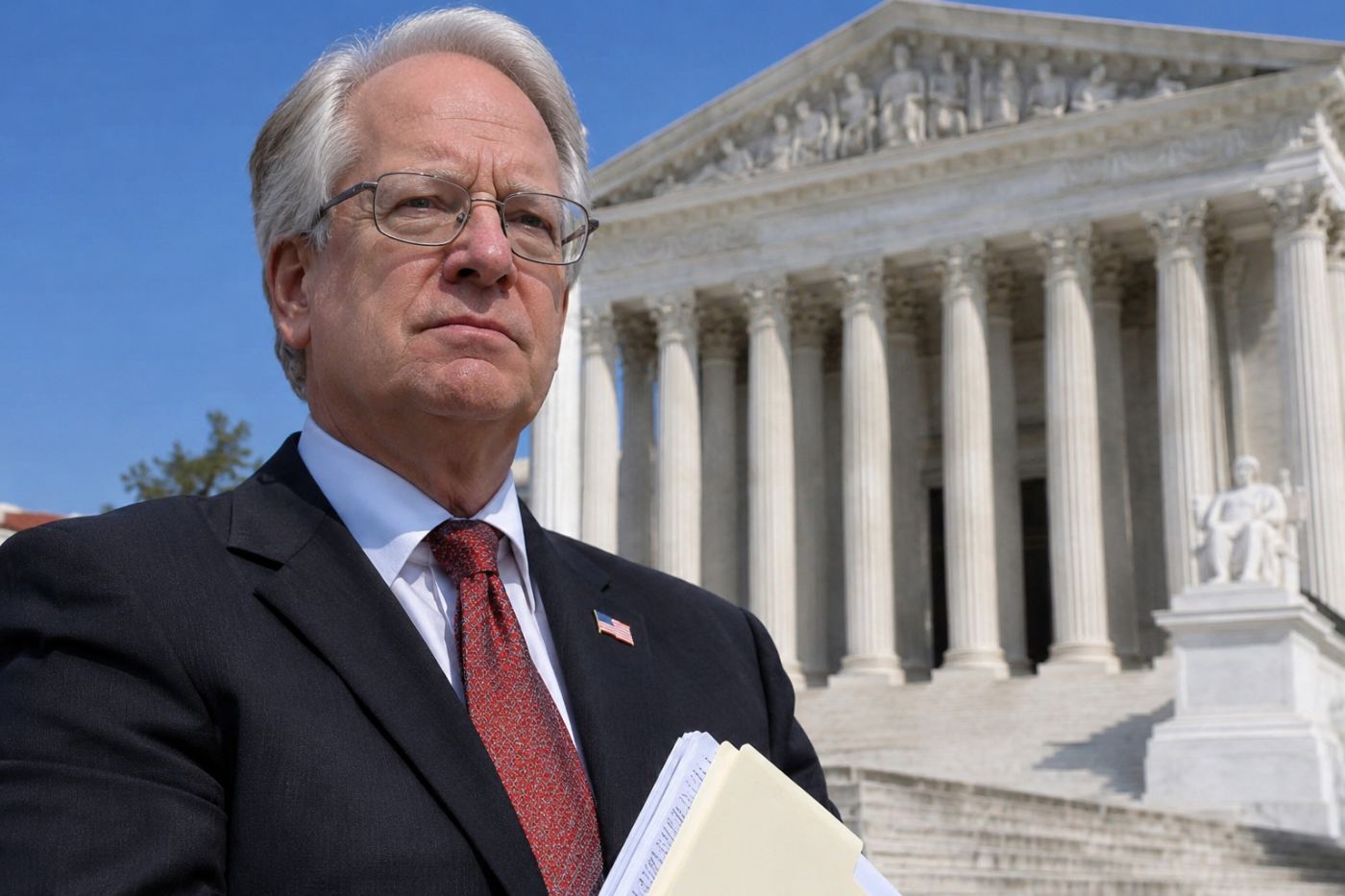
Larry Klayman, the conservative attorney and founder of Judicial Watch who became a prominent figure in right-wing legal activism, has been disbarred from practicing before the United States Supreme Court.
The November 9 decision marks another significant setback in Klayman's lengthy history of disciplinary proceedings, professional misconduct findings, and confrontations with the judiciary.
The Supreme Court issued an unsigned order formally disbarring Klayman after previously suspending him from practicing before the justices in June 2026.
The ruling follows disciplinary actions in Washington, D.C., and Florida, where courts had already suspended his ability to practice law.
A Long History of Legal Trouble
Klayman founded Judicial Watch in 1994, establishing the conservative organization as a frequent litigant against government officials and institutions.
He became particularly prominent during the Clinton administration, when Judicial Watch pursued numerous lawsuits involving President Bill Clinton and his administration.
Klayman later separated from the organization but remained active in conservative political and legal circles, becoming an outspoken supporter of Donald Trump and an advocate for numerous right-wing causes.
His legal career, however, has been overshadowed by repeated disciplinary proceedings.
In one case, the District of Columbia Court of Appeals found that Klayman violated professional ethics rules while representing a woman in a sexual harassment lawsuit against Voice of America.
The court determined that Klayman's romantic feelings toward his client created a conflict of interest that compromised his professional judgment and representation.
Other disciplinary proceedings involved conflicts of interest and disputes over his conduct before federal courts.
Florida Suspended Him in 2025
In November 2025, the Florida Supreme Court suspended Klayman's law license for two years, citing disciplinary findings from Washington, D.C.
Klayman challenged the proceedings and maintained that the disciplinary actions against him were unjustified.
He also accused legal authorities of targeting conservative attorneys, an allegation that does not negate the professional misconduct findings underlying the sanctions.
The U.S. Supreme Court subsequently suspended him from its own bar in June 2026.
On November 9, the justices made that sanction permanent through a formal disbarment order.
Laura Loomer's Attorney Faces Another Setback
Klayman's legal difficulties have also raised questions about his involvement in cases representing prominent conservative activists.
Among his clients has been Laura Loomer, the controversial Trump ally who filed a defamation lawsuit against comedian Bill Maher and HBO.
The lawsuit concerned Maher's comments about Loomer's relationship with Donald Trump.
Klayman's earlier suspension in Florida had already complicated his ability to continue representing clients in that jurisdiction.
His Supreme Court disbarment adds another restriction, although it does not automatically determine his eligibility to practice in every other jurisdiction.
The Supreme Court Draws the Line
The decision is particularly notable because the Supreme Court has a conservative majority, including three justices appointed by Donald Trump.
The disciplinary order did not address Klayman's political beliefs or his support for Trump. It followed established attorney disciplinary proceedings involving professional ethics violations.
Klayman has consistently disputed the legitimacy of the sanctions against him.
Nevertheless, the Supreme Court's November 9 order leaves no ambiguity about his status before the nation's highest court.
The attorney who spent decades challenging government institutions and pursuing politically charged litigation is now prohibited from practicing before the Supreme Court itself.
For Klayman, it represents another consequential chapter in a legal career increasingly defined by battles not simply against political opponents, but against the courts responsible for regulating the legal profession.