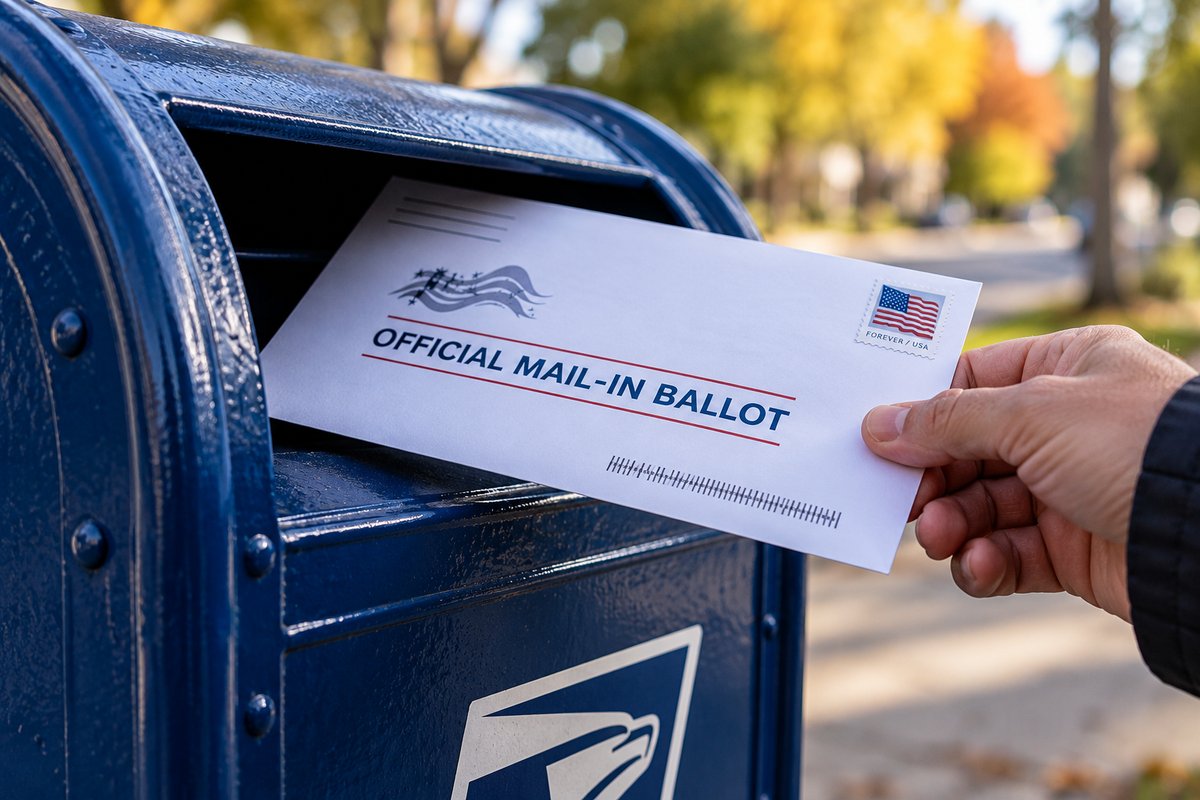
President Donald Trump's attempt to impose sweeping new federal requirements on mail-in voting before the 2026 midterm elections has been blocked by the Supreme Court, leaving states free to continue using their existing mail-ballot systems while the larger legal battle continues.**
The September 14 decision marked the latest turn in a fast-moving fight over presidential power, state control of elections and an unusual attempt to use the U.S. Postal Service as part of the nation's election-verification system.
The administration wanted the Postal Service to enforce new requirements governing which ballot envelopes it would handle and which voters could receive ballots through the mail.
The Supreme Court refused to allow those requirements to take effect for this year's elections.
In its unsigned order, the Court said the government was unlikely to succeed on the merits of its challenge to the lower court's preliminary injunction.
The ruling does not permanently invalidate Trump's policy.
But with voting already beginning in some states, it effectively prevents the administration from implementing the disputed Postal Service system for the 2026 midterms.
It Started With a Presidential Executive Order
Trump signed Executive Order 14399, titled Ensuring Citizenship Verification and Integrity in Federal Elections, on March 31.
The order directed federal agencies to develop new mechanisms for verifying citizenship and instructed the Postal Service to create nationwide standards governing mail-in and absentee ballots.
Among the prop