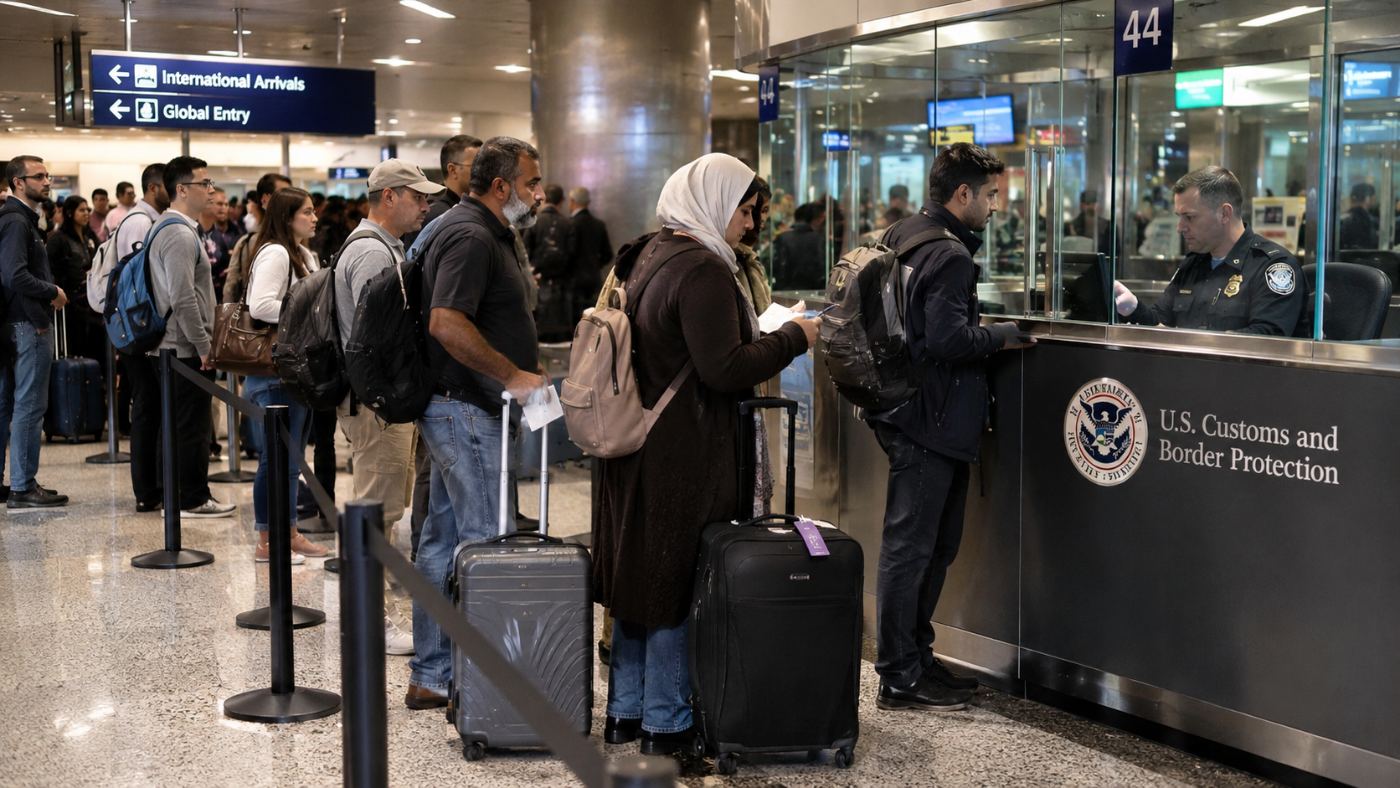
On December 4, 2017, the United States Supreme Court allowed President Donald Trump's controversial travel ban to take full effect, permitting his administration to enforce sweeping restrictions on travelers from several predominantly Muslim countries while legal challenges continued.
The decision marked a significant victory for Trump, whose earlier attempts to restrict immigration had repeatedly encountered resistance in federal courts.
However, the justices did not determine whether the policy was constitutional.
Eight Countries Targeted
The administration's third travel ban, announced in September 2017, imposed varying restrictions on nationals of eight countries.
Six were predominantly Muslim: Iran, Libya, Somalia, Syria, Yemen, and Chad.
The remaining countries were North Korea and Venezuela, although Venezuela's restrictions primarily affected certain government officials and their families.
The administration argued that the restrictions were necessary because the affected governments failed to provide adequate information for American security screening.
Critics maintained that the policy unfairly targeted Muslims and reflected Trump's earlier campaign proposal to restrict Muslim immigration.
Lower Courts Had Blocked the Policy
Federal judges in Hawaii and Maryland had previously limited enforcement of the September proclamation.
Their rulings protected certain travelers who had established relationships with relatives or institutions in the United States.
These exemptions were especially important for families attempting to reunite, students attending American universities, and individuals with employment connections.
The administration appealed, arguing that the courts had improperly interfered with presidential authority over immigration and national security.
Supreme Court Lifts the Restrictions
On December 4, the Supreme Court issued two orders allowing the administration to enforce the proclamation while appeals proceeded.
The unsigned orders provided no detailed explanation of the justices' reasoning.
Justices Ruth Bader Ginsburg and Sonia Sotomayor indicated that they would have denied the administration's requests.
The decision removed the temporary protections established by the lower courts, allowing the administration to implement the restrictions more broadly.
It did not resolve the underlying legal questions.
White House Celebrates
Attorney General Jeff Sessions welcomed the ruling, describing it as a victory for national security.
The administration maintained that the restrictions resulted from a worldwide review of foreign governments' identity-verification and information-sharing practices.
Civil rights organizations strongly disagreed.
The American Civil Liberties Union argued that Trump's previous statements about Muslims provided evidence of discriminatory intent.
Opponents also warned that the restrictions could separate families and prevent otherwise eligible travelers from entering the country.
Trump's Earlier Statements Remain Central
The controversy extended back to Trump's 2016 presidential campaign, when he proposed restricting Muslim entry into the United States.
After taking office, Trump signed his first travel ban in January 2017.
That order triggered widespread protests, confusion at airports, and immediate legal challenges.
A revised version followed in March, but it also encountered judicial opposition.
The September proclamation represented the administration's third attempt to establish enforceable restrictions.
Its inclusion of North Korea and Venezuela became part of the administration's argument that the policy concerned national security rather than religion.
The Legal Battle Continues
The December 4 decision was temporary, leaving appellate courts to consider the legality of the restrictions.
In June 2018, the Supreme Court ultimately upheld the September proclamation in a 5–4 decision in Trump v. Hawaii.
The majority concluded that the president possessed broad statutory authority to impose entry restrictions.
The dissenting justices argued that the policy should be examined in light of Trump's statements about Muslims.
President Joe Biden later revoked the travel restrictions on January 20, 2021.
A Defining Immigration Decision
The December 4 ruling demonstrated the considerable authority available to presidents seeking to restrict entry into the United States.
For affected travelers and families, it meant that restrictions previously limited by federal judges could be enforced while litigation continued.
For the Trump administration, it represented an important legal development in one of its most disputed immigration initiatives.
December 4, 2017, remains a significant date in the history of Trump's travel ban and the legal battle over presidential immigration powers.