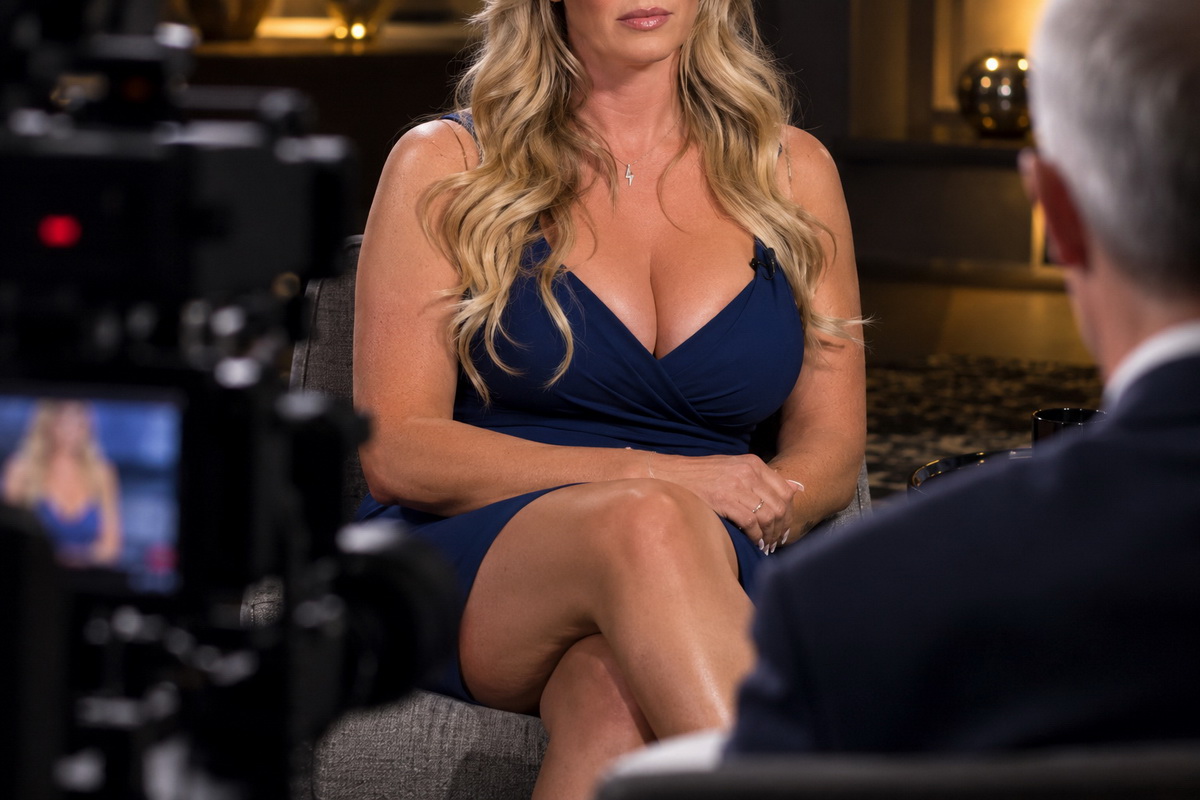
Adult-film actress Stormy Daniels went before one of the largest television audiences of the year and publicly described what she said was a sexual encounter with Donald Trump in 2006 — and the extraordinary effort to keep her from talking about it shortly before he was elected president.
In an interview with Anderson Cooper on CBS's “60 Minutes,” Daniels, whose legal name is Stephanie Clifford, said she had sex with Trump after meeting him at a celebrity golf tournament in Lake Tahoe.
Trump denied having an affair with Daniels.
But one part of the story was no longer in serious dispute: Trump's longtime attorney Michael Cohen had arranged a $130,000 payment to Daniels shortly before the 2016 presidential election in exchange for her signing an agreement requiring her silence.
What initially looked like a celebrity sex scandal would eventually become something much larger.
Years later, the handling and concealment of that payment would become central to the first criminal prosecution and conviction of a former American president.
Daniels Describes the Encounter
Daniels told Cooper that she met Trump at a celebrity golf tournament in July 2006.
Trump had married Melania Trump the previous year, and their son Barron had been born several months before Daniels says the encounter occurred.
According to Daniels, Trump invited her to dinner.
She instead met him in his hotel suite.
Daniels described an extended conversation in which Trump discussed himself, showed her a magazine featuring him on its cover and talked with her about possibly appearing on “The Apprentice.”
She said that when she returned from using the bathroom, Trump was sitting on the bed.
Daniels said they subsequently had consensual sex.
She told Cooper she wasn't physically attracted to Trump and didn't particularly want to have sex with him, but she was equally clear that she had not been physically forced.
Daniels said the two remained in contact afterward and met again, although she said they did not have sex again.
Trump denied the affair.
$130,000 for Her Silence
The most consequential part of the story happened a decade later.
By October 2016, Trump was the Republican presidential nominee and the election was only weeks away.
Daniels' story had suddenly become politically dangerous.
Michael Cohen, Trump's longtime attorney and fixer, arranged an agreement under which Daniels would receive $130,000 in exchange for remaining silent about her story.
Cohen created a company called Essential Consultants LLC and used it to make the payment.
Daniels signed the agreement 11 days before Election Day.
The payment was not a fee for having sex with Trump.
It was money paid years later for her silence about the encounter she said had occurred.
That distinction would eventually become enormously important.
Daniels Says She Had Been Threatened
The “60 Minutes” interview also produced another startling allegation.
Daniels said that in 2011, years before the hush-money agreement, she had been preparing to publicly tell her story when an unknown man approached her in a Las Vegas parking lot.
Her infant daughter was with her.
According to Daniels, the man warned her to leave Trump alone and forget the story.
She interpreted his comments about her daughter and what might happen to Daniels as a direct threat.
Daniels said she never reported the encounter to police because she was frightened.
No evidence presented during the interview established who the man was or whether he had any connection to Trump or his associates.
Why Did Daniels Sign the Agreement?
Daniels had previously signed statements denying that an affair occurred.
On “60 Minutes,” she said those statements weren't truthful.
She told Cooper she had felt pressured to continue denying the story and believed she faced serious legal consequences if she violated the nondisclosure agreement.
Daniels also explained that accepting the $130,000 allowed her to avoid publicly discussing the encounter while protecting her family from the intense publicity that would inevitably follow.
By March 2018, however, the agreement itself had become the story.
Daniels was suing to have it declared invalid, arguing in part that Trump had never personally signed it.
And questions were mounting about exactly where the money came from, who knew about it and why the payment had been made immediately before a presidential election.
The Sex Scandal Becomes a Legal Problem
At the time of the “60 Minutes” interview, much of the public discussion centered on whether Daniels and Trump had actually had sex.
History would make another question considerably more important.
What happened to the $130,000?
Cohen initially said he had used his own money to make the payment.
The financial trail eventually became much clearer.
Cohen pleaded guilty in 2018 to federal crimes that included campaign-finance violations connected to payments made to suppress damaging stories during the 2016 campaign.
He implicated Trump in the payment scheme.
Prosecutors later established that after Trump became president, Cohen was reimbursed through a series of payments recorded by the Trump Organization as legal expenses.
Those records ultimately became the foundation of Manhattan District Attorney Alvin Bragg's criminal prosecution of Trump.
From “60 Minutes” to a Criminal Courtroom
Six years after Daniels sat down with Anderson Cooper, she would tell the story again under dramatically different circumstances.
This time she wasn't sitting in a television studio.
She was testifying under oath in a Manhattan courtroom while Donald Trump sat at the defense table.
Prosecutors argued that the Daniels payment was part of a broader effort to prevent potentially damaging information about Trump from reaching voters before the 2016 election and that business records were falsified to conceal Cohen's reimbursement.
In May 2024, a Manhattan jury convicted Trump on 34 felony counts of falsifying business records.
The case wasn't simply about whether Donald Trump had sex with Stormy Daniels.
Daniels' account of the encounter provided the reason the $130,000 payment existed.
The criminal case concerned what happened afterward — the effort to suppress the story during a presidential campaign and the records created when Cohen was reimbursed.
The Interview That Wouldn't Go Away
On March 25, 2018, however, none of that had happened yet.
There had been no Trump criminal indictment.
There had been no trial.
There had been no felony conviction.
There was simply Stormy Daniels sitting across from Anderson Cooper telling millions of Americans that she had had sex with Donald Trump and explaining why she had accepted $130,000 to keep quiet about it.
Trump denied the affair.
But the payment intended to keep Daniels' story out of public view instead helped ensure that the story would follow Trump for years.
What began as an attempt to buy silence eventually became evidence in one of the most consequential criminal cases in American political history.