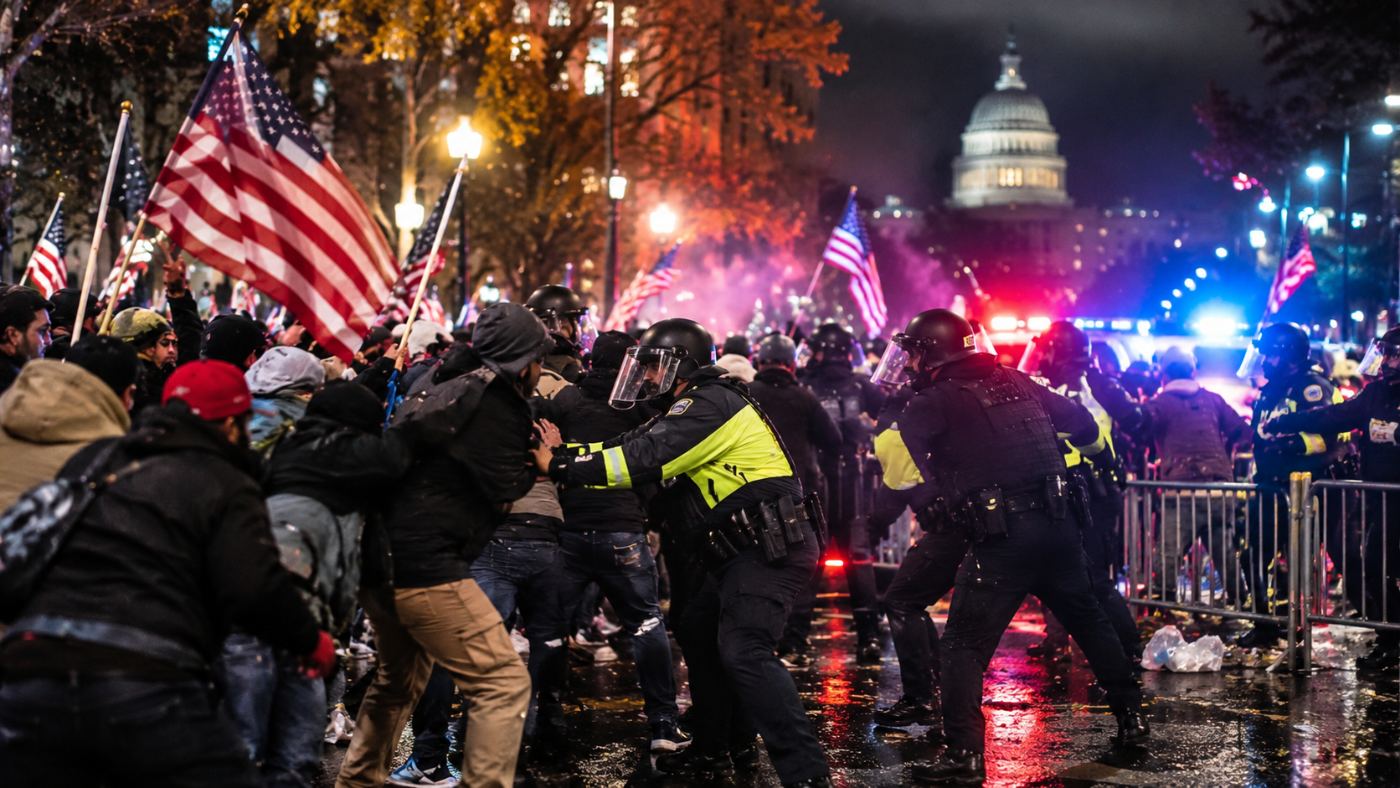
What began Saturday as a demonstration by thousands of Donald Trump supporters refusing to accept the presidential election results descended into violence on the streets of Washington, D.C., leaving people injured, police officers hurt, and at least 20 people under arrest.
The confrontations followed the so-called Million MAGA March, a gathering organized around President Trump's unsupported claims that widespread election fraud cost him a second term.
By nightfall, the nation's capital had become the scene of street fights, thrown projectiles, and increasingly aggressive confrontations between Trump supporters and counterprotesters.
From Political Protest to Street Violence
Throughout much of Saturday, demonstrators marched through Washington carrying American flags and expressing support for a president who refuses to acknowledge his election defeat.
The daytime demonstrations were largely peaceful. However, tensions escalated as opposing groups encountered one another.
Videos circulating Saturday evening showed demonstrators exchanging punches, throwing objects, and engaging in physical confrontations. Some participants reportedly carried clubs or other makeshift weapons.
Police attempted to separate the groups as violence spread through portions of downtown Washington.
The Metropolitan Police Department reported at least 20 arrests by late Saturday, including arrests involving assault, disorderly conduct, and firearms violations.
Authorities also reported a stabbing, injuries to two police officers, and the recovery of several firearms.
Extremist Groups Enter the Picture
Members of the far-right Proud Boys were among those participating in the day's events.
The group's presence has raised concerns about the involvement of extremist organizations in demonstrations surrounding Trump's refusal to concede.
Counterprotesters also engaged in confrontations, and available reports do not establish that every violent incident was initiated by Trump supporters.
Nevertheless, the clashes illustrate how demonstrations built around disputed election claims can create opportunities for violent groups to confront political opponents.
Washington police had already warned demonstrators about restrictions on carrying firearms in the nation's capital.
Saturday's arrests suggest those warnings were not universally heeded.
The President Continues to Challenge the Election
The violence comes one week after major news organizations projected Joe Biden as the winner of the 2020 presidential election.
Trump has continued alleging widespread voter fraud without presenting evidence sufficient to demonstrate that the outcome should be reversed.
His legal challenges have encountered setbacks, while election officials across the country continue their established certification procedures.
Rather than acknowledging Biden's victory, Trump has encouraged public skepticism about the election's legitimacy.
Saturday's demonstrators adopted that message, demanding that the election results be overturned or reconsidered.
The president briefly acknowledged supporters earlier in the day when his motorcade passed through the demonstration on its way to his Virginia golf club.
A Dangerous Political Climate
The right to protest election results is protected by the First Amendment. Peaceful demonstrations, even those based on mistaken beliefs, remain a fundamental part of American democracy.
Violence, intimidation, and assaults are not protected political expression.
Saturday's confrontations demonstrate the growing tensions surrounding an election whose outcome Trump continues to dispute.
The danger extends beyond individual street fights. When political leaders repeatedly question election legitimacy without substantiating their allegations, public confidence in democratic institutions can suffer.
The violence in Washington does not mean every Trump supporter endorses extremist behavior. It does, however, underscore the importance of distinguishing lawful political protest from criminal conduct.
What Happens Next?
With Biden preparing for the presidential transition and Trump continuing to contest the results, the political confrontation shows little sign of ending.
Law enforcement agencies now face the challenge of protecting demonstrators, preventing further violence, and ensuring that opposing groups can exercise their constitutional rights safely.
Meanwhile, the president faces a choice: continue promoting allegations that have not been substantiated or acknowledge the results of an election he has lost.
Saturday's violence is a warning about the consequences of escalating political hostility.
The election is over. The struggle over whether its outcome will be accepted is clearly not.