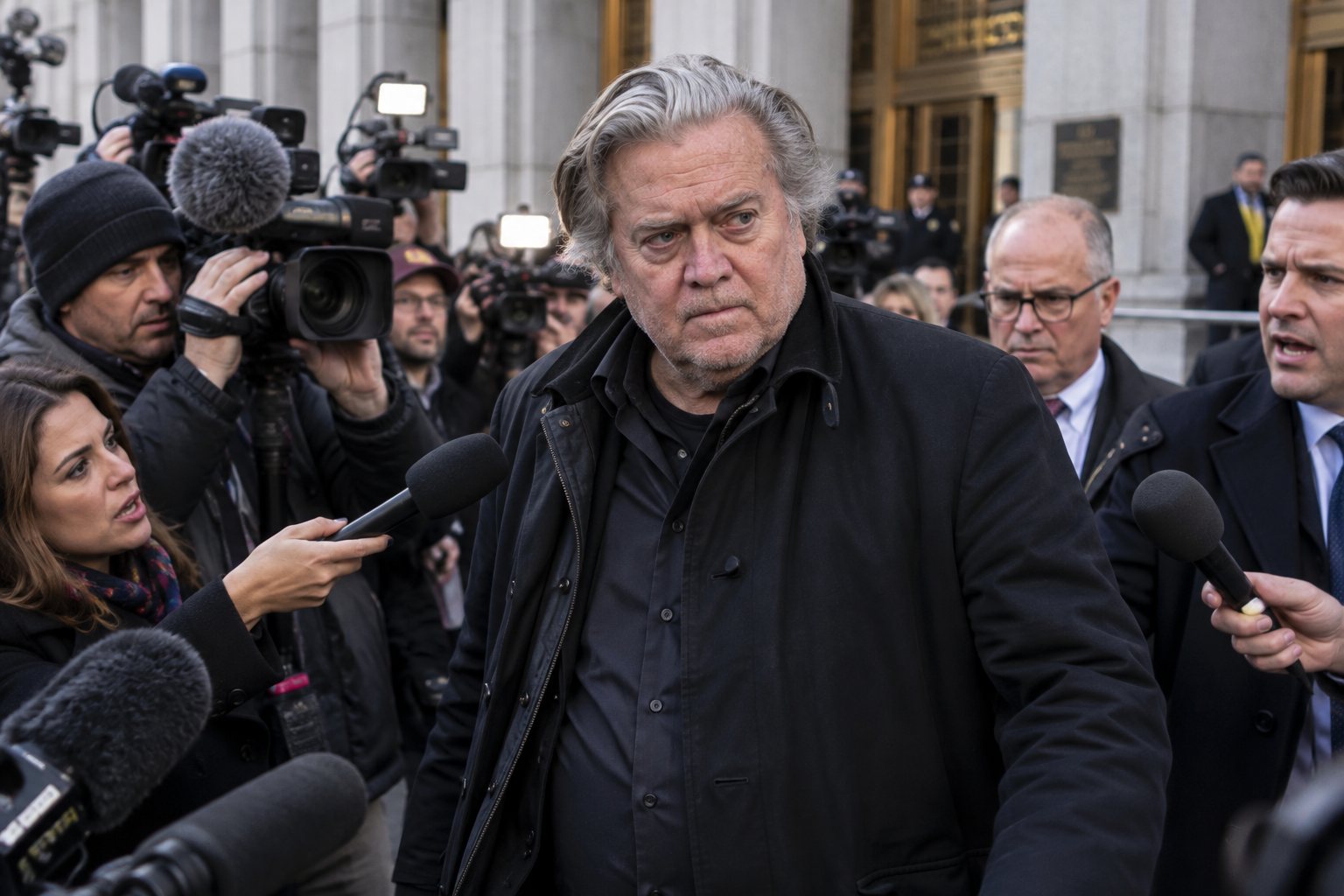
Former Trump campaign chief executive Steve Bannon testified under oath Friday that Donald Trump's 2016 presidential campaign viewed longtime political adviser Roger Stone as a potential connection to WikiLeaks, the organization responsible for publishing stolen Democratic emails during the election.
The testimony came during Stone's federal criminal trial, where prosecutors are examining his alleged efforts to obtain information about WikiLeaks releases and conceal those activities from congressional investigators.
Bannon's statements provide new details about the Trump campaign's interest in material that could damage Hillary Clinton.
Bannon Identifies Stone as a WikiLeaks Connection
Appearing in federal court in Washington, Bannon acknowledged that campaign officials believed Stone might provide information about WikiLeaks and its founder, Julian Assange.
Stone had repeatedly suggested he possessed connections to the organization, which released thousands of Democratic emails during the final months of the 2016 presidential campaign.
Bannon testified that the campaign had no official relationship with WikiLeaks but regarded Stone as a possible source of information.
He also acknowledged that Stone's claims attracted attention because the anticipated releases could benefit Trump's campaign.
Bannon emphasized that he was testifying under subpoena and would not have appeared voluntarily.
The Campaign Wanted Information About Clinton
Prosecutors presented communications demonstrating the campaign's interest in upcoming WikiLeaks disclosures.
In October 2016, when Assange held a news conference without releasing the damaging information some campaign officials expected, Bannon contacted Stone.
Asked why, Bannon explained that Stone was the person he associated with WikiLeaks and Assange.
His testimony suggests that senior campaign officials took Stone's claims seriously enough to seek additional information.
However, Bannon did not testify that Trump personally directed Stone to contact WikiLeaks or that the campaign maintained a confirmed communication channel with Assange.
Russian Hacking and the 2016 Election
American intelligence agencies have concluded that Russian operatives hacked Democratic organizations and conducted an interference campaign intended to damage Clinton and benefit Trump.
WikiLeaks subsequently published stolen emails, including messages belonging to Clinton campaign chairman John Podesta.
The disclosures dominated political coverage during the closing weeks of the presidential race.
Special Counsel Robert Mueller's investigation examined Russian interference and contacts involving Trump associates.
Stone's trial concerns allegations that he obstructed congressional efforts to investigate those activities.
Stone Faces Charges of Lying and Witness Tampering
Stone is charged with making false statements to Congress, obstructing an investigation, and attempting to influence witness testimony.
Prosecutors allege that Stone misrepresented his communications with people who might have had access to WikiLeaks.
Another witness, radio personality Randy Credico, testified that Stone pressured him to support a misleading account of those contacts.
Credico described threatening messages and references to the film The Godfather Part II that he interpreted as attempts to intimidate him.
Stone has pleaded not guilty and disputes the government's allegations.
His attorneys have sought to challenge the credibility of prosecution witnesses and the significance of his communications.
Questions About Trump's Campaign Remain
Earlier testimony revealed telephone contacts between Stone and Trump during the 2016 campaign.
However, the contents of those conversations have not been established in court.
Bannon's testimony does not prove that the campaign coordinated directly with WikiLeaks or participated in Russian hacking.
It does establish that campaign officials regarded Stone as someone who might provide advance information about damaging disclosures.
That distinction is central to the prosecution's case.
As Stone's trial continues, jurors must determine whether he deliberately misled Congress and interfered with witnesses investigating Russian election interference.
For the Trump campaign, Bannon's testimony adds another documented connection between senior campaign figures, Stone, and their interest in WikiLeaks during the 2016 election.