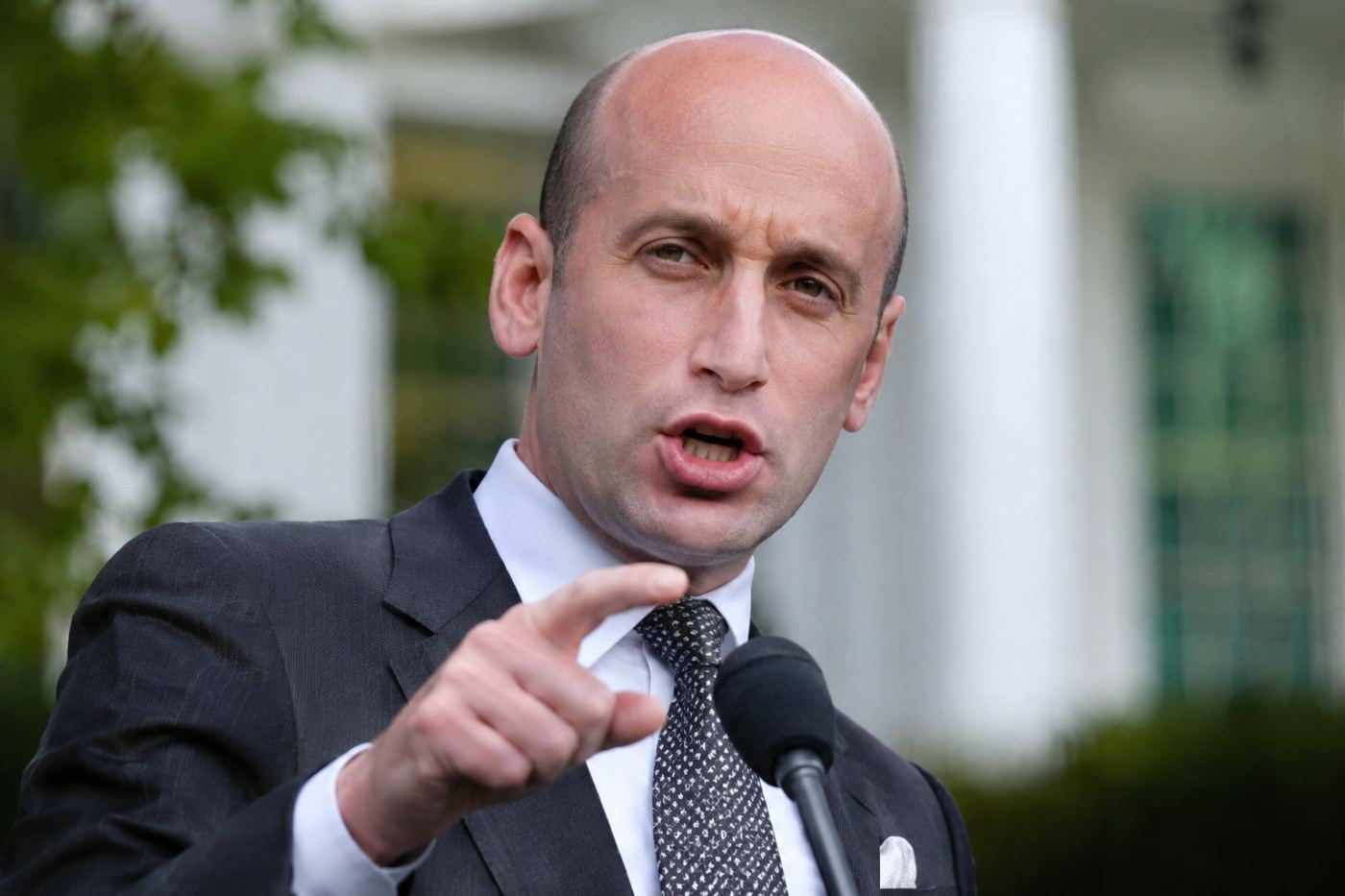
Stephen Miller, the newly appointed White House chief of staff and one of the most controversial figures in Donald Trump's administration, is facing fresh scrutiny after alleged private messages revealed an extraordinary effort to mobilize white male voters during the 2024 presidential election.
The messages, released by former MAGA influencer Ashley St. Clair, suggest that Miller wanted conservative women to pressure young white men into supporting Trump.
And the proposed name for this political operation?
"White Boy November."
The Messages Behind the Controversy
St. Clair, who previously maintained close connections within the MAGA movement, published screenshots of purported Signal conversations with a contact identified as "S M," whom she says was Stephen Miller.
The messages allegedly proposed a last-minute social media campaign encouraging conservative women to contact white male voters and pressure them to participate in the election.
One message instructed supporters to contact ten white men and report their results.
Another proposed the slogan "The Kens strike back," apparently referencing the male characters from the Barbie movie.
The authenticity of the messages has not been independently established, and the screenshots alone do not prove Miller authored them.
Nevertheless, the alleged strategy raises questions about the racial and gender-based political messaging circulating within Trump's inner circle.
The Architect of Trump's Immigration Crackdown
Miller is hardly an unfamiliar figure in American politics.
For nearly a decade, he has been among the most influential architects of Trump's immigration agenda, helping shape policies involving mass deportations, restrictive immigration measures, and the controversial family separation policy during Trump's first administration.
His approach has consistently emphasized immigration enforcement and nationalist political messaging.
Critics have long accused Miller of promoting policies that disproportionately target immigrant communities and exploit racial anxieties for political advantage.
The alleged messages, if authenticated, would add another revealing chapter to that record.
From Electoral Defeat to Promotion
The timing of the disclosures is particularly striking.
Following devastating Republican losses in the 2026 midterm elections, Trump elevated Miller to White House chief of staff, replacing Susie Wiles.
Rather than distancing himself from one of the administration's most polarizing figures, Trump placed Miller in one of the most powerful unelected positions in American government.
It was an extraordinary decision for a party facing serious questions about its political direction.
And now, just days after his promotion, Miller finds himself at the center of another controversy involving race and political strategy.
Another MAGA Insider Breaks Ranks
St. Clair's decision to release the alleged messages is also significant.
Once a prominent conservative influencer, she has publicly repudiated the MAGA movement, criticizing its internal culture and the financial incentives driving political outrage.
Her break with the movement reflects a recurring pattern in Trump's political orbit: former supporters and insiders eventually turning against the very movement they once promoted.
Her allegations deserve scrutiny, but they also require independent verification.
The Politics of Division
There is nothing inherently improper about encouraging young men, white voters, or any other demographic group to participate in elections.
Political campaigns routinely organize around demographic constituencies.
The larger issue is the political philosophy behind the messaging.
For a movement that frequently condemns identity politics, an alleged campaign explicitly organized around mobilizing "white boys" exposes an unmistakable contradiction.
MAGA regularly denounces political appeals based on race and identity when those appeals come from its opponents.
Yet the alleged messages suggest that racial identity may have been an organizing principle within its own electoral strategy.
The question is not whether white men should vote. Of course they should. The question is why racial identity appears so central to the political calculations of those closest to Donald Trump.
For Stephen Miller, whose career has been defined by hardline immigration policies and divisive rhetoric, the controversy is another reminder of the political ideology now occupying the highest levels of the White House.
And for a Republican Party searching for answers after its midterm defeat, doubling down on that ideology may prove to be exactly the wrong lesson.