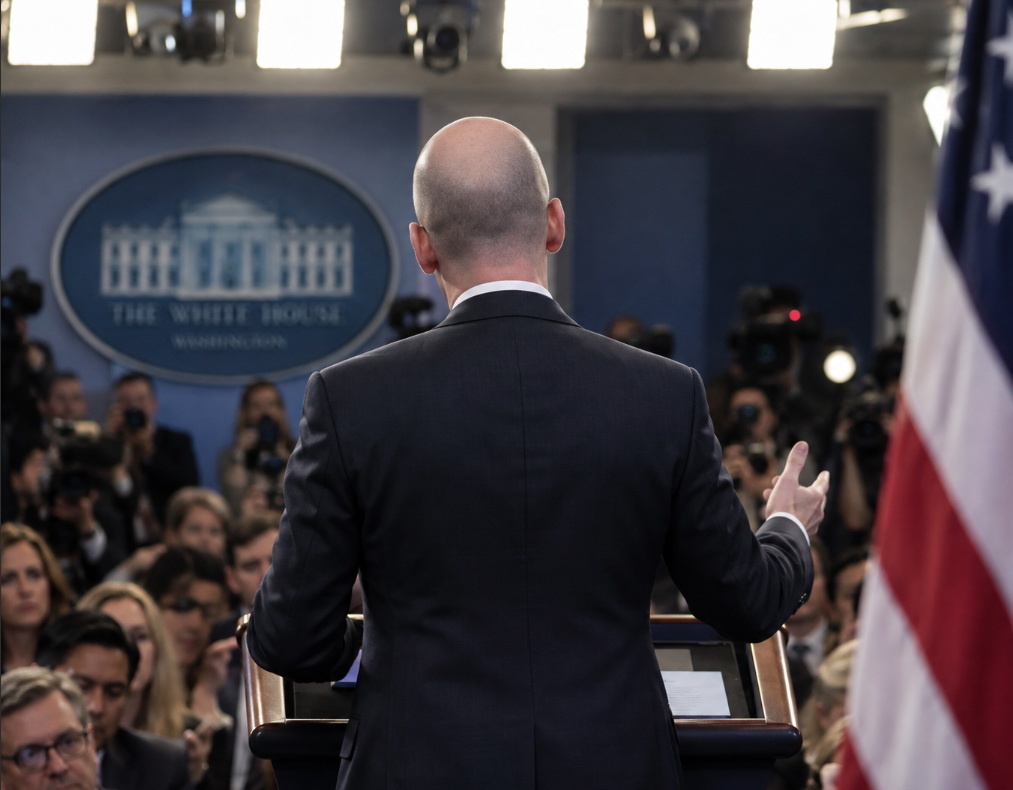
Stephen Miller Pushes New Effort to Accelerate Deportations of Migrant Children
The Trump administration is intensifying its immigration crackdown in a particularly controversial area: children who arrived in the United States without their parents.
Stephen Miller, President Donald Trump’s deputy chief of staff and one of the administration’s most influential immigration-policy advisers, is reportedly playing a central role in coordinating an effort across multiple federal agencies to accelerate the removal of undocumented minors from the United States.
The effort represents another significant expansion of the administration’s aggressive approach to immigration enforcement — and has raised concerns among immigration attorneys and child-welfare advocates about whether children will have a meaningful opportunity to make their cases before being deported.
More Than 200,000 Minors Reportedly Ordered Removed
According to reporting by The Guardian, more than 200,000 minors have received removal orders since January 2025.
Those numbers include children navigating an immigration court system that can be extraordinarily complicated even for adults.
Unlike defendants in criminal court, people appearing in immigration proceedings generally do not have a constitutional right to a government-appointed attorney. For a child who may speak little English and have little understanding of American immigration law, navigating that system without legal assistance can be particularly difficult.
That matters because some of these children may potentially qualify for asylum or other forms of humanitarian protection.
Determining that requires examining why the child came to the United States, what conditions exist in the child's home country and whether returning the child could expose them to persecution, trafficking, abuse or other dangers.
Legal Assistance Has Been Reduced
Another major part of the controversy involves legal representation.
The administration has moved to reduce federal funding for legal services provided to unaccompanied migrant children.
Supporters of tougher immigration enforcement argue that entering the United States illegally should not create an indefinite pathway to remaining in the country and that immigration laws must ultimately be enforced.
Critics counter that providing a child with access to an attorney is not the same thing as guaranteeing that child permission to remain in the United States.
An attorney can help determine whether a child has a legitimate legal claim, ensure required procedures are followed and help immigration courts obtain the information necessary to decide the case.
A child who does not qualify for protection can still ultimately be ordered removed.
The dispute is therefore not simply about whether immigration laws should be enforced. It is also about what process should occur before the government sends a child out of the country.
Information About Sponsors Is Also Becoming an Enforcement Tool
Another significant change involves information collected about potential sponsors for unaccompanied children.
When a child arrives without a parent, federal authorities may attempt to locate a relative or another responsible adult who can care for the child while the immigration case proceeds.
That process requires potential sponsors to provide personal information to the government.
Under the administration's tougher enforcement approach, immigration authorities have gained greater access to information associated with children and their potential sponsors.
Critics warn that this can create a chilling effect.
If an undocumented relative believes that stepping forward to take custody of a child could expose that relative to immigration enforcement, the person may decide not to come forward at all.
That could leave children in federal custody longer and make it more difficult to place them with relatives.
Miller Has Become Central to Trump's Immigration Agenda
Stephen Miller's involvement is particularly notable because immigration policy has been one of his primary areas of influence throughout Trump's political career.
During Trump's first administration, Miller was closely associated with efforts to reduce refugee admissions, restrict asylum and dramatically tighten immigration enforcement.
He was also one of the administration officials associated with the broader immigration strategy during the period in which the government's "zero tolerance" policy resulted in thousands of children being separated from their parents at the southern border.
Now, during Trump's second administration, Miller occupies an even more influential White House position.
Rather than immigration enforcement being confined primarily to agencies such as Immigration and Customs Enforcement and Customs and Border Protection, the current effort reportedly involves coordination among several parts of the federal government.
That includes the Department of Homeland Security, Department of Health and Human Services and Department of Justice.
The Administration Says Tough Enforcement Protects Children
The Trump administration presents the issue very differently from its critics.
Miller and other administration officials have repeatedly argued that permissive immigration policies encourage families and children to undertake dangerous journeys controlled in many areas by smugglers and criminal organizations.
Their argument is that stronger enforcement reduces the incentive to make those journeys in the first place.
The administration has also pointed to trafficking and exploitation of migrant children as evidence that the existing immigration system has failed to protect vulnerable minors.
From that perspective, rapidly determining immigration cases and returning children who have no legal right to remain in the United States is presented as enforcement of existing law rather than an attack on children.
Critics Say Children's Protections Are Being Dismantled
Immigration attorneys and child-welfare organizations see a different danger.
They argue that policies created specifically because children are vulnerable are increasingly being absorbed into the administration's broader deportation machinery.
Their concern is not merely that more children will be deported.
It is that the process may move so quickly — and with so little legal assistance — that children with legitimate claims for protection could be removed before those claims are adequately examined.
That distinction is important.
Immigration law does not automatically allow every child who reaches the United States to remain here.
But neither does arriving without legal immigration status automatically mean that a child has no legal claim to protection.
The immigration system is supposed to determine the difference.
A Fundamental Question About How America Treats Migrant Children
The expanding effort overseen by Miller therefore raises a larger question about the government's responsibilities when immigration enforcement involves children.
The Trump administration argues that immigration laws cannot function if certain groups are effectively insulated from enforcement and that stricter policies can discourage dangerous migration.
Critics argue that children require additional safeguards precisely because they cannot reasonably be expected to understand or defend themselves within one of the most complicated areas of American law.
The outcome of that dispute could affect hundreds of thousands of young migrants.
And with Stephen Miller coordinating immigration policy from inside the White House, the administration is making clear that the treatment of undocumented children is not separate from its broader immigration crackdown.
It is becoming a central part of it.