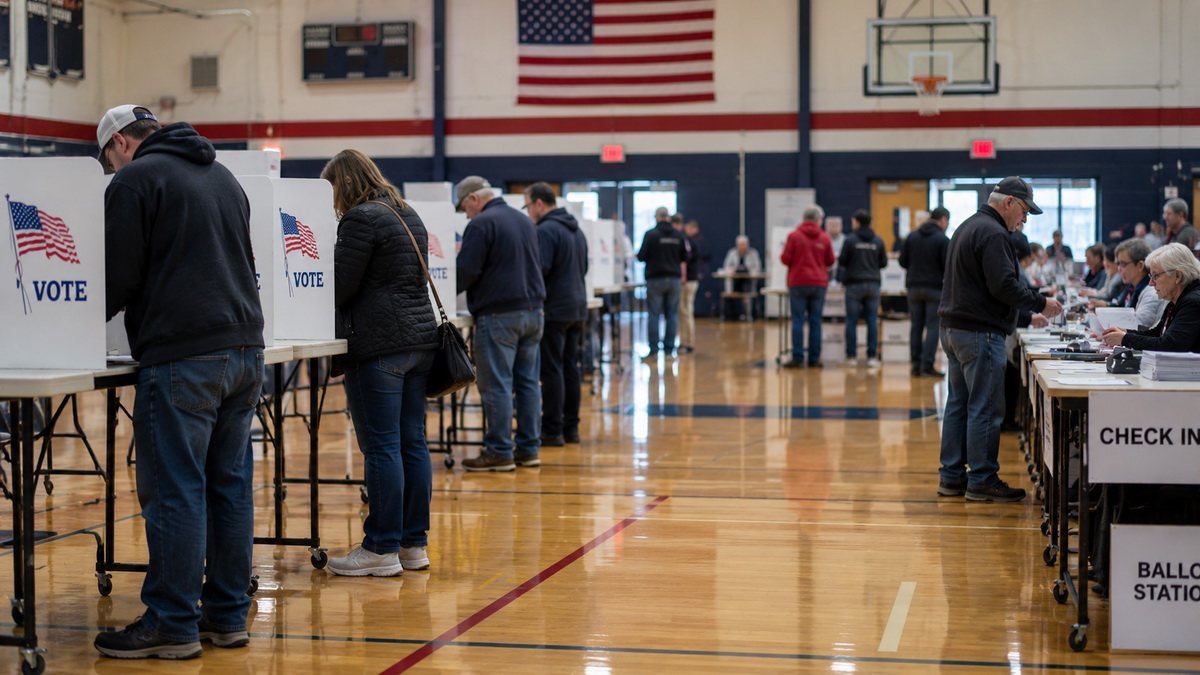
The unprecedented scale of the operation has raised concerns about voter intimidation, federal overreach, and the Trump administration's involvement in election oversight.
According to Newsweek, officials in Indiana, Kentucky, and Arkansas have announced restrictions preventing Justice Department monitors from entering certain voting locations.
Other states, including Colorado and Wyoming, have established similar limitations.
An Unprecedented Federal Deployment
The Justice Department plans to send approximately 1,000 election monitors across all 50 states, significantly expanding its traditional election oversight operations.
For comparison, the department deployed 289 monitors during the 2022 midterms and 714 during the 2024 presidential election.
Federal election monitoring is not new. Historically, Justice Department observers have helped identify potential violations of voting rights laws, including discrimination, accessibility problems, and interference with eligible voters.
However, the size of this year's operation and the inclusion of employees from federal law enforcement agencies have generated controversy.
The department says its monitors will observe election activities, document potential violations, and avoid interfering with voters.
States Push Back
Indiana election officials have informed the Justice Department that federal monitors cannot enter polling locations without specific legal authorization.
In Marion and Lake counties, where approximately two dozen federal monitors are expected, officials say state law does not permit their entry.
Colorado has imposed restrictions requiring federal monitors to receive authorization and follow strict observation procedures.
The Justice Department subsequently agreed to remain outside Colorado polling locations rather than accept those conditions.
Wyoming officials have also challenged federal monitoring authority, maintaining that observers cannot enter polling places without appropriate legal permission.
These disputes highlight the tension between federal voting rights enforcement and states' constitutional responsibility for administering elections.
Concerns About Voter Intimidation
Voting rights organizations have expressed concerns that the expanded federal presence could discourage eligible Americans from voting.
The NAACP has filed litigation seeking greater transparency about the Justice Department's monitoring plans.
Critics question why the administration is dramatically expanding federal election monitoring while emphasizing allegations of illegal voting.
Trump has repeatedly claimed, without substantiated evidence, that widespread election fraud affected the 2020 presidential election.
Those claims have contributed to ongoing disputes over election security and public confidence.
The Justice Department rejects accusations that its monitoring operation is intended to intimidate voters.
In court filings, officials stated that monitors will not carry firearms or exercise law enforcement authority while observing elections.
The department also confirmed that FBI and Immigration and Customs Enforcement personnel will not serve as monitors.
Questions About Transparency
Another concern involves the administration's refusal to publicly identify every location receiving federal monitors before Election Day.
A Justice Department spokesperson told Newsweek that the complete deployment list would be released on November 3.
Voting rights advocates argue that greater advance transparency would help election officials prepare and reassure voters about the monitors' responsibilities.
The department maintains that its personnel will comply with applicable laws and established monitoring procedures.
A Test of Election Oversight
The controversy comes as Americans prepare to elect a new Congress.
Federal authorities have a legitimate responsibility to protect voting rights, while state officials must ensure elections proceed without intimidation or disruption.
The challenge is determining where federal oversight ends and state authority begins.
With Election Day approaching, the central question is whether the Justice Department's expanded monitoring operation will protect voters' rights without interfering with the voting process itself.