Seven months after the United States went to war with Iran, one of the world's most important waterways is offering another reminder that this conflict may be nowhere close to finished.
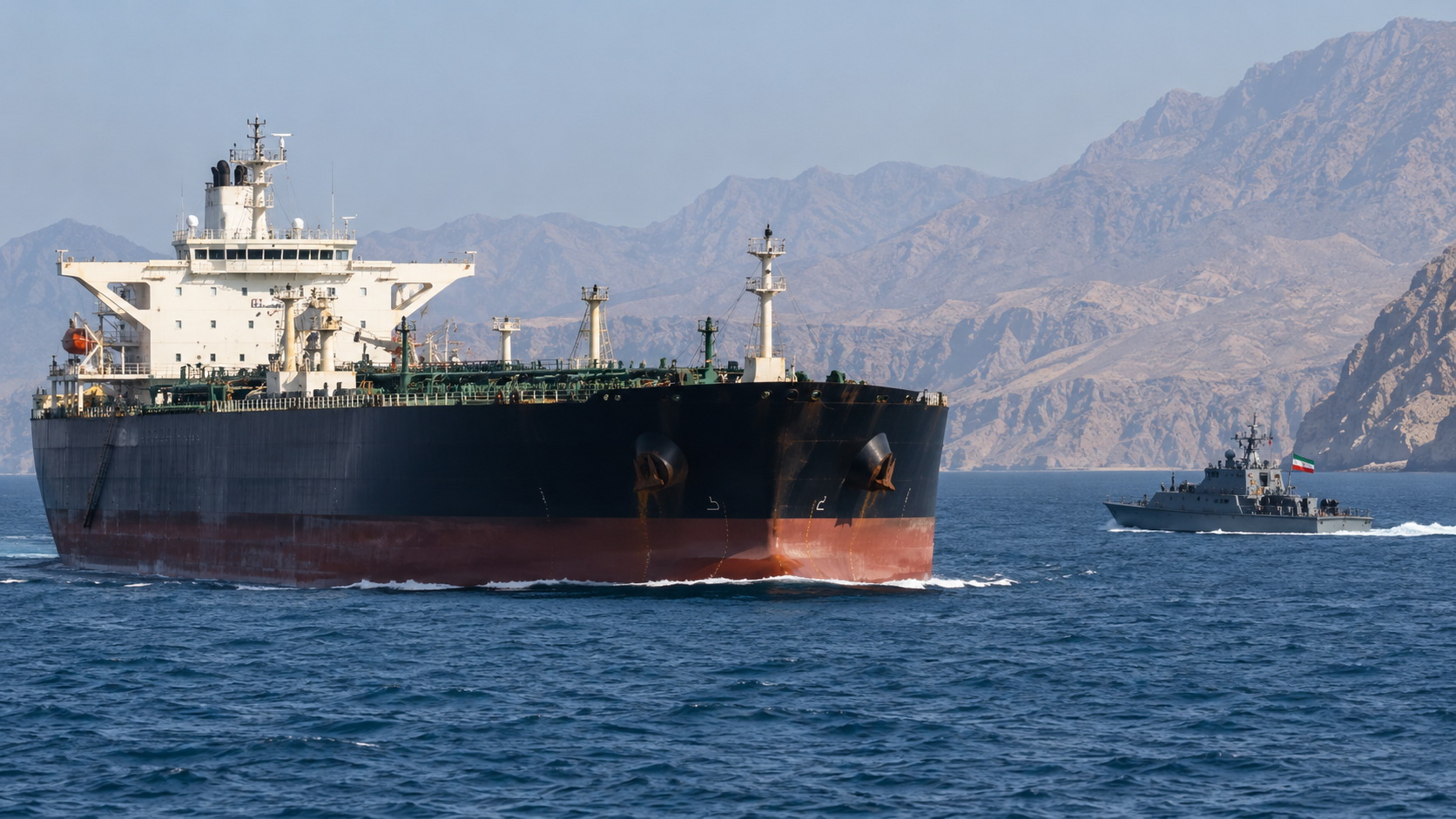
Three Liberian-flagged oil tankers were struck by unidentified projectiles Tuesday while traveling through the Strait of Hormuz, according to shipping intelligence cited by Reuters.
Another vessel was reportedly struck in recent days.
Who fired the projectiles has not been independently established.
But the incidents occurred as Iranian media reported that warning shots were being fired at ships attempting to pass through the strait — and as Iran continues using control over one of the world's most important energy corridors as leverage in negotiations with Washington.
The incidents are another troubling signal from a war that President Donald Trump once suggested would be a relatively short affair.
Instead, October has arrived.
And the war is entering its eighth month.
The Strait Remains the Center of the Conflict
The Strait of Hormuz is only about 21 miles wide at its narrowest point, but its importance to the global economy is enormous.
It connects the Persian Gulf with the Gulf of Oman and the Arabian Sea and normally carries enormous quantities of oil and liquefied natural gas from Saudi Arabia, Iraq, Kuwait, Qatar, the United Arab Emirates and Iran to world markets.
That makes the strait one of Iran's most powerful strategic weapons.
Tehran does not have to defeat the United States militarily to inflict enormous economic damage.
It merely has to make commercial shipping through the Persian Gulf dangerous enough that insurers, tanker operators and energy companies begin reconsidering whether vessels should make the trip.
That is exactly why every attack — or even suspected attack — against commercial shipping matters.
Three Tankers Hit
According to shipping intelligence service Marisks, three Liberian-flagged oil tankers were struck by unknown projectiles Tuesday while transiting the Strait of Hormuz.
Reports indicate another tanker may have been struck days earlier.
There has been no definitive public attribution establishing who carried out the attacks.
Iranian media, however, separately reported that Iranian forces fired warning shots at vessels attempting to transit the strait.
That distinction matters.
The tanker attacks should not be automatically attributed to Iran without evidence.
But Iran has made no secret of its willingness to use control of the waterway as leverage in the war.
And the incidents demonstrate just how fragile commercial shipping remains.
Diplomacy Is Still Alive — Barely
At the same time ships are coming under fire, diplomats are still trying to find a way out.
Iran recently proposed reopening the Strait of Hormuz within seven days if the United States lifted its blockade of Iranian ports, released frozen Iranian assets and waived sanctions on Iranian oil sales, among other conditions.
Trump rejected the proposal publicly.
Iran subsequently said it had received a formal American response through intermediaries, and Qatari and Pakistani mediators continue working between Washington and Tehran.
There is reportedly some agreement over what ultimately needs to happen.
The problem is the order.
Iran wants American economic pressure lifted as part of the process of reopening the strait.
Washington wants Iranian concessions, including movement on the country's nuclear program and guarantees concerning shipping.
Neither side appears willing to trust the other to move first.
That is a particularly dangerous situation when missiles, drones, warships and commercial tankers are occupying the same narrow stretch of water.
Iran Is Preparing for More Fighting
Perhaps more troubling is what Iran is reportedly doing behind the scenes.
Reuters reported Thursday that Tehran is preparing for a significantly broader retaliation if the United States resumes major military attacks.
Iranian officials reportedly believe another American assault could be substantially larger than previous strikes.
Their response could be larger as well.
According to Reuters, Iranian planning includes the possibility of expanding retaliation beyond American military installations and potentially targeting U.S.-allied countries and locations outside the Middle East.
Iran has also reportedly told allied armed groups in Lebanon, Yemen and Iraq to prepare for coordinated action.
That does not mean such attacks will occur.
It does mean both sides are preparing for the possibility that diplomacy fails.
America Is Preparing Too
Iran is hardly alone in preparing for another round.
The United States is sending thousands more sailors and Marines toward the Middle East.
The USS Theodore Roosevelt carrier strike group is heading toward the region.
So is the USS Makin Island Amphibious Ready Group carrying the 13th Marine Expeditionary Unit.
Depending on ship rotations, the United States could soon have three aircraft carriers operating in the Middle East along with two major amphibious Marine forces.
That is not the posture of a military assuming the conflict is nearly finished.
It is a force being positioned so that considerably more combat power is available if negotiations collapse.
Trump Says More Bombing Is Possible
Trump himself is openly leaving that possibility on the table.
Asked whether the United States could increase bombing after the November midterm elections, Trump said it was possible.
He has also rejected Iran's latest proposal as inadequate.
That leaves an uncomfortable combination:
Iran is preparing for a larger American attack.
The United States is moving additional military forces toward Iran.
Commercial vessels are again being struck in the Strait of Hormuz.
And the diplomatic process remains unresolved.
None of those developments guarantees another major escalation.
Together, however, they make claims that this war is approaching its conclusion increasingly difficult to reconcile with events on the ground and at sea.
Seven Months Became Eight
When the war began on February 28, Trump repeatedly suggested the conflict would be short.
It wasn't.
The fighting continued through spring.
Then summer.
Then September.
Now October has arrived.
The financial cost has climbed dramatically as well. A recent Pentagon estimate provided to Congress placed the U.S. military cost of the war at approximately $43.6 billion as of September 3.
That number does not include the broader economic damage caused by disrupted energy markets, damaged infrastructure, higher shipping costs and instability throughout the region.
Oil markets are still reacting violently to developments in the war.
The Strait of Hormuz remains contested.
American reinforcements are heading toward the region.
Iran is preparing retaliation.
And another diplomatic effort appears to be struggling.
Seven months ago, the question was how quickly the war would end.
As the conflict enters its eighth month, the more uncomfortable question may be how much longer it can continue.