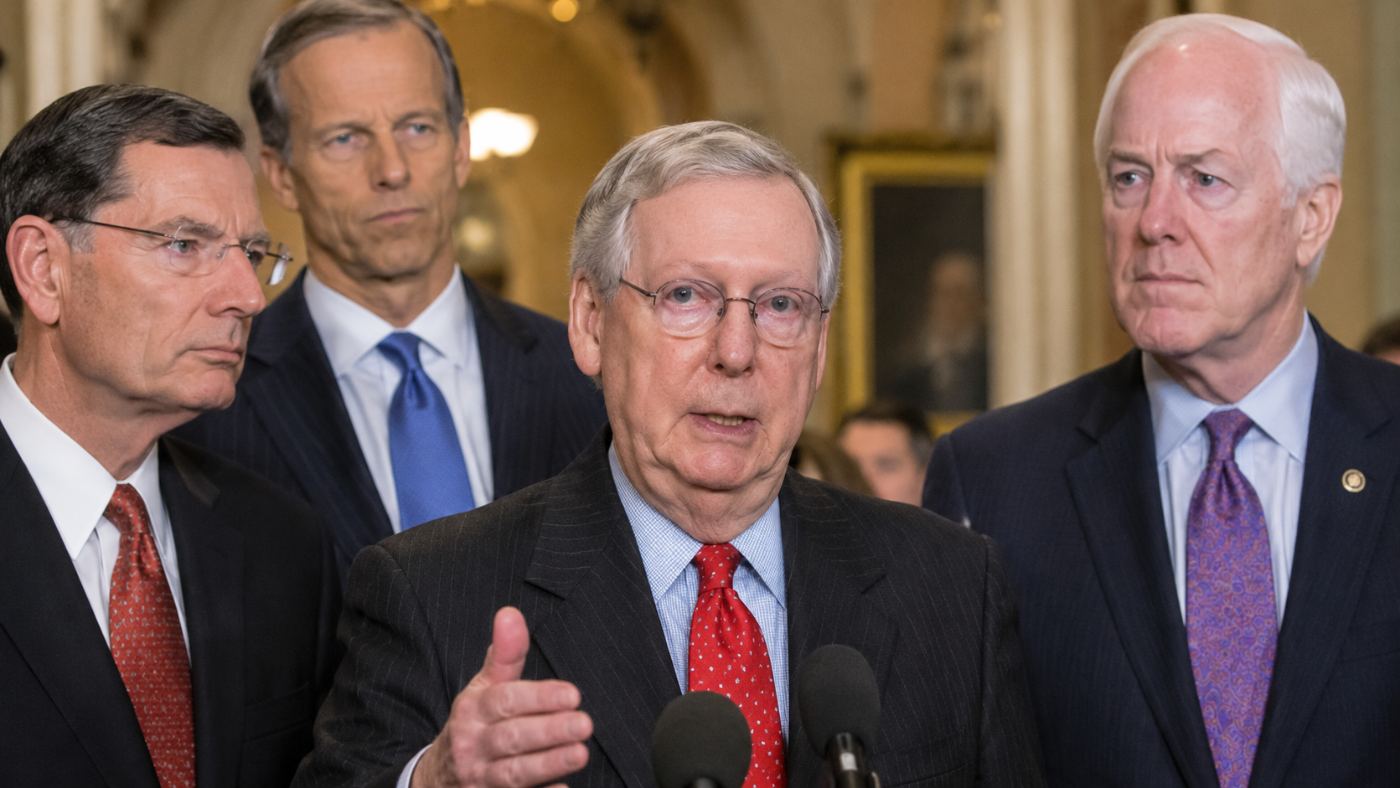
In the early morning hours of December 2, 2017, Senate Republicans narrowly passed President Donald Trump's sweeping tax overhaul, advancing legislation that would dramatically reduce corporate taxes while adding more than $1 trillion to projected federal deficits.
The final vote was 51–49, with every Democrat and independent voting against the legislation.
Republican Senator Bob Corker of Tennessee was the only member of his party to oppose the bill, citing concerns about its impact on the national debt.
The vote concluded shortly before 2 a.m., following hours of negotiations, amendments, and last-minute changes.
A Massive Corporate Tax Reduction
At the center of the Republican proposal was a permanent reduction in the federal corporate income tax rate from 35% to 20%.
The legislation also reduced individual income tax rates, expanded the child tax credit, and changed deductions available to households.
However, the Senate proposal treated corporations and individuals differently.
Corporate tax reductions would remain permanent, while many individual tax reductions were scheduled to expire after 2025.
Republicans argued that lowering business taxes would encourage investment, increase wages, and make American companies more competitive internationally.
Democrats countered that the legislation disproportionately benefited corporations and higher-income households while increasing federal borrowing.
Handwritten Changes Hours Before the Vote
The process surrounding the vote generated considerable controversy.
Senators received a revised version of the legislation shortly before voting, with portions of the lengthy document containing handwritten modifications.
Democratic lawmakers complained that they had insufficient time to review the changes or understand their consequences.
Senate Minority Leader Chuck Schumer criticized the rushed process, arguing that lawmakers could not reasonably examine hundreds of pages of complicated tax provisions in the available time.
Republican leaders defended the negotiations as necessary to secure enough votes for passage.
The spectacle of handwritten changes to major federal tax legislation became one of the defining images of the overnight debate.
More Than $1 Trillion Added to the Deficit
Independent congressional analysis raised significant concerns about the legislation's fiscal consequences.
The Joint Committee on Taxation projected that the Senate proposal would increase federal deficits by approximately $1 trillion over ten years, even after accounting for additional economic growth.
Corker opposed the measure because he believed the projected increase in federal borrowing was unacceptable.
Supporters maintained that stronger economic growth would help offset the revenue losses.
But congressional estimates did not support the claim that the tax reductions would fully pay for themselves.
A Major Legislative Victory for Trump
The December 2 vote represented a significant achievement for Trump and congressional Republicans after earlier legislative setbacks, including unsuccessful efforts to repeal the Affordable Care Act.
The Senate-approved proposal still needed to be reconciled with the House version.
Congress eventually approved the final Tax Cuts and Jobs Act later that month, and Trump signed it into law on December 22, 2017.
The enacted legislation reduced the corporate tax rate to 21%, rather than the 20% proposed in the earlier Senate bill.
It also introduced major changes to individual taxation, business deductions, and the international tax system.
The Long-Term Consequences
The 2017 tax overhaul reshaped federal tax policy for years.
Corporations received a substantial permanent reduction in their statutory tax rate, while the law's individual provisions contained expiration dates.
Analysts continued debating its effects on investment, wages, economic growth, and income distribution.
What was not in dispute was that the legislation reduced federal revenue relative to previous law and increased projected deficits.
The December 2, 2017, Senate vote remains an important moment in Trump's economic record.
It demonstrated how a closely divided Congress could advance sweeping changes to the nation's tax system with no bipartisan support, limited time for reviewing final amendments, and substantial disagreement over the long-term fiscal consequences.