Donald Trump had been president for less than three months when one of the most consequential Senate rule changes in modern Supreme Court history cleared the way for his first justice.
The fight centered on Neil Gorsuch, Trump's nominee to fill the Supreme Court seat left vacant by the death of Justice Antonin Scalia.
When Democrats refused to provide enough votes to overcome a filibuster of Gorsuch's nomination, Senate Republicans faced a choice: abandon the nomination, find additional Democratic support — or change the Senate's precedent.
They chose the third option.
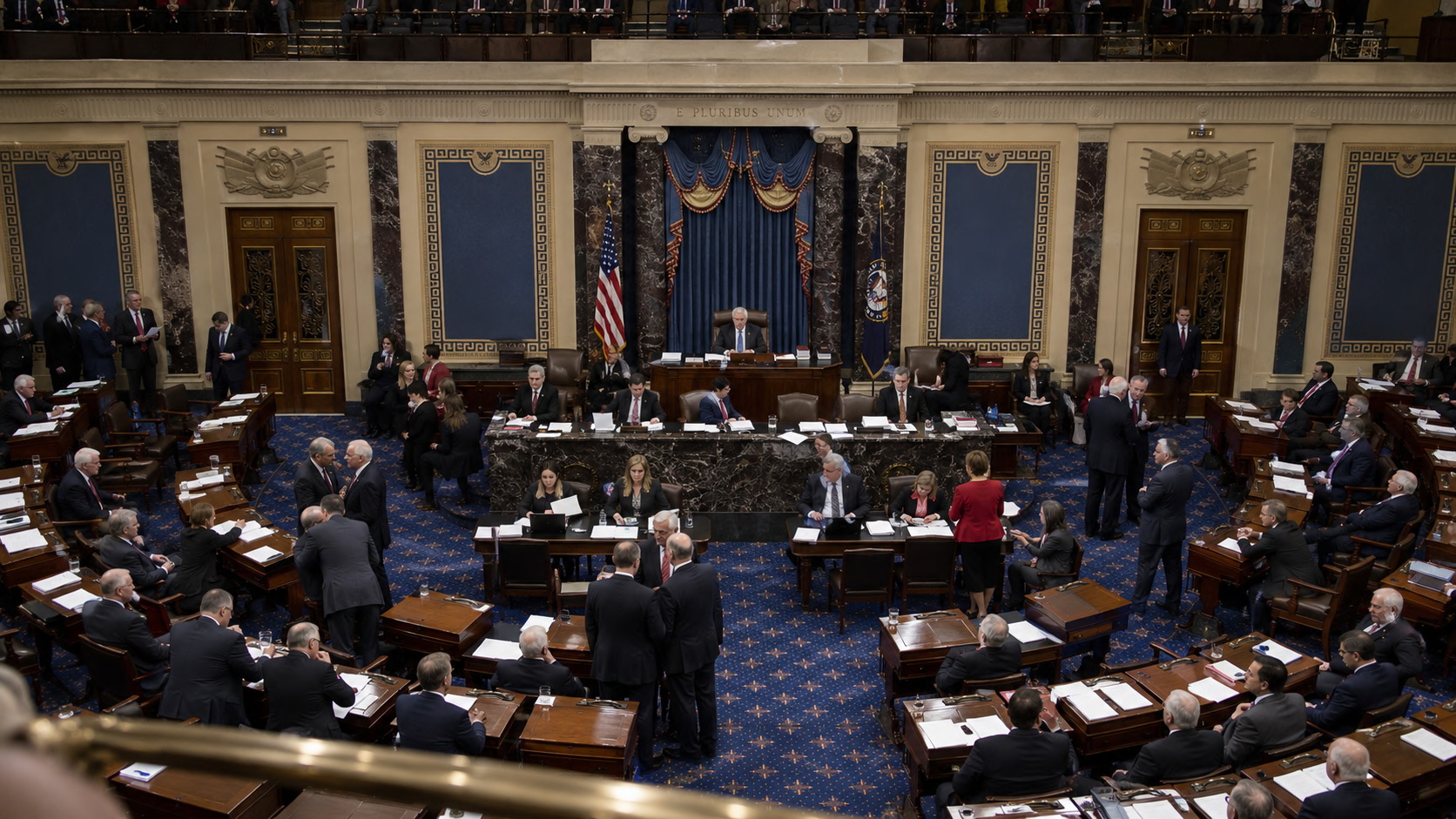
On April 6, Republicans invoked what had become known in Washington as the "nuclear option," establishing that debate on Supreme Court nominations could be ended by a simple majority rather than the 60 votes previously required.
A day later, Gorsuch was confirmed.
The Fight Began Before Trump
The battle over Gorsuch could not be separated from what happened during Barack Obama's final year in office.
Justice Scalia died in February 2016. Obama nominated federal appeals court judge Merrick Garland to replace him.
But the Republican-controlled Senate, led by Majority Leader Mitch McConnell, declined to hold confirmation hearings or a vote on Garland's nomination, arguing that the vacancy should be filled after the presidential election.
The seat therefore remained vacant when Trump entered the White House.
Trump nominated Gorsuch on January 31, 2017.
That meant the confirmation battle wasn't simply about one judge. It arrived after nearly a year of partisan warfare over who should get to fill Scalia's seat.
Democrats Block Cloture
On April 6, the Senate voted on whether to invoke cloture and end debate on Gorsuch's nomination.
The vote was 55–45 in favor.
Normally, that sounds like victory.
It wasn't.
Under the rules then governing Supreme Court nominations, cloture required three-fifths of the Senate — ordinarily 60 votes.
Gorsuch was five votes short, and the cloture motion failed.
Republicans nevertheless had enough senators to confirm Gorsuch in a straight majority vote.
So they changed the precedent governing how the Senate reached that vote.
The Nuclear Option
Senate Majority Leader Mitch McConnell raised a point of order asserting that cloture on nominations should require only a majority.
The Senate's presiding officer ruled against him because the existing precedent still required 60 votes for Supreme Court nominations.
McConnell appealed.
Republicans then voted 52–48 against sustaining the ruling of the chair.
That parliamentary maneuver established a new Senate precedent: cloture for Supreme Court nominations could be invoked with a simple majority.
The Senate then reconsidered Gorsuch's nomination and invoked cloture 55–45.
The 60-vote barrier was gone.
Democrats Had Changed the Rules Before
Republicans were not the first party to use the nuclear option for judicial nominations.
In 2013, Senate Democrats changed Senate precedent so that executive-branch appointments and lower federal-court nominees could advance with a simple majority.
But Democrats left one major exception:
The Supreme Court.
Four years later, Republicans eliminated that exception.
From that point forward, a Senate majority could advance a Supreme Court nomination without obtaining the 60 votes previously needed to overcome a filibuster.
Gorsuch Is Confirmed
On April 7, the Senate held its final vote.
Neil Gorsuch was confirmed 54–45, with three Democrats joining Republicans in voting for him.
Trump had his first Supreme Court justice.
But the consequences extended far beyond Gorsuch.
The change meant future presidents and Senate majorities would no longer need to assemble a 60-vote coalition to overcome a filibuster of a Supreme Court nominee.
That became especially important during Trump's presidency.
His subsequent nominees Brett Kavanaugh and Amy Coney Barrett would both be confirmed with fewer than 60 votes — something the old cloture threshold could have prevented had a filibuster been sustained.
A Lasting Change to the Senate
The Gorsuch battle was another step in a years-long erosion of the Senate's supermajority requirements for presidential nominations.
Democrats blamed Republicans for escalating the conflict by refusing even to consider Garland in 2016.
Republicans argued Democrats had begun dismantling the nomination filibuster themselves with their 2013 rule change and that Gorsuch deserved an up-or-down confirmation vote.
Whatever side of that argument senators took, the institutional result was unmistakable.
The Senate that emerged from the Gorsuch confirmation operated under different rules than the Senate that entered it.
A procedure once requiring cooperation from at least some members of the minority party could now be accomplished by the majority alone.
And with one procedural showdown in April 2017, Republicans didn't merely secure Donald Trump's first Supreme Court justice.
They changed the confirmation process for every Supreme Court nominee who would come afterward.
Category: Politics / Courts & Justice
Tags: Donald Trump, Neil Gorsuch, Supreme Court, Mitch McConnell, Merrick Garland, Nuclear Option, Senate, Judicial Nominations, Republican Party, 2017