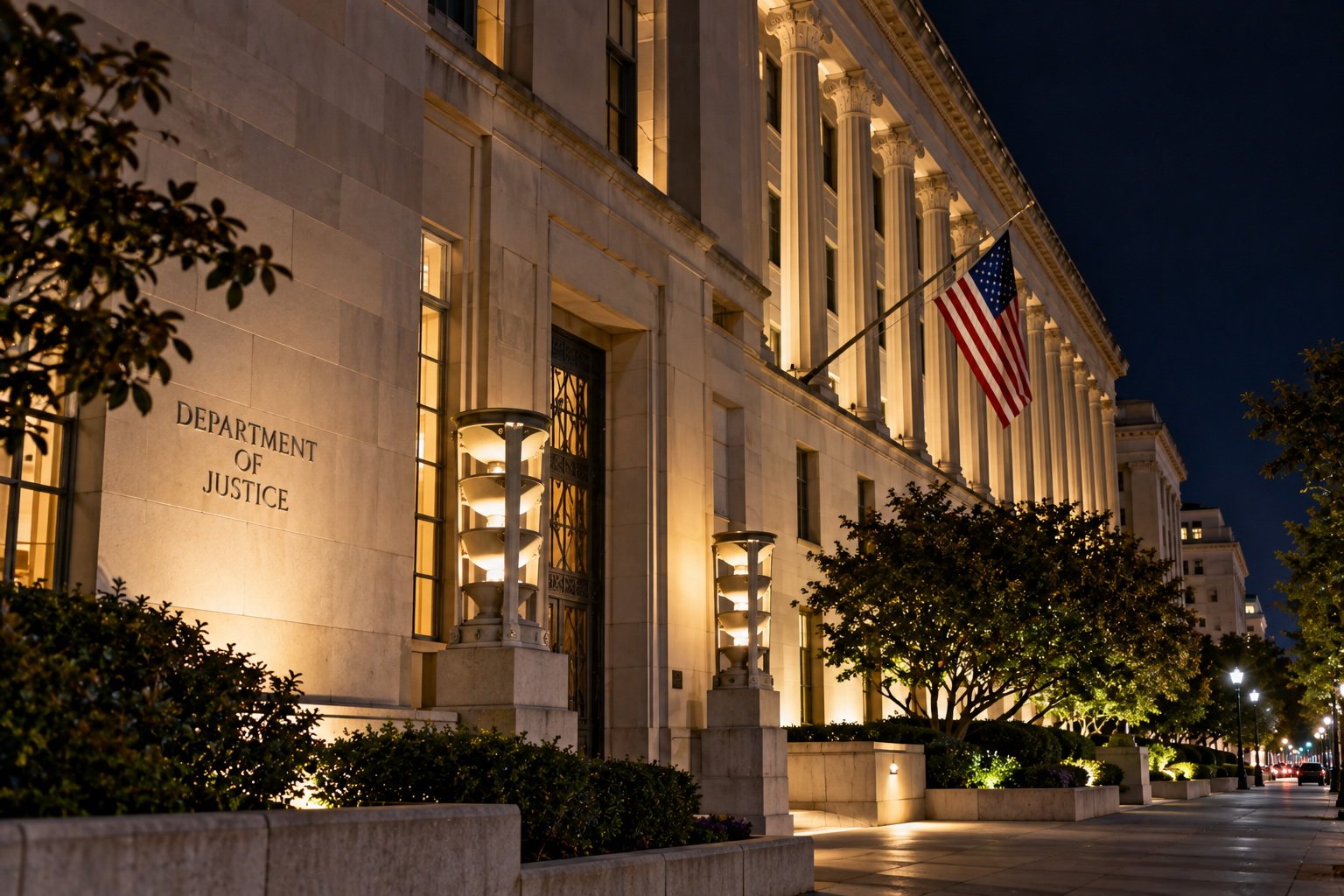
Donald Trump didn't merely challenge the results of the 2020 presidential election in court.
According to an extraordinary Senate Judiciary Committee report released on October 7, 2021, Trump repeatedly pressured the United States Department of Justice to become involved in his effort to overturn an election he had lost.
The report, titled Subverting Justice: How the Former President and His Allies Pressured DOJ to Overturn the 2020 Election, documented repeated contacts between Trump and senior Justice Department officials during the final weeks of his presidency.
Trump pushed officials to investigate claims of widespread election fraud.
He complained when Justice Department leaders told him those claims weren't supported by evidence.
And ultimately, he considered replacing Acting Attorney General Jeffrey Rosen with another Justice Department official, Jeffrey Clark, who was willing to pursue a dramatically different course.
The plan came so close to happening that senior Justice Department officials threatened to resign together if Trump went through with it.
The confrontation represented something far more serious than a president complaining about an election result.
The president of the United States was pressuring the nation's principal federal law-enforcement agency while attempting to remain in power after losing an election.
Nine Calls and Meetings
The Senate investigation documented at least nine calls or meetings in which Trump directly pressured Rosen or Acting Deputy Attorney General Richard Donoghue about election-fraud claims.
The contacts began after Attorney General William Barr announced his resignation in December 2020.
Barr had already publicly stated that the Justice Department had not uncovered fraud on a scale that could have changed the outcome of the election.
Rosen became acting attorney general.
Trump continued pushing.
Justice Department officials investigated allegations brought to them and repeatedly told the president that the claims either lacked evidence or would not change the election result.
Trump nevertheless continued demanding action.
According to testimony later documented by investigators, Donoghue took handwritten notes during one December 27 telephone conversation.
Trump wanted the Justice Department to declare that the election was corrupt.
Donoghue pushed back.
The department could not simply change the outcome of an election because the president wanted it to.
Enter Jeffrey Clark
Trump eventually found a Justice Department official more receptive to his election claims.
Jeffrey Clark was serving as acting assistant attorney general for the Civil Division.
Clark proposed sending a letter to Georgia officials stating that the Justice Department had identified significant concerns that could have affected the state's election results.
The proposed letter encouraged Georgia lawmakers to consider convening a special legislative session.
There was a major problem.
Senior Justice Department officials did not believe the department had evidence supporting such a statement.
Rosen and Donoghue rejected Clark's proposal.
Clark continued pushing it.
He eventually informed Rosen that Trump was considering putting Clark in charge of the entire Justice Department.
That would mean replacing the acting attorney general with a man willing to pursue an election strategy that existing Justice Department leadership had rejected.
January 3: The Oval Office Showdown
The conflict culminated on January 3, 2021.
Only three days remained before Congress would meet to count the electoral votes.
Trump summoned senior Justice Department and White House officials to the Oval Office.
For hours, they argued over whether Rosen should remain acting attorney general or be replaced by Clark.
Trump considered making Clark the nation's top law-enforcement official.
The reaction inside the Justice Department was explosive.
Rosen would leave.
Donoghue said he would resign.
Assistant Attorney General Steven Engel said he would resign.
Other senior Justice Department officials were expected to follow.
Donoghue warned Trump that he could face mass resignations throughout the department.
The president was being told that replacing Rosen with Clark could cause the leadership of the United States Department of Justice to collapse.
White House Counsel Pat Cipollone also opposed Clark's proposed strategy.
According to testimony described in the Senate investigation, Cipollone characterized Clark's proposed letter involving Georgia as a “murder-suicide pact.”
Trump was confronted with a choice.
Keep Rosen.
Or install Clark and risk a mass resignation at the Justice Department.
Trump ultimately backed down.
Rosen remained acting attorney general.
Why This Raised Serious Legal Questions
A president has broad authority over the executive branch, including the Justice Department.
It is not inherently illegal for a president to communicate with the attorney general or replace senior executive-branch officials.
But presidential authority does not include a lawful power to overturn an election simply because the president lost it.
Using government authority corruptly to interfere with an election, obstruct an official proceeding, defraud the United States or knowingly advance fraudulent representations can potentially implicate federal criminal laws depending upon the evidence and intent involved.
Those distinctions matter.
The October 7 Senate report did not conclude that Trump had committed a specific crime.
In fact, the committee expressly said it was withholding potential conclusions and recommendations concerning criminal culpability while its investigation continued.
But the conduct described in the report raised profound legal and constitutional questions about whether presidential power was being used for a legitimate governmental purpose or to keep the incumbent president in office despite the certified election results.
Those questions would become increasingly important as subsequent investigations uncovered additional evidence.
Trump Had Lost the Election
There was no legitimate factual basis for simply declaring Trump the winner.
Joe Biden won the Electoral College 306-232.
Election officials certified the results.
Trump and his allies filed numerous lawsuits challenging aspects of the election, but those efforts failed to produce a judicial finding of fraud capable of overturning Biden's victory.
Trump's own Justice Department had investigated allegations.
Attorney General Barr said the department had not found fraud on a scale that could have changed the outcome.
Rosen and Donoghue continued telling Trump that claims being presented to the department did not justify overturning the election.
Yet Trump continued pressing them.
That is what made the Justice Department confrontation so significant.
The nation's law-enforcement agency was being asked to take steps that could lend federal credibility to claims its own leadership did not believe were supported by the evidence.
Pressure From the White House
Trump wasn't the only White House official contacting the Justice Department.
The Senate report found that White House Chief of Staff Mark Meadows had repeatedly asked Rosen to investigate election-fraud allegations.
Some were extraordinary.
One involved a conspiracy theory alleging that election data had somehow been manipulated through Italy with involvement by the CIA.
Rosen resisted those requests.
The committee concluded that Meadows' contacts violated longstanding restrictions designed to limit White House interference in specific Justice Department law-enforcement matters.
Those restrictions exist for an important reason.
The Justice Department is part of the executive branch, but presidents are not supposed to use federal prosecutors as their personal attorneys or political enforcement arm.
Republicans Dispute the Report's Conclusions
Republicans on the Senate Judiciary Committee released their own report the same day.
Ranking Republican Senator Chuck Grassley argued that the evidence painted a different picture.
Republicans emphasized that Trump listened to senior advisers during the January 3 meeting and ultimately decided not to replace Rosen with Clark.
They argued that the evidence did not establish that Trump had successfully weaponized the Justice Department to overturn the election.
That is an important part of the historical record.
Trump considered replacing Rosen.
Senior officials strongly objected.
Trump listened to those objections.
And Rosen remained acting attorney general.
But that does not erase what happened before the decision.
The confrontation occurred because the president had repeatedly pressured Justice Department officials over an election he had lost and was considering installing another official who was willing to take actions the department's existing leadership rejected.
The Guardrails Held
In the end, the Justice Department did not send Clark's proposed letter.
Rosen wasn't replaced.
The senior leadership didn't resign.
The department did not declare the election corrupt.
The institutional guardrails held.
But according to the Senate investigation, they held because individual government officials refused to participate and threatened to resign — not because the pressure campaign never occurred.
That distinction is critical.
The United States came remarkably close to having the leadership of its Justice Department thrown into turmoil just days before Congress was scheduled to certify the presidential election.
Three Days Before January 6
The timing makes the story even more consequential.
The Oval Office confrontation happened January 3.
Three days later, Congress assembled at the Capitol to count the electoral votes.
Trump continued falsely insisting that the election had been stolen.
Thousands of his supporters gathered in Washington.
A mob then attacked the United States Capitol, forcing lawmakers to flee or shelter while certification of the election was temporarily halted.
The Justice Department confrontation therefore wasn't an isolated episode.
It occurred during the same broader effort to prevent Biden's election victory from becoming final.
How Close America Came
The Senate report provided Americans with one of the first detailed accounts of what had happened inside the Justice Department during the final days of Trump's presidency.
Trump had lost an election.
His legal challenges had failed to overturn it.
State officials had certified the results.
His own Justice Department repeatedly told him that allegations of widespread fraud did not justify changing the outcome.
Still, he kept pushing.
And on January 3, he seriously considered replacing the acting attorney general with an official willing to pursue a course the department's leadership had rejected.
The plan stopped only after Trump was confronted with the possibility of mass resignations.
On October 7, 2021, Americans learned just how close that confrontation had come to fundamentally destabilizing the Justice Department.
The department did not overturn the election.
But the Senate investigation showed that the president had repeatedly pressured it to take actions that could have helped his effort to remain in power.
And senior Justice Department officials had been forced to threaten resignation to stop it.