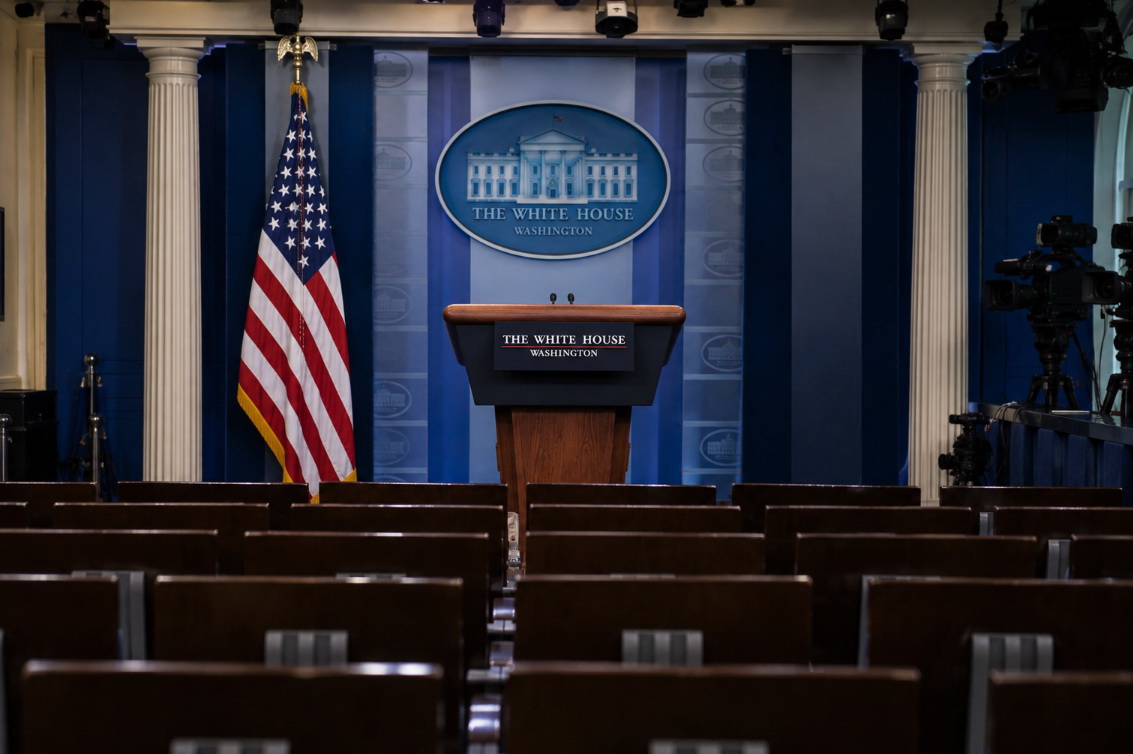
Sean Spicer's turbulent tenure as Donald Trump's first White House press secretary ended almost as dramatically as it began.
On July 21, 2017, Spicer resigned after Trump decided to appoint financier and longtime supporter Anthony Scaramucci as White House communications director.
Trump reportedly asked Spicer to remain.
Spicer declined.
The resignation triggered an immediate reshuffling of the president's communications operation. Sarah Huckabee Sanders, who had increasingly been handling White House briefings in Spicer's place, was named the new press secretary.
Scaramucci became communications director.
And Spicer, one of the most recognizable faces of Trump's first six months in office, was on his way out.
The episode was another public sign of the personnel conflicts and shifting power centers inside a White House still trying to find a stable communications strategy.
Six Months at the Podium
Spicer had been with the Trump administration from its first full day.
And his tenure began with controversy.
On January 21, Spicer appeared in the White House briefing room and angrily challenged news coverage of the size of Trump's inauguration crowd.
“This was the largest audience to ever witness an inauguration — period — both in person and around the globe,” Spicer declared.
Available photographs, transit figures and other evidence did not support the claim that Trump's physical inauguration crowd was the largest ever.
The episode immediately established the confrontational relationship that would frequently characterize Spicer's dealings with the press.
Over the following months, he became the administration's principal public defender through controversies involving Trump's travel ban, the Russia investigation, the firing of FBI Director James Comey and numerous presidential tweets and statements.
Sometimes Spicer was left attempting to explain comments Trump had already changed or contradicted.
Other times he aggressively defended the administration's position himself.
The daily briefing became unpredictable television.
Trump Was His Own Communications Director
Spicer faced a problem that went beyond difficult reporters.
The president frequently communicated directly with the public through Twitter.
Trump could announce a position, criticize an opponent or introduce an entirely new controversy before his communications staff had prepared a response.
That sometimes left Spicer standing behind the White House podium trying to explain presidential statements in real time.
The difficulty became particularly visible following Trump's firing of FBI Director James Comey.
White House officials initially offered explanations centered on recommendations from Justice Department leadership.
Trump subsequently told NBC News that he had already been considering firing Comey and that the Russia investigation was on his mind when he made the decision.
For a communications operation trying to maintain a consistent explanation, the president could instantly rewrite the message.
Spicer Begins Disappearing
By the summer, Spicer's role was already changing.
Sarah Huckabee Sanders, his principal deputy, increasingly conducted White House briefings.
The administration also reduced the frequency of televised briefings, sometimes prohibiting cameras or live audio.
Spicer remained press secretary, but he was appearing behind the podium less often.
Meanwhile, the White House communications operation itself was unsettled.
Communications director Mike Dubke had resigned in May.
Spicer temporarily assumed additional communications responsibilities while the administration searched for a replacement.
That replacement would ultimately be Anthony Scaramucci.
And Spicer strongly objected to the choice.
Enter Anthony Scaramucci
Scaramucci was a New York financier, founder of the investment firm SkyBridge Capital and a frequent television defender of Trump.
He was comfortable on television.
Trump liked his ability to advocate for him publicly.
But Scaramucci had never run a White House communications operation.
His appointment also inserted another personality into a West Wing already marked by competing factions and internal rivalries.
On July 21, Trump offered him the communications director position.
Scaramucci accepted.
Spicer resigned.
Contemporaneous reporting described Spicer as strongly opposed to the appointment and believing it was a mistake.
Spicer publicly offered a less confrontational explanation, saying the administration would benefit from allowing the new communications team to start with a “clean slate.”
Either way, the result was the same.
The president had made his decision.
Spicer was leaving.
Sarah Huckabee Sanders Takes Over
The transition happened remarkably quickly.
Later that afternoon, Sanders entered the White House briefing room.
Then she introduced Anthony Scaramucci.
Standing at the same podium Spicer had occupied for six months, Scaramucci announced that Sanders would become the new White House press secretary.
“The president loves Sarah,” Scaramucci said. “He thinks she's doing a phenomenal job.”
The White House subsequently made the appointment official.
Trump praised Sanders' work as deputy press secretary and said she would continue promoting the administration's agenda.
The White House also released a statement praising Spicer.
Trump thanked him for his service and added a characteristically television-focused farewell:
“Just look at his great television ratings.”
Spicer agreed to remain temporarily to assist with the transition through August.
A Press Secretary Unlike Any Before Him
Spicer's six months had transformed the normally recognizable but relatively specialized position of White House press secretary into something approaching celebrity.
His combative briefings generated constant television coverage.
His confrontations with reporters became viral clips.
Melissa McCarthy famously portrayed him on Saturday Night Live, exaggerating his aggressive briefing-room persona and turning Spicer into a fixture of popular culture.
But beneath the comedy was a serious communications problem.
A White House press secretary speaks on behalf of the president.
That job becomes extraordinarily difficult when the president frequently changes the message himself.
Spicer could deliver an administration explanation in the afternoon only to see Trump complicate it with a tweet, interview or statement.
Eventually Sanders increasingly took his place at the podium.
Then Trump brought in Scaramucci.
For Spicer, that was the end.
The Shake-Up Was Just Beginning
At first, Scaramucci's appointment appeared to represent a new beginning for Trump's communications team.
It would instead become one of the shortest chapters of the administration.
Within days, Scaramucci would become embroiled in his own extraordinary controversy after giving a profanity-filled interview to The New Yorker in which he attacked senior White House officials.
White House Chief of Staff Reince Priebus would soon be gone.
Scaramucci himself would follow.
His tenure as communications director would last only about a week and a half.
None of that was known when Spicer resigned on July 21.
But the speed with which events subsequently unfolded made his departure look less like the conclusion of a White House shake-up than the beginning of a larger one.
Another Reset
Six months after Trump's inauguration, the administration was once again trying to reset its public message.
The first press secretary was leaving.
A new communications director was arriving.
A deputy press secretary was moving into the top job.
And the president remained the administration's most unpredictable communicator.
Sean Spicer entered the White House promising to explain Donald Trump to the American public.
By July, the White House was replacing the people responsible for delivering that message.
Scaramucci was coming in.
Sanders was moving up.
Spicer was heading out.
And the personnel turmoil inside Trump's West Wing was only beginning.