President Donald Trump is attempting to cancel nearly $1 billion in federal spending that Congress has already approved, once again using a controversial budget maneuver that the Government Accountability Office has said is not permitted under federal law.
The White House announced the cuts just days before the September 30 end of the federal fiscal year, targeting programs involving refugees and migrants, education, health research, housing assistance and minority business development.
But the larger fight is not simply about which programs should receive federal money.
It is about who controls federal spending.
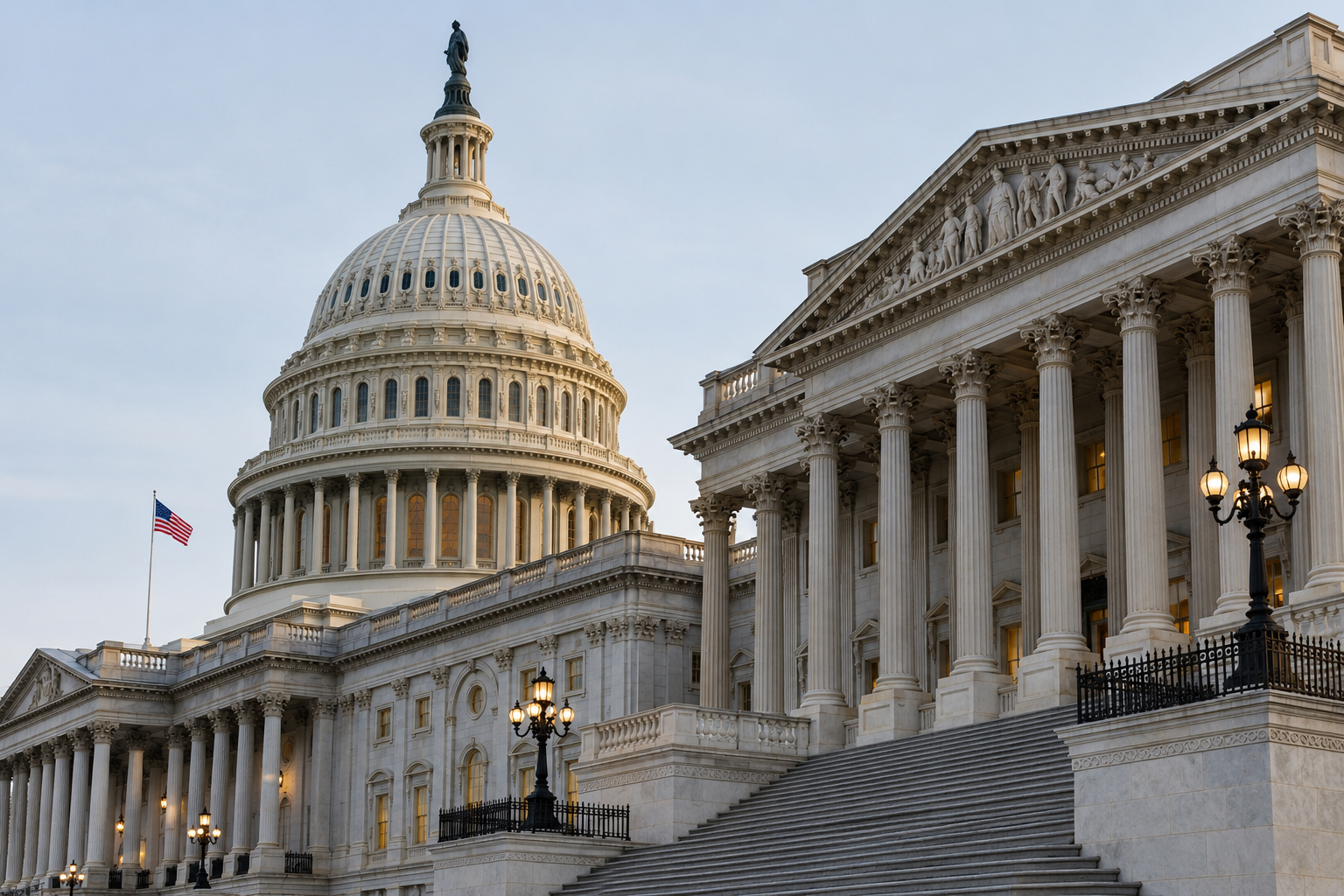
Under the Constitution, Congress holds the power of the purse. Congress passes appropriations legislation determining how federal money will be spent, while the executive branch generally carries out those laws.
Trump is attempting to use what is known as a “pocket rescission” to effectively reverse some of those congressional decisions.
Running Out the Clock
The Impoundment Control Act of 1974 allows presidents to ask Congress to cancel money that lawmakers have previously appropriated.
Congress then gets an opportunity to decide whether to approve the request.
The law generally provides Congress with 45 days to consider a presidential rescission proposal.
Trump's latest move, however, came with only days remaining before the end of the fiscal year.
That timing is crucial.
If the money expires before Congress has an opportunity to act, the administration can effectively prevent the funds from being spent regardless of whether Congress ever approves the president's request.
That is why the maneuver is called a pocket rescission.
The Government Accountability Office, Congress' nonpartisan watchdog agency, has concluded that the Impoundment Control Act does not allow presidents to withhold appropriated funds until they expire.
The Trump administration disputes that interpretation and argues that the president possesses the authority to use the maneuver.
Republican Senator Calls the Move Illegal
The administration's decision drew criticism not only from Democrats but from Republican Sen. Susan Collins of Maine, chair of the Senate Appropriations Committee.
Collins said the administration acted without warning or consultation and accused the Office of Management and Budget of attempting to take over authority belonging to Congress.
“OMB is an agency of the executive branch,” Collins said. “It does not get to decide which programs are worth funding.”
Collins said she planned to work with other senators to address what she described as illegal actions by the administration.
Democratic Sen. Patty Murray of Washington, the ranking Democrat on the Appropriations Committee, likewise accused the White House of overriding bipartisan spending decisions made by Congress.
What Trump Is Cutting
The largest portion of the rescission involves hundreds of millions of dollars administered through the Department of Health and Human Services for programs serving refugees, asylum seekers and other noncitizens.
The administration argues that much of the spending is no longer necessary because illegal border crossings have fallen substantially.
Other targeted spending includes approximately $70 million in international education programs that the White House labeled “woke,” $28 million in Health and Human Services research grants, $9 million in debt relief connected to climate policies and $10 million for minority business development.
Additional programs affected include migrant education, housing counseling and Justice Department efforts intended to reduce racial tensions.
The White House characterized the package as an effort to eliminate wasteful and ideologically driven government spending.
Whether those programs are worthwhile, however, is separate from the constitutional question raised by the administration's method of eliminating them.
Congress already appropriated the money.
Trump Used the Same Strategy Before
This is not Trump's first attempt to use a pocket rescission.
In 2025, his administration used the same strategy to block approximately $4.9 billion in foreign aid that Congress had previously approved — the first significant use of the maneuver in nearly half a century.
The dispute eventually reached the Supreme Court.
The Court allowed those foreign-aid rescissions to proceed while litigation continued, emphasizing the president's authority in foreign affairs. But the Court also made clear that its decision should not be interpreted as a final judgment on whether pocket rescissions themselves are lawful.
The distinction could become important this time.
Unlike the 2025 dispute, Trump's latest rescissions primarily involve domestic federal programs, removing some of the foreign-policy considerations that influenced the earlier Supreme Court fight.
A Larger Battle Over Presidential Power
The controversy therefore extends far beyond approximately $1 billion.
If presidents can wait until the final days of a fiscal year, announce rescissions and allow appropriated money to expire before Congress can respond, the practice could significantly weaken Congress' control over federal spending.
A future president could potentially use the same mechanism against programs supported by lawmakers of either party.
Congress could pass an appropriations bill.
The president could sign it.
And months later, the executive branch could still prevent portions of that law from being carried out by withholding the money until the clock runs out.
The Trump administration portrays the tactic as another tool for cutting government spending.
The Government Accountability Office has reached a very different conclusion: Congress created a process for presidents to request rescissions — not a mechanism allowing presidents to impose them simply by waiting out the fiscal calendar.
That disagreement is now setting up another confrontation over one of the Constitution's most fundamental divisions of power: Congress decides how federal money is appropriated, while the president executes the laws Congress passes.
With only days remaining in the fiscal year, Trump is once again testing how much of that authority a president can take for himself.