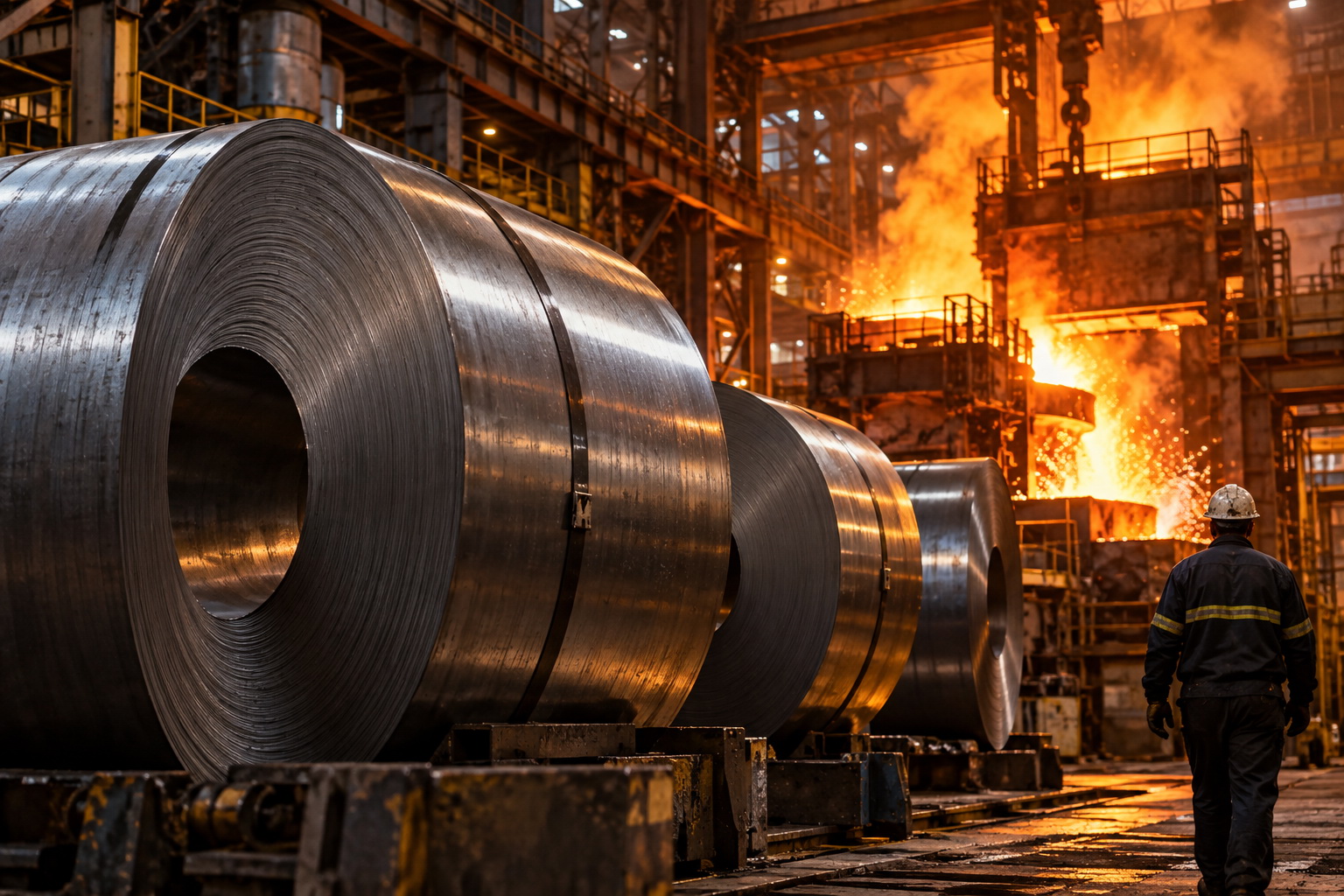
President Donald Trump signed proclamations imposing sweeping new tariffs on imported steel and aluminum, marking one of the most significant breaks with traditional U.S. trade policy in decades and setting the stage for escalating trade disputes with some of America's closest allies.
The policy imposed a 25 percent tariff on imported steel and a 10 percent tariff on imported aluminum.
Trump had announced the tariffs a week earlier, on March 1, arguing that foreign competition had weakened American steel and aluminum producers and that rebuilding those industries was necessary for both economic and national security.
The tariffs were scheduled to take effect March 23.
Using National Security to Restrict Imports
Rather than relying on conventional trade-remedy laws aimed specifically at dumping or foreign subsidies, the Trump administration invoked Section 232 of the Trade Expansion Act of 1962.
The rarely used provision allows a president to restrict imports when the Commerce Department determines that they threaten to impair national security.
Commerce Secretary Wilbur Ross had delivered reports concluding that the quantities and circumstances of steel and aluminum imports threatened to impair U.S. national security.
Trump accepted that finding.
The administration argued that maintaining a viable domestic steel and aluminum industry was essential because the materials are used extensively in military equipment, infrastructure and other strategically important products.
The approach was controversial because it treated imports from American allies as a potential national-security concern rather than limiting action to strategic competitors such as China.
A Major Change in American Trade Policy
The tariffs represented something larger than a dispute over steel.
Trump had campaigned in 2016 on a promise to fundamentally change America's approach to international trade, repeatedly arguing that previous administrations had allowed other countries to take advantage of the United States.
The steel and aluminum tariffs demonstrated that the administration was willing to translate that rhetoric into broad trade restrictions.
For decades, Republican administrations had generally promoted lower tariffs and expanded international trade agreements. Trump instead embraced tariffs as a tool for protecting domestic industries, gaining leverage in negotiations and attempting to reduce America's trade deficits.
Steel and aluminum became an early test of that strategy.
Allies Become Targets
The policy quickly became complicated by America's trading relationships.
Canada, Mexico, the European Union and several other partners initially received temporary exemptions while the administration negotiated with their governments.
But those negotiations did not eliminate the confrontation.
By June, the United States was applying the steel and aluminum tariffs to major allies including Canada, Mexico and members of the European Union.
Those governments responded with tariffs of their own.
The European Union targeted billions of dollars in American exports, including bourbon whiskey, motorcycles and agricultural products. Canada imposed retaliatory tariffs covering steel, aluminum and numerous consumer products, while Mexico targeted products including pork, apples, potatoes and cheese.
China also retaliated against American exports.
The result was a widening trade conflict in which tariffs intended to protect American metal producers also exposed other U.S. industries to foreign retaliation.
Winners, Losers and a Larger Trade War
American steel and aluminum producers stood to benefit from protection against cheaper imported metals, while manufacturers that purchased steel and aluminum faced potentially higher input costs.
That tension would become one of the defining debates surrounding Trump's trade strategy.
Supporters argued that years of inexpensive imports had weakened strategically important American industries and that tariffs were necessary to restore domestic production.
Critics countered that tariffs functioned as taxes on imported goods and could raise costs for American companies and consumers while provoking retaliation against U.S. exporters.
The steel and aluminum tariffs also foreshadowed a much larger confrontation.
Within months, the Trump administration would impose additional tariffs on hundreds of billions of dollars of Chinese goods under a separate trade-law provision. China responded with tariffs on American products, transforming what began as a series of trade actions into a full-scale U.S.-China trade war.
A Turning Point
The March 2018 steel and aluminum decision established a pattern that would become central to Trump's approach to international economics.
Tariffs were no longer being treated primarily as narrowly targeted remedies against specific unfair trade practices. Under Trump, they increasingly became instruments of broader economic and foreign policy.
The administration was willing to use them against competitors and allies alike, often arguing that the threat of tariffs itself could force other countries to negotiate.
What began with a 25 percent duty on steel and a 10 percent duty on aluminum therefore became much more than a dispute over metals.
It marked the beginning of a new era in American trade policy — one in which tariffs once again became one of Washington's most prominent economic weapons.