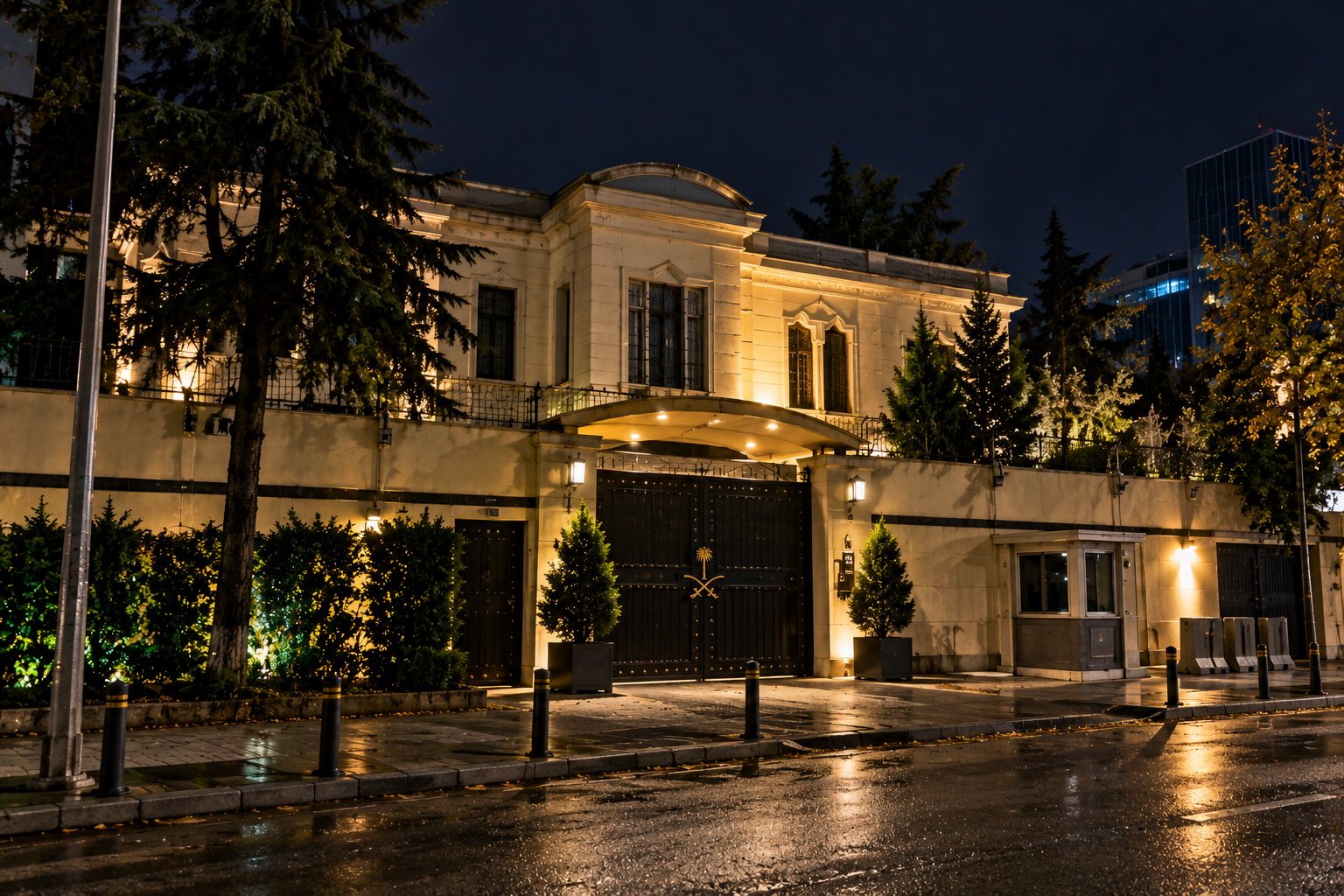
President Donald Trump is facing growing criticism for his response to the killing of journalist Jamal Khashoggi after Saudi Arabia admitted that the Washington Post columnist died inside its consulate in Istanbul.
After more than two weeks of denying knowledge of Khashoggi's disappearance, Saudi officials announced Friday night that the journalist was killed during a physical confrontation inside the diplomatic building.
The explanation has been met with widespread skepticism, including from Republican lawmakers who are demanding accountability from the Saudi government.
Trump, however, initially described the Saudi announcement as a credible explanation and a positive development.
Saudi Arabia Changes Its Story
Khashoggi, a Saudi journalist and critic of Crown Prince Mohammed bin Salman, entered the Saudi consulate in Istanbul on October 2 to obtain documents related to his upcoming marriage.
He was never seen leaving.
For more than two weeks, Saudi officials insisted that Khashoggi had departed the building unharmed.
Now, the kingdom acknowledges that he died inside the consulate, claiming that an argument escalated into a physical fight.
Saudi authorities say 18 individuals have been detained and several intelligence officials dismissed.
Turkish officials have disputed the suggestion that Khashoggi's death resulted from an accidental confrontation, with reports indicating that investigators suspect a planned killing.
Trump Initially Accepts Saudi Explanation
Speaking to reporters Friday evening, Trump said he found the Saudi account credible, despite the government's earlier denials.
He also praised the arrests as an important first step.
By Saturday evening, however, Trump's position had shifted.
In an interview with The Washington Post, the president acknowledged that Saudi officials had provided conflicting explanations and said he was not satisfied with the information available.
Nevertheless, Trump continued defending Saudi Arabia as an important American ally and declined to assign responsibility to Crown Prince Mohammed bin Salman.
Billions in Arms Sales Take Center Stage
Throughout the controversy, Trump has repeatedly emphasized the economic relationship between the United States and Saudi Arabia.
The president has pointed to a proposed $110 billion military sales agreement and argued that canceling weapons purchases could cost American jobs.
Speaking Saturday in Nevada, Trump again warned that Saudi Arabia could purchase military equipment from Russia or China if the United States refused to sell it.
He suggested that sanctions could be considered but expressed reluctance to jeopardize American arms sales.
The administration's position has raised questions about how economic and strategic interests are influencing Washington's response to the death of a journalist.
Republicans Demand Answers
Several prominent Republican lawmakers are rejecting the Saudi government's explanation.
Senate Foreign Relations Committee Chairman Bob Corker has expressed doubts about the kingdom's account, while Sen. Lindsey Graham has demanded a more credible investigation.
Democrats have also called for consequences if Saudi officials are found responsible.
The controversy is creating unusual bipartisan pressure on the White House to reconsider its relationship with Riyadh.
A Test of American Foreign Policy
Saudi Arabia remains a major American partner in the Middle East, particularly in confronting Iran and maintaining regional security.
But Khashoggi's death has created a diplomatic crisis that extends far beyond the disappearance of one journalist.
The Saudi government has acknowledged that he was killed inside its own consulate, yet fundamental questions remain unanswered about who ordered the operation and what happened to his body.
Trump says he wants those answers before determining the American response.
For now, the president's continued emphasis on arms sales and the strategic alliance stands in contrast to lawmakers demanding stronger action.
The central question facing Washington is whether the United States will impose meaningful consequences on a powerful ally after the killing of a journalist—or allow its economic and strategic relationship to determine the response.