Roger Stone Posts Judge’s Photo With Apparent Crosshairs — and Gets Gagged
February 21, 2019
Roger Stone had already been indicted.
He had already been warned by a federal judge about his public comments.
And he had already been placed under restrictions governing what he and his attorneys could say about his criminal case.
Then he posted a photograph of the judge overseeing that case with what appeared to be crosshairs near her head.
Three days later, Stone was standing before that judge trying to explain himself.
It did not go well.
Stone, a longtime Republican political operative and associate of President Donald Trump, had been arrested on January 25 as part of Special Counsel Robert Mueller's investigation into Russian interference in the 2016 election.
A federal grand jury indicted him on seven felony counts: five counts of making false statements, one count of obstruction of an official proceeding and one count of witness tampering.
Stone pleaded not guilty.
Even after his indictment, Stone continued his characteristically aggressive public campaign against the investigation and the people involved in it.
U.S. District Judge Amy Berman Jackson initially allowed Stone considerable freedom to speak publicly, while imposing restrictions intended to protect the integrity of the proceedings.
Then came Instagram.
On February 18, Stone's account posted a photograph of Jackson. Near her head was a symbol that appeared to resemble the crosshairs of a gun sight.
The accompanying message attacked the prosecution and accused Jackson of bias.
Stone subsequently removed the post.
He then reposted the image without the apparent crosshairs before eventually removing that version as well.
Stone denied intending to threaten Jackson. His attorneys filed a formal apology with the court, acknowledging that the photograph and accompanying comment were improper.
Jackson wasn't satisfied with an apology.
The following day, she ordered Stone to appear personally in federal court to explain why his communications restrictions — or even the conditions allowing him to remain free before trial — should not be changed.
On February 21, Stone took the witness stand.
He apologized repeatedly.
He described the episode as a terrible mistake and blamed it on poor judgment.
“I am kicking myself over my own stupidity,” Stone told the court.
Jackson pressed him on how the image had appeared on his account and rejected the idea that the episode could simply be dismissed as an innocent mistake.
The judge described the message conveyed by the post as “sinister.”
She then imposed sweeping new restrictions.
Stone could no longer speak publicly about Mueller's investigation, his criminal case or anyone participating in either one.
No television interviews.
No radio interviews.
No press conferences.
No blog posts.
No social-media posts about the case.
And Stone couldn't circumvent the order by having family members, representatives, volunteers or surrogates make statements for him.
The judge also made clear what would happen if Stone tested the boundaries again.
“I gave you a second chance,” Jackson told him. “But this is not baseball. There will not be a third chance.”
Another violation could result in his bond being revoked and Stone being sent to jail while awaiting trial.
It was a remarkable turn for a political operative who had spent decades cultivating a public persona built around provocation.
Stone had long embraced controversy.
He called himself a political “dirty trickster,” cultivated an image of theatrical defiance and rarely seemed reluctant to attract attention.
But a federal criminal courtroom operated under different rules.
This time the person on the receiving end of the provocation wasn't a political opponent, journalist or campaign rival.
It was the federal judge deciding whether Stone could remain free while awaiting trial.
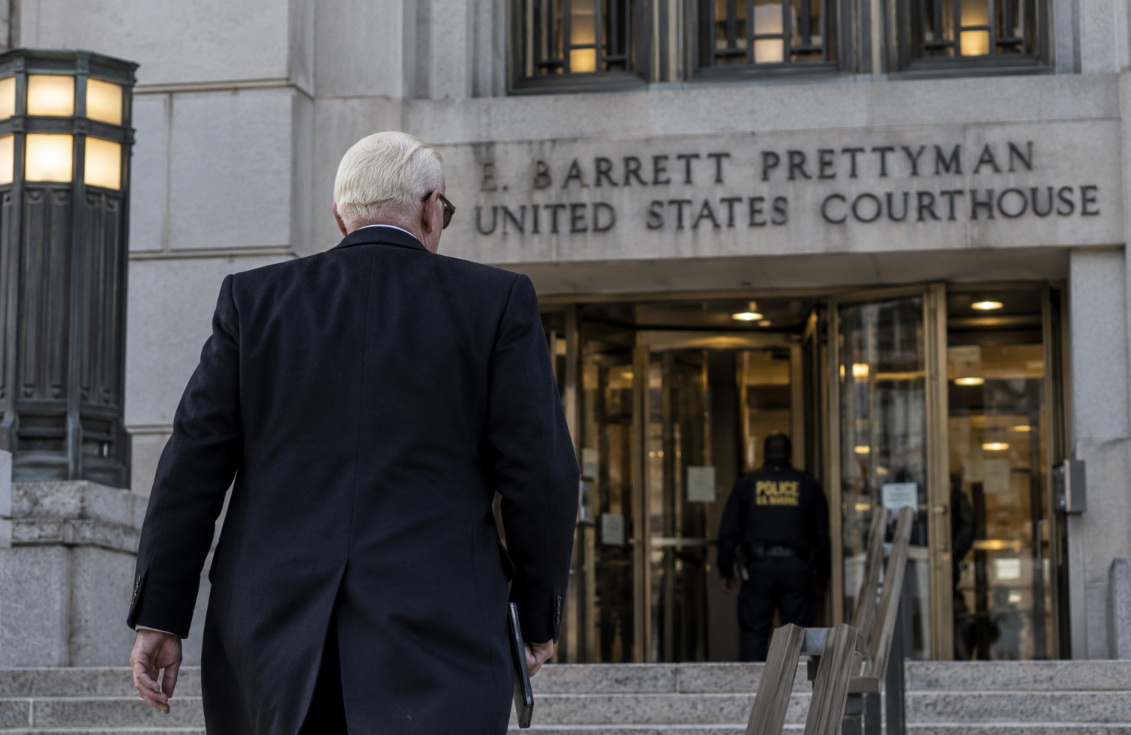
Stone walked out of the courthouse that day still a free man.
But for perhaps the first time since his arrest, Roger Stone had been given an instruction that left almost no room for one of his favorite activities:
Talking.