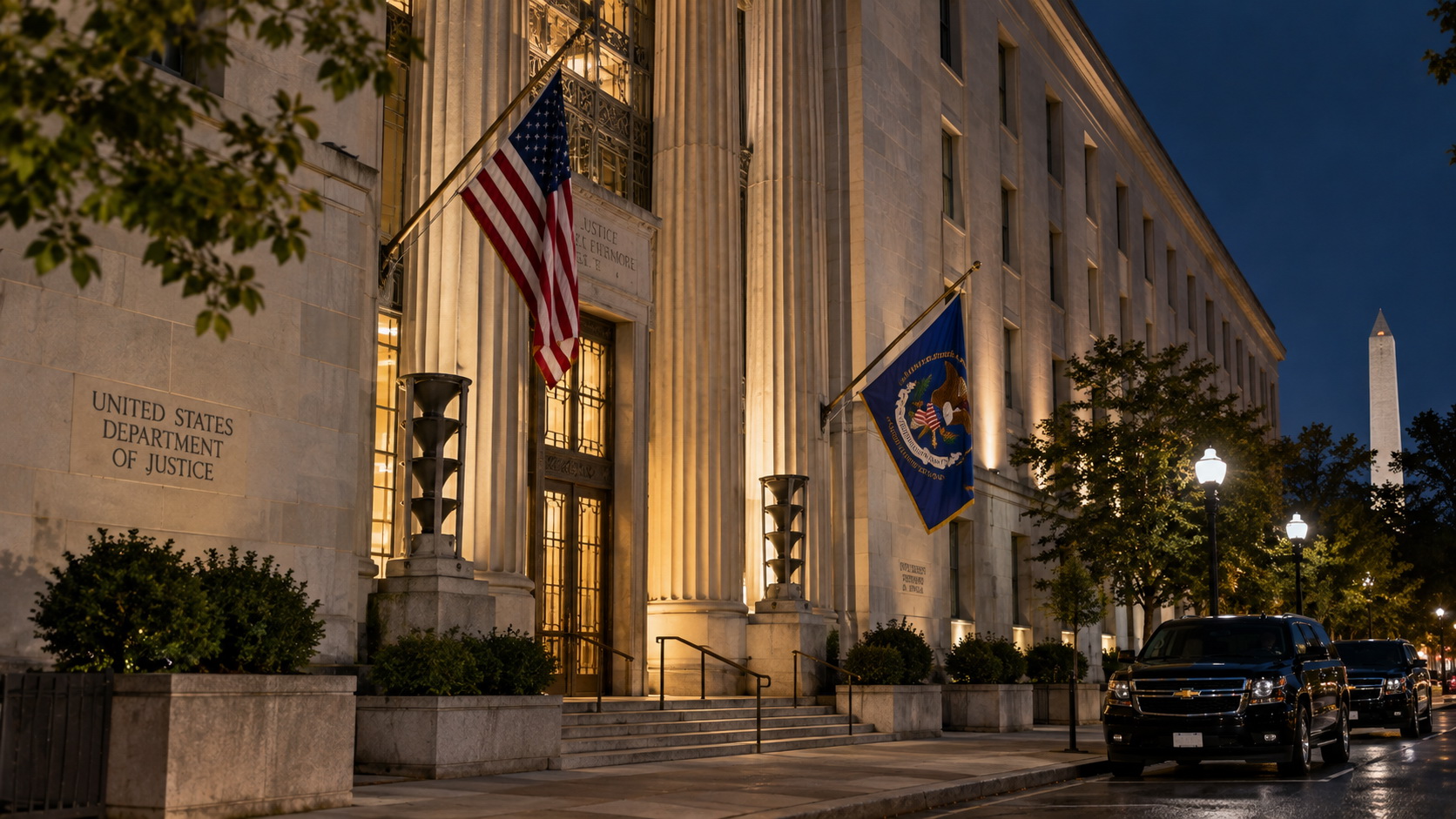
After eight extraordinary days in Washington, the investigation into Russian interference in the 2016 presidential election was placed under the authority of a special counsel.
On May 17, Deputy Attorney General Rod Rosenstein appointed former FBI Director Robert Mueller to oversee the investigation.
The decision came just eight days after President Donald Trump fired FBI Director James Comey and one day after reports revealed Comey's memorandum describing a private Oval Office conversation in which Comey said Trump asked him to let go of the investigation involving former National Security Adviser Michael Flynn.
The Justice Department said the unusual circumstances surrounding the investigation required someone with greater independence from the department's normal chain of command.
Mueller would now be that person.
Rosenstein Makes the Decision
Attorney General Jeff Sessions had previously recused himself from investigations relating to the 2016 presidential campaign.
That left Rosenstein acting as attorney general for purposes of the Russia investigation.
On May 17, Rosenstein signed Order No. 3915-2017, formally appointing Mueller as special counsel.
The order authorized Mueller to continue the investigation that Comey had publicly confirmed before Congress in March.
Its scope included:
Any links or coordination between the Russian government and individuals associated with Donald Trump's presidential campaign.
Mueller was also authorized to investigate matters arising directly from the investigation and, when appropriate, prosecute federal crimes uncovered through his work.
It was a broad mandate that would ultimately extend well beyond the immediate controversy surrounding Comey's firing.
Not a Finding That a Crime Occurred
Rosenstein made an important distinction when announcing Mueller's appointment.
The creation of a special counsel did not mean the Justice Department had concluded that Trump, his campaign or anyone else had committed a crime.
Rosenstein explicitly said he had made no such determination.
Instead, he said the extraordinary circumstances and intense public interest surrounding the investigation required placing it under someone who could exercise a degree of independence from the normal Justice Department chain of command.
The objective, Rosenstein said, was to ensure public confidence that the investigation would be conducted fairly and thoroughly.
Why Robert Mueller?
Mueller was hardly an unknown figure inside federal law enforcement.
President George W. Bush had appointed him FBI director in 2001.
He took office just days before the September 11 terrorist attacks and would ultimately lead the bureau for 12 years.
President Barack Obama later asked Congress to extend Mueller's original 10-year term by two additional years, keeping him at the FBI until 2013.
Now Mueller was returning to government for one of the most politically sensitive investigations in modern American history.
He agreed to leave his private law firm to take the assignment.
Eight Days That Changed Washington
Mueller's appointment came at the end of a remarkable sequence of events.
May 9: Trump fired FBI Director James Comey.
May 10: Trump met Russian Foreign Minister Sergey Lavrov and Ambassador Sergey Kislyak inside the Oval Office.
May 12: Trump publicly suggested there might be recordings of his conversations with Comey.
May 15: Reports said Trump had disclosed highly sensitive intelligence during his meeting with the Russian officials.
May 16: The existence of Comey's memo describing Trump's request concerning Michael Flynn became public.
May 17: Robert Mueller was appointed special counsel.
In barely more than a week, an FBI counterintelligence investigation had developed into a special-counsel investigation with its own staff, prosecutors and investigative authority.
What Mueller Was Asked to Investigate
Mueller's original mandate centered on Russian efforts to interfere with the 2016 presidential election.
His office would examine contacts between people associated with Trump's campaign and individuals connected to Russia.
It would investigate whether there had been coordination or conspiracy involving Russia's election-interference activities.
The investigation would also examine possible obstruction of justice and other matters arising from its work.
Mueller's investigation ultimately lasted nearly two years.
It documented extensive Russian efforts to interfere in the 2016 election.
The investigation did not establish that members of the Trump campaign conspired or coordinated with the Russian government in its election-interference activities.
Mueller's office also examined Trump's conduct for possible obstruction of justice but did not make a traditional prosecutorial determination about whether the president had committed an obstruction offense.
A New Phase Begins
Mueller's appointment fundamentally changed the investigation.
Trump could fire an FBI director.
But firing Comey had not ended the FBI's Russia investigation.
Instead, eight days later, responsibility for that investigation had been transferred to a former FBI director operating as a special counsel with authority to follow the evidence wherever the Justice Department's appointment order permitted.
What began as an FBI investigation into Russian election interference was about to become something Americans would hear about almost every day for the next two years:
the Mueller investigation.
Category: Politics / Courts & Justice
Tags: Robert Mueller, Donald Trump, Rod Rosenstein, James Comey, Russia Investigation, Special Counsel, FBI, 2016 Election, Department of Justice, 2017