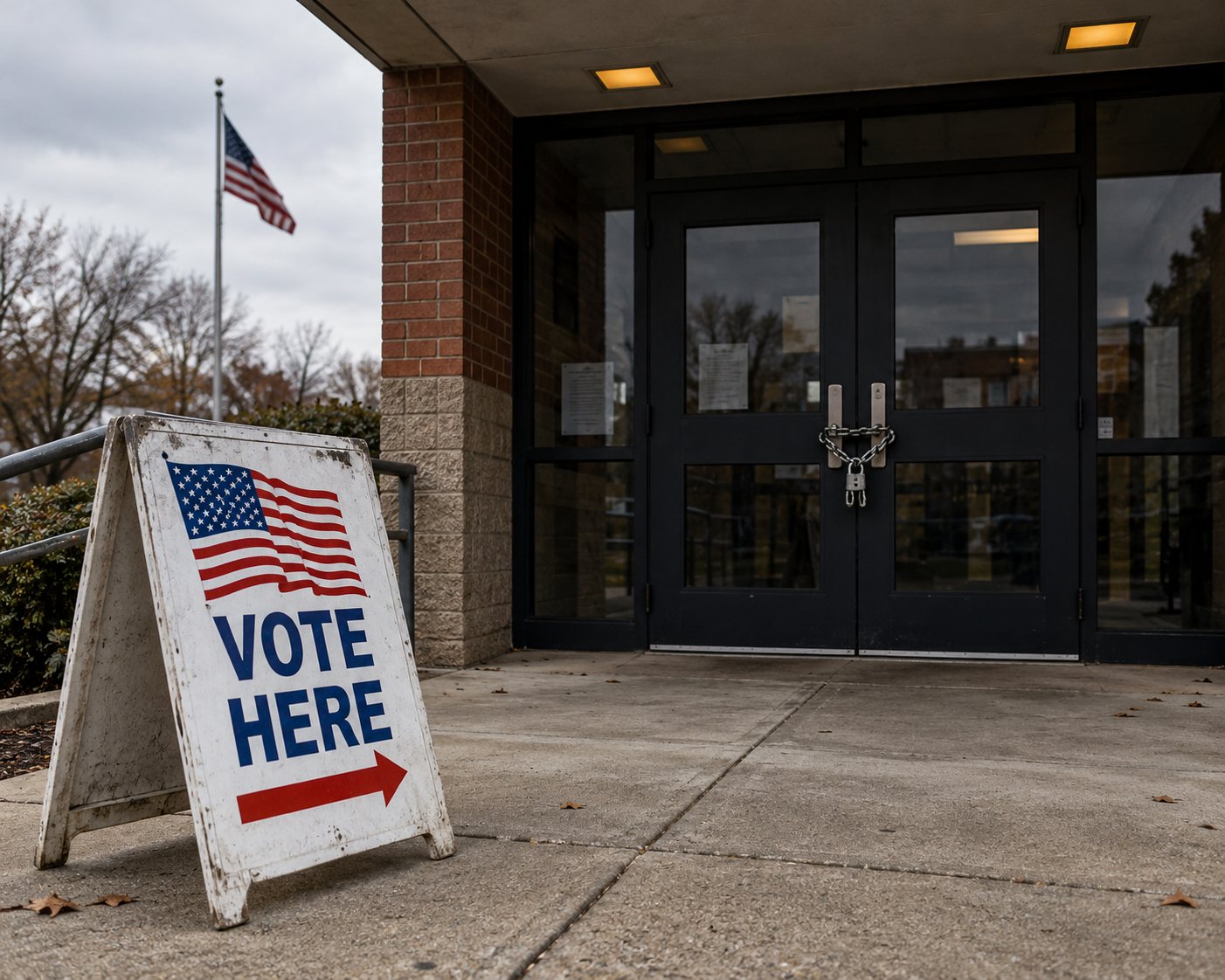
From closing polling places to restricting mail-in ballots and imposing tougher identification requirements, Republican-led governments are making voting more difficult in states across the country.*
With the November midterm elections approaching, Republican lawmakers and election officials are imposing new restrictions on how Americans register, cast ballots, and participate in elections.
An October 16 CNN investigation highlights the breadth of these changes. According to the Brennan Center for Justice, voters in at least 22 states face new voting hurdles compared with the 2024 election, building on 78 restrictive voting laws enacted across 30 states between 2020 and 2024.
The restrictions affect virtually every major voting method: in-person voting, early voting, mail-in ballots, voter registration, and ballot drop boxes.
In Texas, Republican-controlled Tarrant County commissioners voted to eliminate nearly 30% of polling locations, including sites serving predominantly Black and Latino communities. Officials defended the cuts as a cost-saving measure, while voting-rights advocates warned that they would create significant barriers for residents.
Ohio has tightened voter identification requirements, limited ballot drop boxes to one per county, and eliminated early voting on the Monday before Election Day. Iowa has introduced additional citizenship-verification procedures and removed an identification alternative previously available to voters.
Republicans defend these policies as necessary safeguards against election fraud and noncitizen voting. However, election experts have repeatedly found no evidence of widespread noncitizen voting sufficient to justify claims that it threatens election outcomes.
Voting-rights organizations argue that the cumulative effect of these restrictions is particularly damaging to students, elderly Americans, disabled voters, and communities with limited access to transportation.
The controversy extends beyond any single state or voting method. Republican officials are simultaneously changing registration rules, identification requirements, polling-place availability, and mail-ballot procedures.
Whether these measures ultimately change election results remains uncertain. But their immediate consequences are clear: eligible voters in numerous states must navigate additional requirements and, in some communities, travel farther to cast their ballots.
The fundamental question is whether the additional security Republicans say these changes provide outweighs the obstacles they create for eligible American voters.
Source: CNN, October 16, 2026 — https://www.cnn.com/2026/10/16/politics/gop-voting-restrictions-midterms-invs