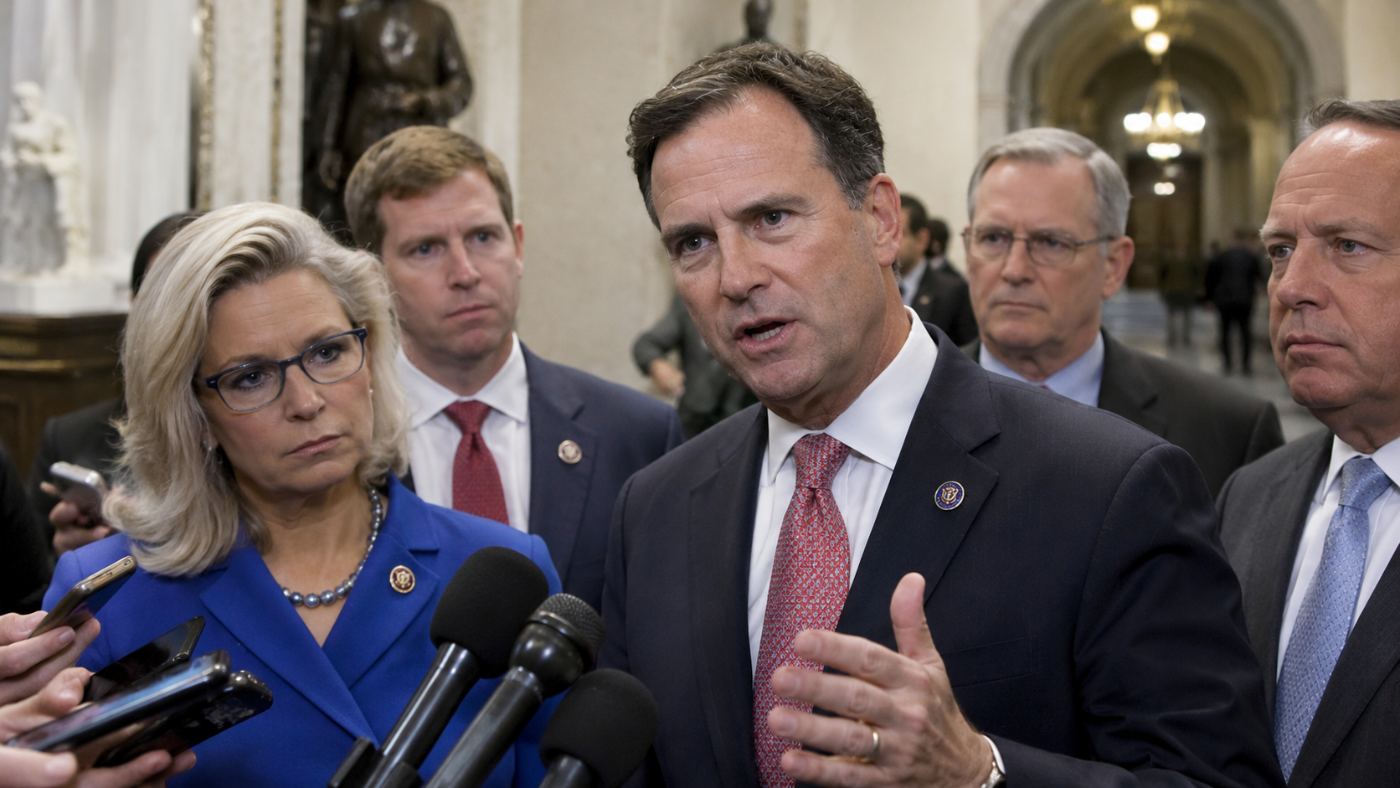
Republican lawmakers faced difficult questions on December 4, 2022, after former President Donald Trump suggested that alleged fraud in the 2020 presidential election could justify terminating constitutional rules.
While several Republicans publicly condemned Trump's remarks, others avoided confronting him directly, exposing divisions within the party over its former president and his continued efforts to challenge the election results.
The controversy erupted just weeks after Trump announced his campaign for the 2024 Republican presidential nomination.
Trump's Statement Sparks a Political Crisis
On December 3, Trump posted on Truth Social that supposed widespread election fraud justified extraordinary action, including the termination of rules and articles found in the Constitution.
Trump continued insisting that the 2020 election had been stolen, despite recounts, court rulings, and investigations that failed to establish fraud sufficient to change the outcome.
His statement prompted immediate condemnation from Democrats and the Biden White House.
By December 4, attention had shifted toward Republican officials and whether they would publicly reject Trump's suggestion.
Republican Congressman Condemns Trump's Remarks
Representative Mike Turner of Ohio, the leading Republican on the House Intelligence Committee, appeared on CBS's Face the Nation.
Turner said he strongly disagreed with Trump's statement and condemned the suggestion that constitutional protections could be set aside.
He emphasized that elected officials swear an oath to uphold the Constitution.
However, Turner stopped short of declaring that Trump's comments should automatically disqualify him from seeking the Republican nomination.
Some Republicans Refuse to Break With Trump
Representative David Joyce of Ohio took a different approach during an appearance on ABC's This Week.
Joyce initially avoided discussing Trump's remarks, arguing that the country needed to move forward rather than revisit controversial statements.
He dismissed the possibility of suspending the Constitution as unrealistic.
Nevertheless, Joyce said he would support whoever became the Republican presidential nominee in 2024.
His response demonstrated how some Republican officials could reject Trump's proposal without withdrawing their potential political support.
Liz Cheney Issues a Strong Rebuke
Representative Liz Cheney of Wyoming, who had served as vice chair of the House committee investigating January 6, responded sharply.
Cheney accused Trump of opposing constitutional principles and connected his latest statement to his efforts to overturn the 2020 election.
Representative Adam Kinzinger of Illinois also condemned Trump's remarks and questioned how fellow Republicans could continue supporting him.
Both lawmakers had become prominent Republican critics of Trump's conduct following the 2020 election.
Republican Leaders Remain Largely Silent
While individual lawmakers spoke publicly, several senior Republican leaders did not immediately issue responses.
House Republican leader Kevin McCarthy and Senate Republican leader Mitch McConnell had not publicly addressed the controversy by December 4.
Their silence attracted attention because both had previously emphasized constitutional principles and the importance of American institutions.
The absence of immediate statements from party leadership contrasted with the direct criticism offered by Cheney, Kinzinger, and Turner.
Democrats Demand Accountability
Incoming House Democratic leader Hakeem Jeffries argued that Republicans needed to decide how they would respond to Trump's continued attacks on the legitimacy of the 2020 election.
The White House also condemned the former president's remarks, emphasizing that constitutional protections cannot depend on whether a candidate wins or loses.
The controversy underscored the continuing political consequences of Trump's refusal to accept his 2020 defeat.
A Party Divided Over Its Former President
The December 4 reactions revealed differing approaches within the Republican Party.
Some officials directly rejected Trump's constitutional claims. Others criticized the proposal while leaving open the possibility of supporting his next presidential campaign.
Several prominent leaders initially avoided commenting altogether.
The episode became another example of the political divisions surrounding Trump's role in the Republican Party after his 2020 election defeat.
December 4, 2022, remains a significant date in the debate over constitutional principles, party loyalty, and accountability for attempts to overturn an American presidential election.