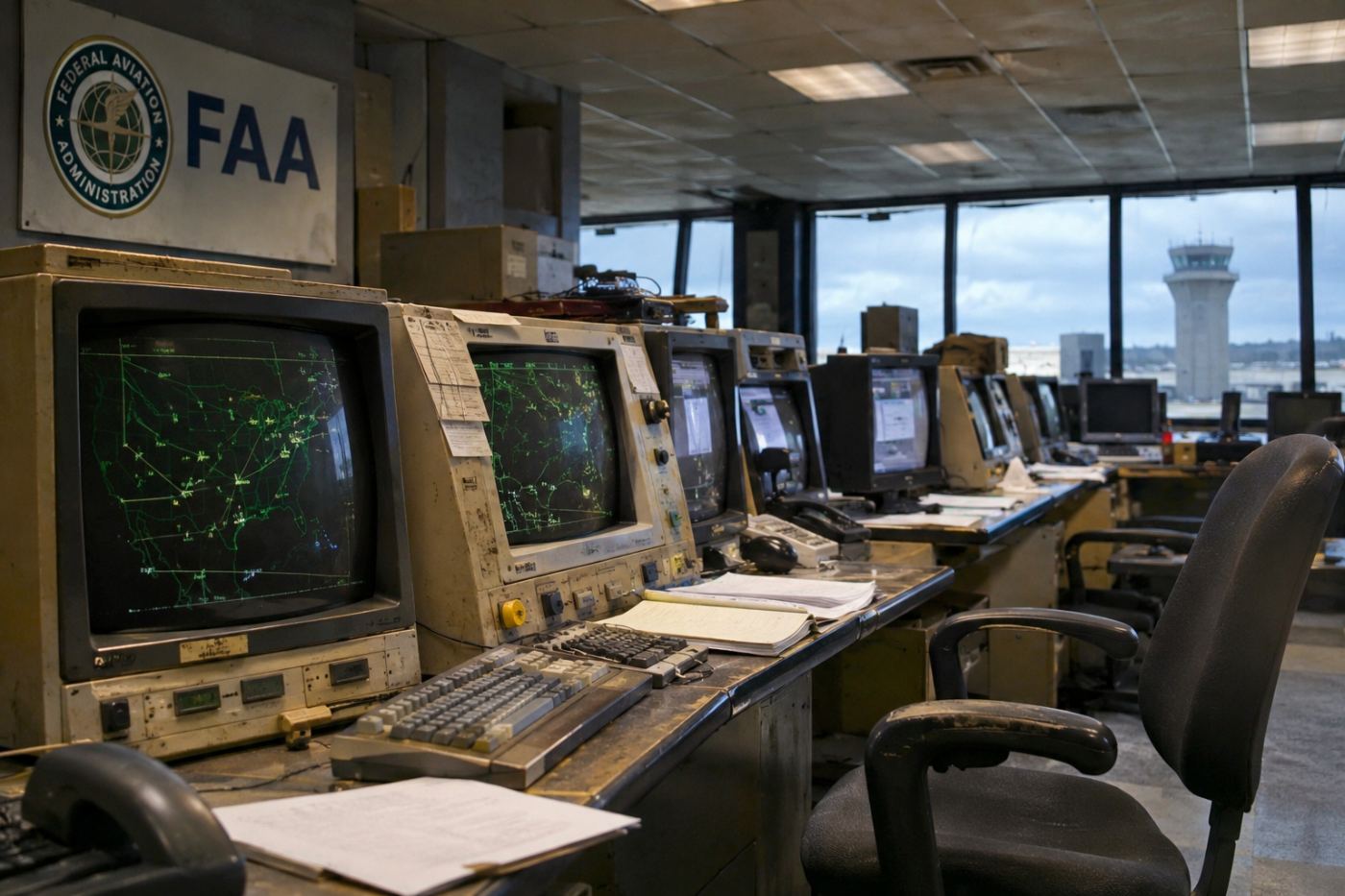
A nationwide aviation shutdown on November 13 brought American air travel to a standstill, disrupting thousands of flights and exposing serious weaknesses in the Federal Aviation Administration's aging infrastructure.
Republican officials quickly blamed Democrats. But federal budget records reveal a more complicated story: Congress has provided the FAA more than $156 billion in funding over the past six fiscal years, including a major modernization package signed by President Donald Trump.
Republicans Point Fingers
Former Trump adviser Kellyanne Conway criticized Democrats for opposing the Republican-backed One Big Beautiful Bill, which included approximately $12.5 billion for air traffic control modernization.
Conway argued that Democrats had effectively voted against aviation improvements.
However, the legislation also included controversial changes to Medicaid, food assistance, and federal taxes. Democrats opposed the broader package, not a standalone FAA modernization bill.
Republicans controlled Congress when the legislation passed, and Trump signed it in July 2025.
Outgoing House Speaker Mike Johnson also criticized Democrats over funding, while dismissing calls for an investigation into the shutdown.
More Than $156 Billion in Six Years
Congressional Research Service records document the FAA's regular funding over six fiscal years:
- 2021: $17.97 billion
- 2022: $23.86 billion
- 2023: $24.02 billion
- 2024: $25.08 billion
- 2025: $26.02 billion
- 2026: $27.21 billion
Total: $144.15 billion.
Additionally, Trump's 2025 legislation provided approximately $12.5 billion specifically for air traffic control modernization.
Together, these appropriations total approximately $156.65 billion.
These figures represent funding made available, not necessarily money already spent. They also cover the FAA's entire mission, including airport grants, safety oversight, personnel, operations, and infrastructure—not exclusively air traffic control modernization.
Much of the funding provided between 2022 and 2026 also originated from the bipartisan infrastructure legislation signed by President Joe Biden.
Duffy Wants Another $50 Billion
Transportation Secretary Sean Duffy acknowledged that the existing modernization funding was insufficient.
Following the shutdown, he called for approximately $50 billion in additional funding to rebuild the air traffic control system.
Democratic lawmakers questioned how the administration was managing the money already approved.
According to their figures, approximately $4.3 billion in contracts had been awarded, but only about $1 billion had actually been spent.
Those numbers do not necessarily indicate mismanagement. Large infrastructure projects require years of procurement, construction, testing, and deployment.
Nevertheless, they underscore the importance of examining the modernization program before approving another enormous expenditure.
What Actually Failed?
The November 13 shutdown followed communications and radar disruptions affecting 17 of the FAA's 22 regional air traffic control centers.
Investigators are examining whether a router installed during telecommunications upgrades malfunctioned or was improperly configured.
The affected network included decades-old technology that successive administrations had struggled to replace.
The failure demonstrated how vulnerable America's aviation infrastructure remains, despite years of federal investment.
The Accountability Question
The FAA's problems did not begin with Trump, and the billions appropriated during Biden's presidency did not eliminate them.
Both administrations supported substantial aviation infrastructure spending.
But Republicans controlled the White House and Congress when the latest modernization package passed, and Trump's Transportation Department oversees its implementation.
Blaming Democrats for opposing a sweeping tax-and-spending bill does not explain why the aviation system failed.
With more than $156 billion appropriated over six fiscal years, Americans have reason to demand a detailed accounting of where the money went, what improvements were completed, and why critical systems remain vulnerable.
Before Congress approves another $50 billion, those questions deserve answers.
Political finger-pointing cannot replace technical oversight, effective management, or a credible modernization plan.