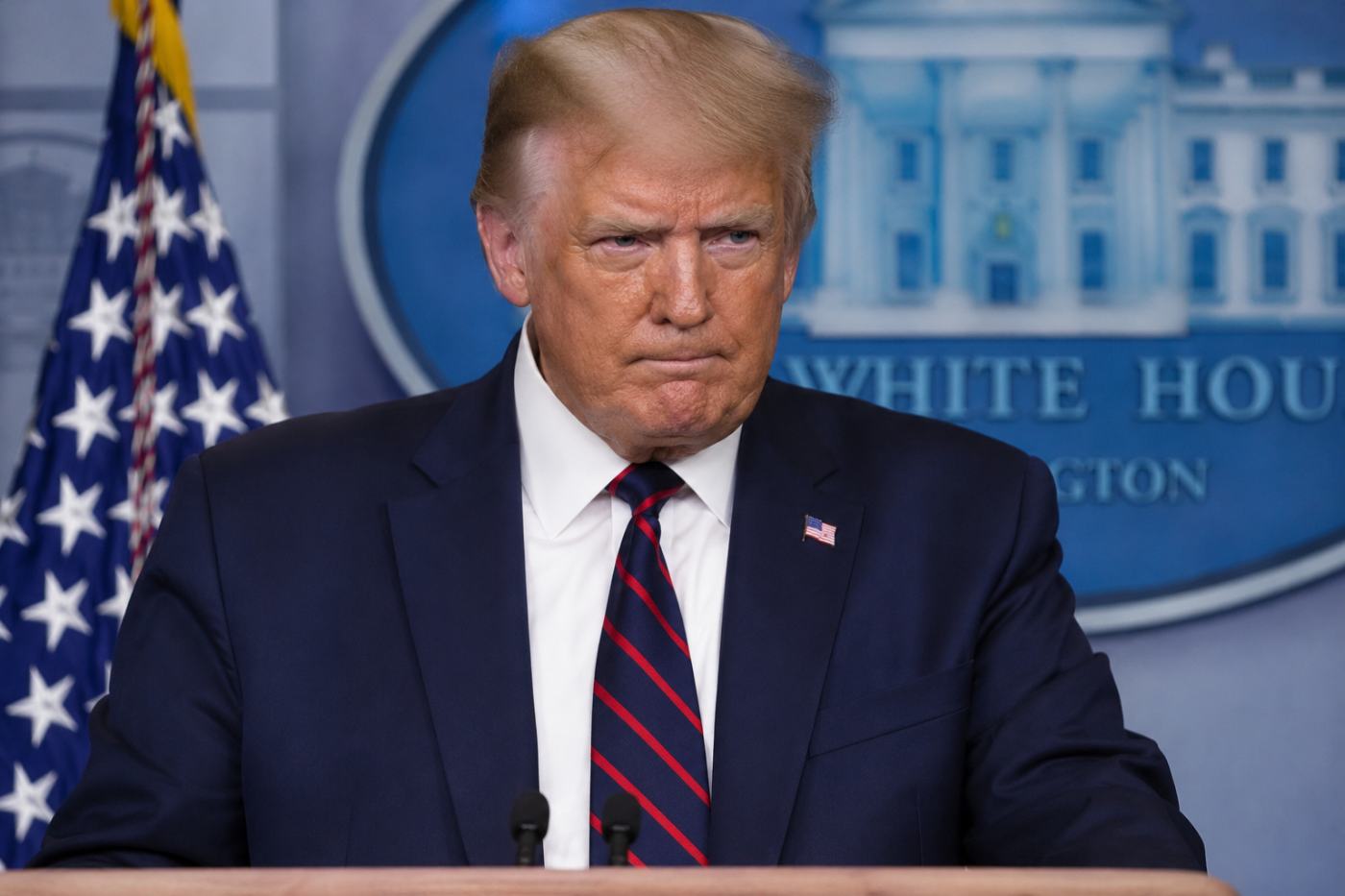
Nine days after the 2020 presidential election, Donald Trump's refusal to acknowledge his defeat was beginning to expose divisions within the Republican Party. While congressional leaders continued defending the president's efforts to challenge the results, several prominent Republican governors publicly recognized Joe Biden as the legitimate president-elect.
On November 12, Ohio Governor Mike DeWine, a Republican who had endorsed Trump's reelection, acknowledged what the president continued to deny.
"Joe Biden is the president-elect," DeWine told CNN.
DeWine emphasized that Trump retained the legal right to challenge election results in court. But he also made clear that the country needed to recognize the outcome and begin moving forward.
New Hampshire Governor Chris Sununu, another Republican who supported Trump's reelection, delivered a similar message. Sununu acknowledged Biden's expanding lead and the diminishing prospects of Trump's legal challenges, stating that Biden would likely take the oath of office in January.
The statements represented an emerging divide within a party whose national leadership remained largely unwilling to publicly contradict Trump.
Election Officials Reject Fraud Allegations
The Republican defections came on the same day that federal and state election officials issued a significant statement about the integrity of the election.
The Cybersecurity and Infrastructure Security Agency, working alongside election officials and industry representatives, described the November 3 election as the most secure in American history.
The statement directly contradicted Trump's repeated allegations that voting systems had manipulated results or improperly transferred votes between candidates.
Election officials reported no evidence that voting systems had changed, deleted, or lost votes.
Nevertheless, Trump continued alleging widespread election fraud without producing evidence sufficient to substantiate claims that could overturn Biden's victory.
His campaign pursued lawsuits in several battleground states, but the legal challenges had not established irregularities capable of changing the outcome.
Republican Leaders Refuse to Break Ranks
Despite the growing recognition of Biden's victory outside Washington, Republican congressional leaders remained reluctant to confront the president.
House Minority Leader Kevin McCarthy questioned whether Biden would actually assume office on January 20, suggesting the election's outcome remained uncertain.
Other Republicans took a narrower position.
Senators Chuck Grassley, Lindsey Graham, and James Lankford supported providing Biden access to classified intelligence briefings, even as many Republicans stopped short of fully recognizing his victory.
The distinction mattered. Intelligence briefings were an important part of preparing an incoming administration to confront national security threats, yet the Trump administration's refusal to authorize the formal transition was restricting Biden's access to government resources.
As of November 12, only a small minority of Republican senators and governors had publicly recognized Biden as president-elect.
A Warning About American Democracy
Former President George W. Bush had already congratulated Biden, while longtime Republican strategist Karl Rove argued that the election result would not be overturned.
Former President Barack Obama warned that Republican officials who understood the outcome but continued accommodating Trump's claims were contributing to the erosion of public confidence in democratic institutions.
The controversy extended beyond whether Trump would personally concede. It raised questions about the responsibility of elected officials to recognize legitimate election outcomes, even when doing so conflicted with their political interests.
Biden had secured enough projected electoral votes to win the presidency. Trump's legal challenges remained unresolved, but they had produced no evidence capable of reversing that result.
November 12 marked an important moment in the post-election confrontation: Republican officials were beginning to acknowledge Biden's victory, even as much of their party's national leadership continued supporting Trump's resistance.
The broader Republican recognition of Biden's victory would take weeks longer, illustrating how a defeated president's refusal to concede could disrupt the traditionally orderly transfer of American political power.