Donald Trump had lost the presidential election, but he was still fighting to change the results.
His campaign was pursuing lawsuits, alleging widespread voter fraud without sufficient evidence, and attempting to prevent battleground states from certifying Joe Biden's victories.
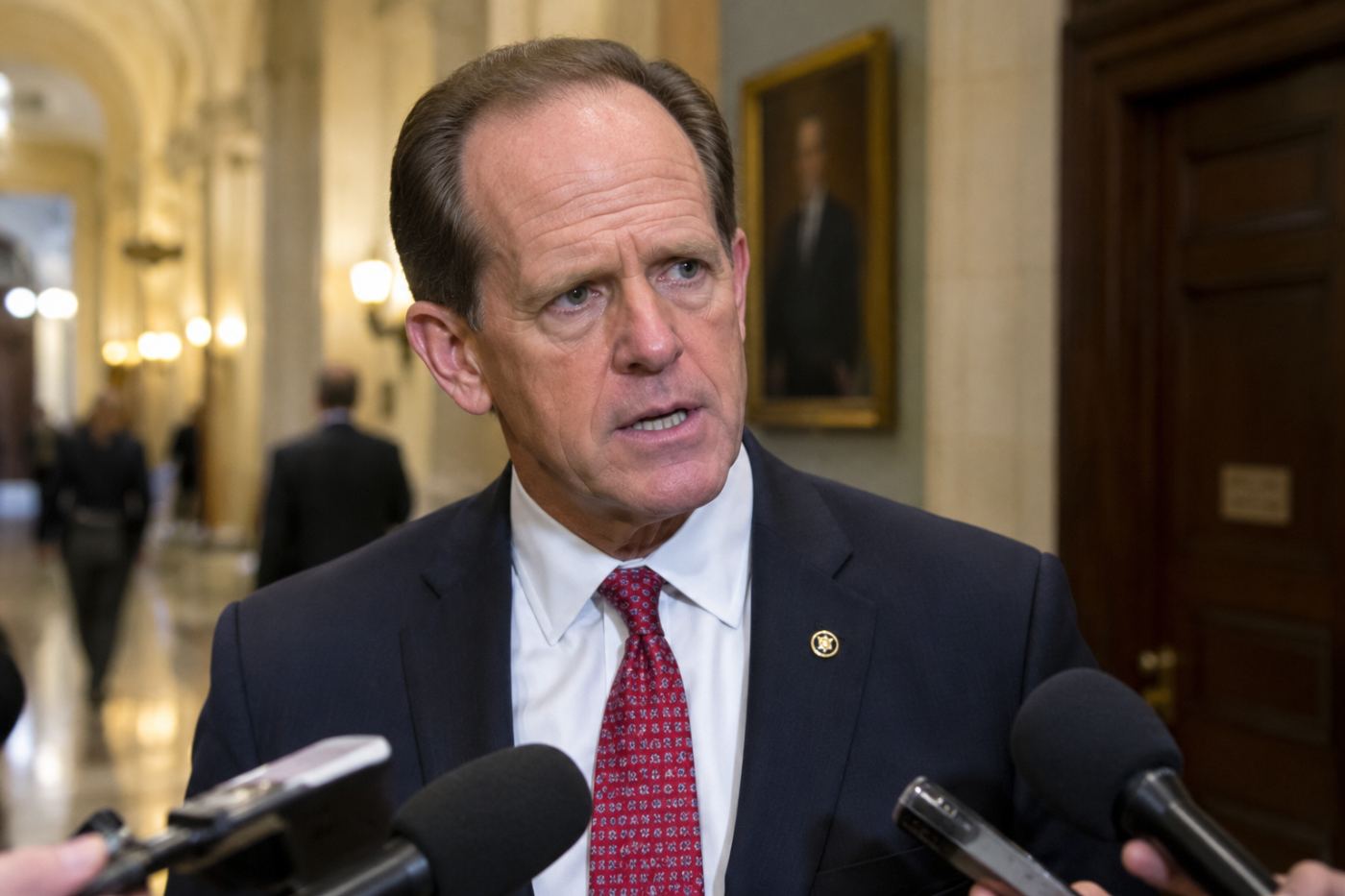
On November 21, 2020, Trump suffered another setback when Republican Senator Pat Toomey of Pennsylvania publicly acknowledged Biden's victory and called on the president to accept defeat.
Toomey had endorsed Trump, voted for him, and supported much of his administration's agenda.
But even he was unwilling to support Trump's continuing effort to reverse the election outcome.
Trump's Pennsylvania Strategy Falls Apart
Earlier that day, federal Judge Matthew Brann dismissed a Trump campaign lawsuit seeking to block Pennsylvania from certifying its election results.
Biden had defeated Trump in Pennsylvania by more than 80,000 votes.
The campaign argued that election officials had treated voters differently when allowing corrections to mail-in ballots.
But the lawsuit failed to establish grounds for the extraordinary remedy Trump sought.
The president was effectively asking a federal court to interfere with certification of an election involving millions of voters.
Brann rejected the request.
Trump's attorneys vowed to appeal, continuing their legal effort to challenge the outcome.
A Republican Senator Says Enough
Following the ruling, Toomey released a statement acknowledging that Trump's legal strategy in Pennsylvania had reached a dead end.
He declared that the president had exhausted the plausible legal options available to challenge the state's results.
Toomey congratulated President-elect Joe Biden and Vice President-elect Kamala Harris.
He also acknowledged that Biden would become the 46th president of the United States.
This was not a Democrat celebrating a political victory.
It was a Republican senator publicly recognizing that the candidate he supported had lost.
Trump Was Still Trying to Change the Election
Toomey's announcement came amid a broader campaign by Trump and his allies to reverse the results in several battleground states.
Just one day earlier, Trump had met with Republican legislative leaders from Michigan at the White House.
The meeting occurred as his allies explored whether Republican-controlled legislatures could intervene in the Electoral College process.
Michigan's lawmakers subsequently stated that they had received no information justifying a change to their state's election outcome.
Meanwhile, Georgia had completed a statewide hand audit confirming Biden's victory and formally certified its results.
Trump nevertheless continued challenging the election.
His campaign's legal efforts, public allegations, and contacts with state officials demonstrated that he was not simply requesting routine verification of close races.
He was pursuing avenues that could change the outcome of an election he had lost.
Toomey Warns Trump About His Legacy
Toomey made clear that his disagreement was not rooted in opposition to Trump's policies.
He praised several administration accomplishments, including tax legislation, judicial appointments, and Middle East diplomatic agreements.
He also expressed disappointment that Trump and Vice President Mike Pence had not won reelection.
But he urged Trump to accept the results and cooperate with the incoming administration.
Toomey warned that refusing to facilitate a peaceful transition could overshadow the accomplishments he believed Trump had achieved.
Trump responded by attacking the senator and criticizing the judge who dismissed his lawsuit.
The president's resistance continued.
The Election Was Over. Trump's Fight Was Not.
November 21, 2020, marked another significant moment in the struggle over the presidential election results.
A federal judge had rejected Trump's Pennsylvania lawsuit.
A Republican senator who supported the president had acknowledged Biden's victory.
Other Republican officials were resisting efforts to change certified election outcomes.
Yet Trump continued fighting the results rather than accepting the voters' decision.
Toomey's statement illustrated a growing divide within the Republican Party between those willing to recognize Biden's victory and those continuing to support Trump's challenges.
The president would not formally concede.
His campaign to overturn the election continued into January 2021, culminating in the events surrounding the certification of the Electoral College vote on January 6.
On November 21, however, one of Pennsylvania's most prominent Republicans had already reached his conclusion.
Trump had lost, and it was time to begin the transition.