For more than a decade, Donald Trump reshaped American presidential politics, building a Republican coalition that transformed former battleground states into conservative strongholds.
Now, following one of the most devastating midterm defeats in modern American politics, Republican strategists are confronting an uncomfortable possibility: the political map Trump created may be coming apart.
According to a November 6 POLITICO investigation, Republicans are increasingly alarmed that states they once considered safely Republican could become competitive in the 2028 presidential election.
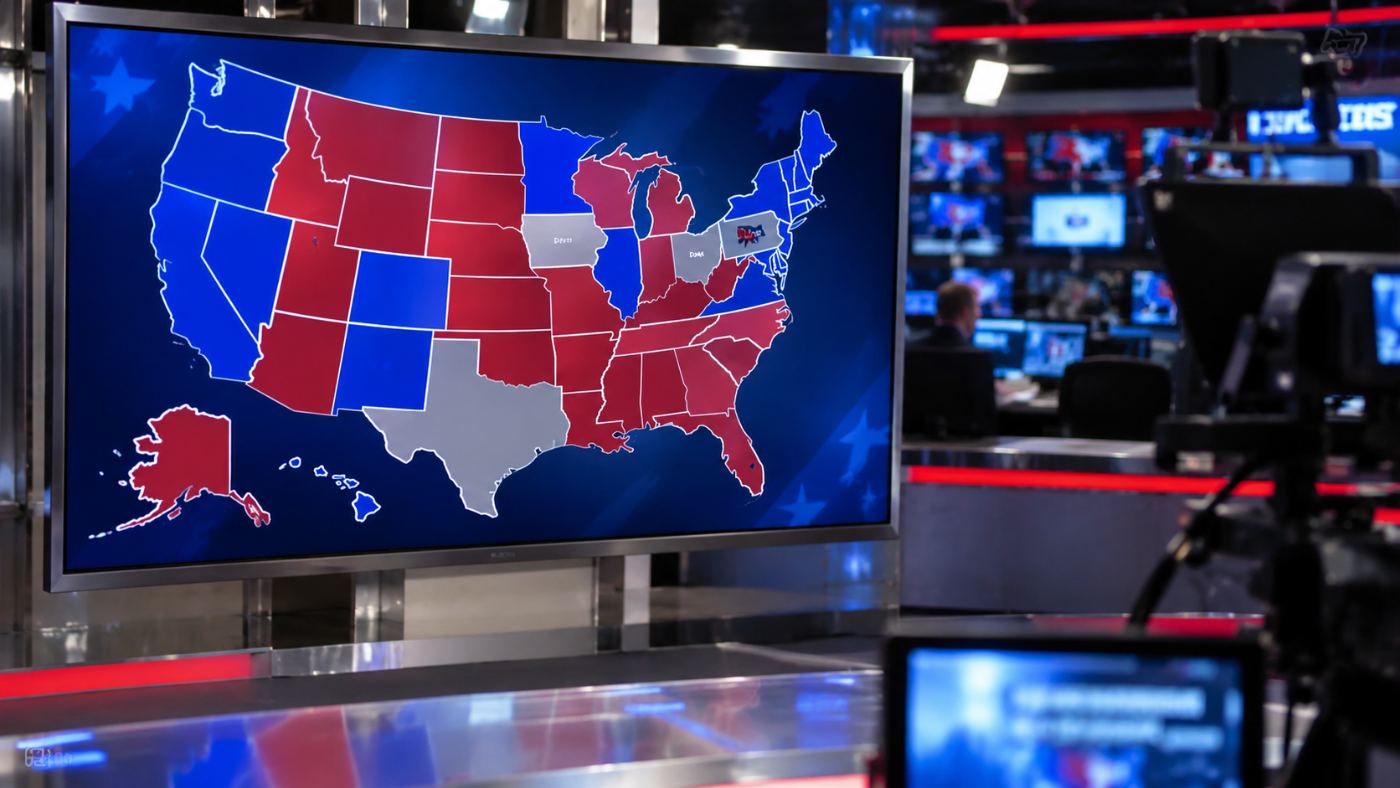
Texas. Ohio. Iowa. Georgia. Arizona.
States that Republicans expected to provide a dependable foundation for future presidential victories are suddenly presenting new challenges.
And the warnings are coming from inside the Republican Party itself.
Texas: The Biggest Republican Warning Sign
Perhaps no state better illustrates the magnitude of the Republican Party's problems than Texas.
For decades, Republicans have treated the Lone Star State as a dependable source of Electoral College votes.
That assumption was shaken Tuesday when Democrats swept statewide offices, including the governorship and a United States Senate seat.
Democrat James Talarico defeated Republican Ken Paxton in the Senate contest, ending nearly four decades of Republican control of that seat.
Democrats also defeated longtime Republican Governor Greg Abbott.
Texas carries 40 electoral votes, making it the second-largest prize in presidential elections after California.
Republican strategist Bill Stepien, who managed Trump's 2020 presidential campaign, acknowledged the significance of the results.
Defending Texas in a presidential election would require substantial financial resources and campaign infrastructure that Republicans have historically been able to deploy elsewhere.
For Democrats, the results have renewed discussions about whether Texas could become a genuine presidential battleground.
For Republicans, they represent a warning that even longstanding advantages cannot be taken for granted.
Ohio and Iowa Are No Longer Political Certainties
Trump's political success depended heavily on his ability to attract working-class voters in states that previously supported Barack Obama.
Ohio and Iowa became important examples of that transformation.
Both states voted for Obama twice before shifting decisively toward Trump.
But Tuesday's results demonstrated that those Republican gains may not be permanent.
Democrats won Senate and gubernatorial contests in both states while capturing additional congressional seats.
In Iowa, economic pressures on rural communities, including agricultural tariffs and high fuel prices, contributed to dissatisfaction among voters.
Republican strategist Curt Steiner acknowledged that Ohio should once again be viewed as a competitive state.
Meanwhile, influential Iowa conservative Bob Vander Plaats warned that Republicans had benefited from Trump's political identity but could also suffer from its declining appeal.
The concern is straightforward: a coalition built around one political personality may prove difficult to maintain when that personality is no longer on the ballot.
Republicans Are Already Fighting Over Who Is Responsible
The election results have triggered disagreements among prominent Republicans over why the party suffered such extensive losses.
Vice President JD Vance pointed to the administration's war with Iran.
Senator Ted Cruz emphasized voters' economic frustrations and the party's failure to address affordability.
Florida Governor Ron DeSantis described the results in exceptionally severe terms, warning of potentially lasting consequences for Republicans.
These competing explanations expose a significant challenge facing the party.
Republicans must determine whether their problems resulted primarily from unpopular policies, economic conditions, Trump's personal standing, or deeper changes in the electorate.
The answer matters because the next Republican presidential nominee will have to compete without Trump's unique political appeal while confronting the consequences of his administration.
The Electoral College Problem
Presidential elections are not decided by the national popular vote alone.
Candidates must secure at least 270 Electoral College votes.
Republicans have traditionally relied on a foundation of conservative states before competing for a relatively small number of battlegrounds.
But if Texas, Ohio, and Iowa require serious competition, Republican presidential campaigns could face difficult decisions about where to spend money, deploy staff, and concentrate candidate appearances.
Texas alone represents 40 electoral votes. Ohio contributes 17, and Iowa contributes six.
Together, those three states account for 63 electoral votes.
Their competitiveness would not automatically deliver them to Democrats. But it could force Republicans to defend territory they previously considered secure.
Former Trump campaign manager Bill Stepien told POLITICO that the election results had made the mechanics of winning the presidency more difficult for his party.
The implications extend beyond presidential campaigns.
Democratic victories in gubernatorial and legislative races could also strengthen the party's organizational presence in states where Republicans have enjoyed longstanding institutional advantages.
The Shadow of 2006 and 2008
Some Republican strategists are drawing comparisons to the 2006 midterm elections.
That year, Democrats captured both chambers of Congress amid widespread dissatisfaction with President George W. Bush and the Iraq War.
Two years later, Barack Obama won the presidency, carrying several states that Republicans had previously considered dependable.
Marc Short, who served as chief of staff to Vice President Mike Pence, suggested that the current Republican difficulties could resemble that earlier political cycle.
But history also offers an important caution.
Midterm elections frequently produce dramatic swings against the president's party, and those results do not necessarily predict the next presidential contest.
The candidates, economic conditions, international events, and voter priorities of 2028 could differ substantially from those of 2026.
Democratic strategists have acknowledged that retaining newly won voters will require sustained effort.
Trump's Political Legacy Faces a New Test
Donald Trump remains president, but the Constitution prevents him from seeking another elected term.
That leaves Republicans with a difficult question about the future of their party.
Can JD Vance, Marco Rubio, Ron DeSantis, or another Republican reproduce Trump's electoral coalition without his personal appeal?
And can the party recover support among voters who rejected Republican candidates in 2026?
The midterms have not answered those questions. They have made them considerably more urgent.
Republicans must now examine why voters shifted in traditionally conservative states, whether those shifts are temporary, and how their next presidential nominee can respond.
Democrats, meanwhile, face the challenge of demonstrating that their midterm victories represent more than a temporary reaction against an unpopular administration.
The central political development is unmistakable: the 2026 midterms have challenged assumptions about the Republican Party's geographic strength and reopened debate over the electoral map for 2028.
Trump transformed the Republican coalition. The next presidential election will test how much of that transformation endures after him.